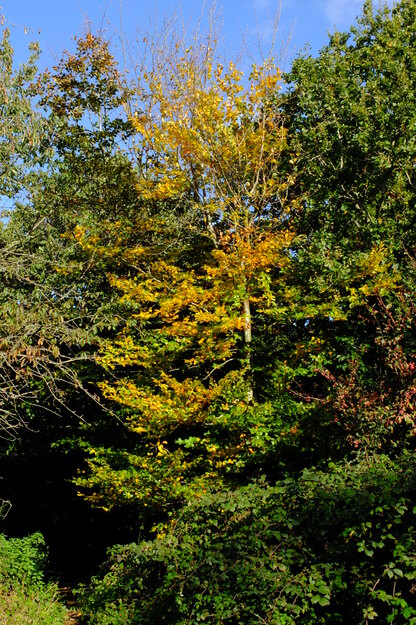
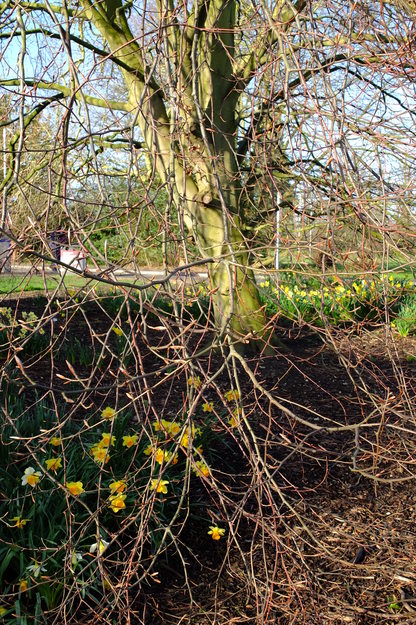
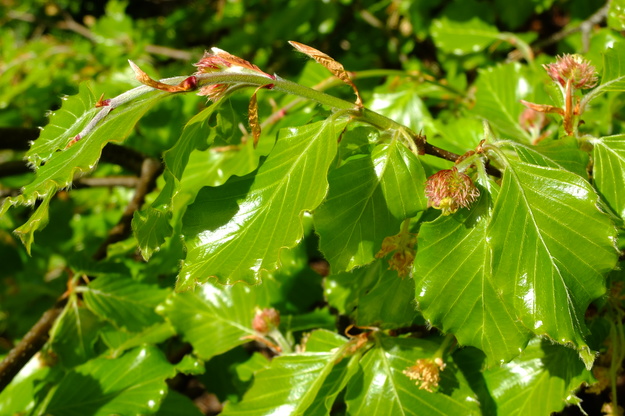
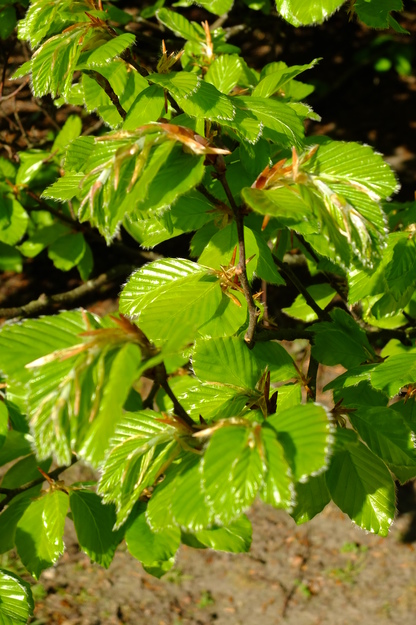
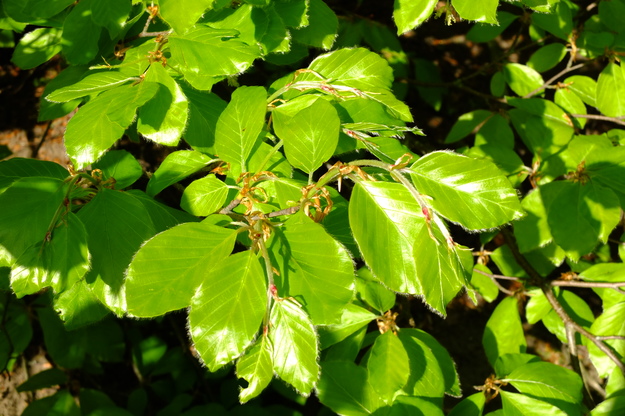
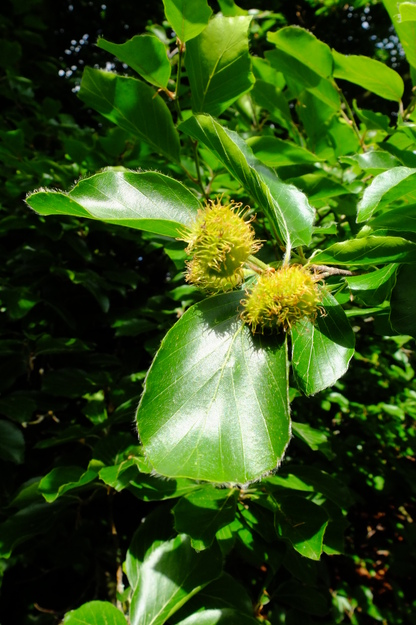
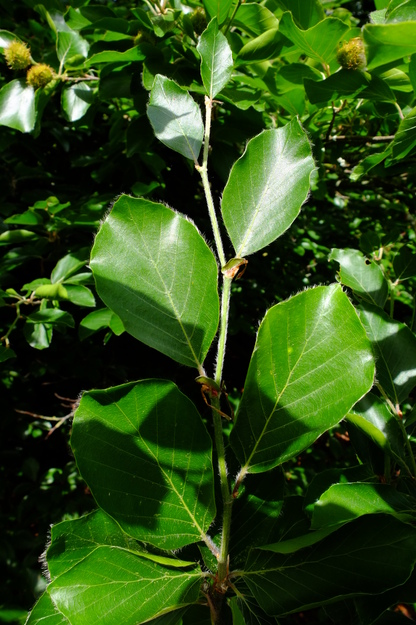
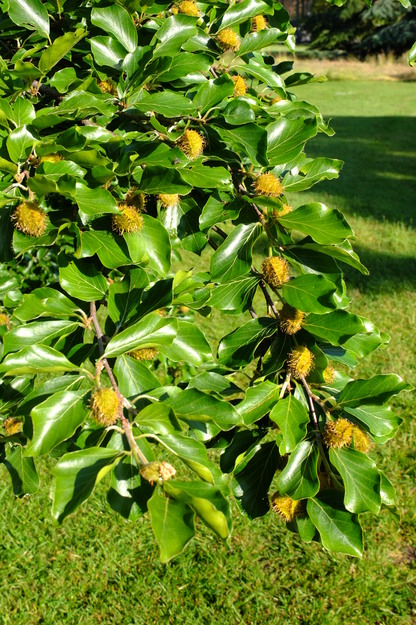
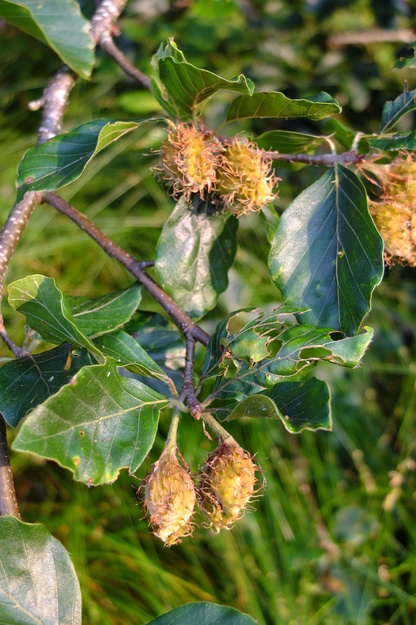
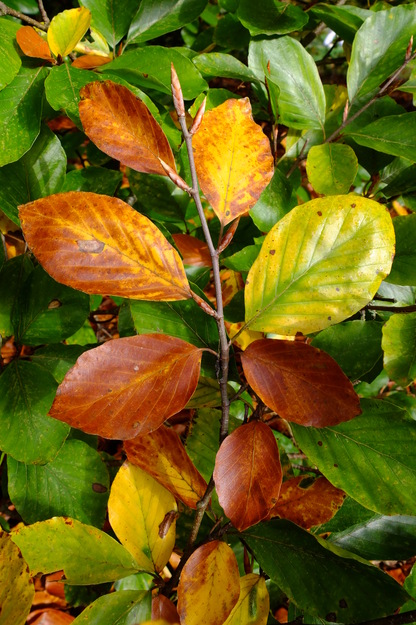
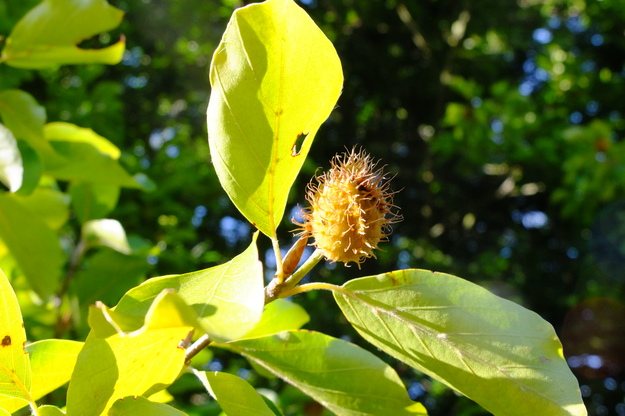
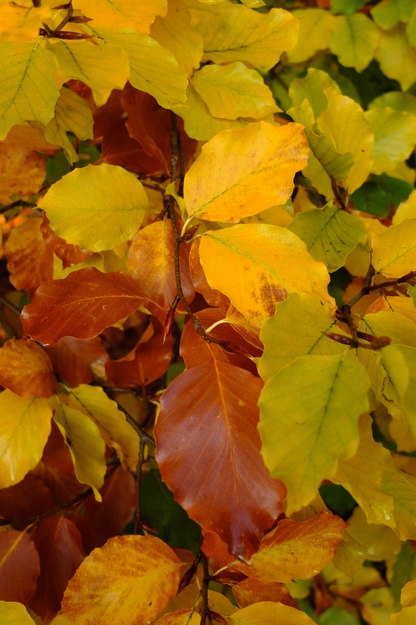
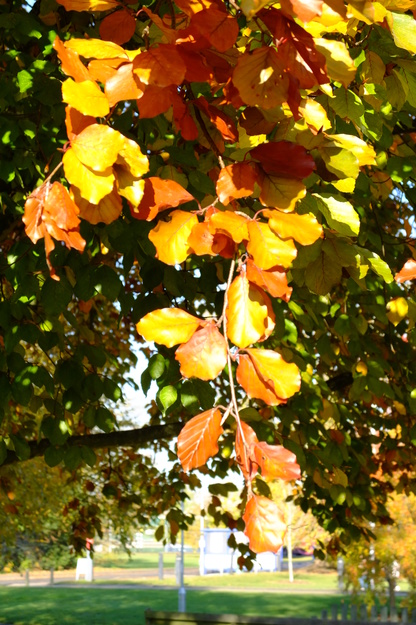
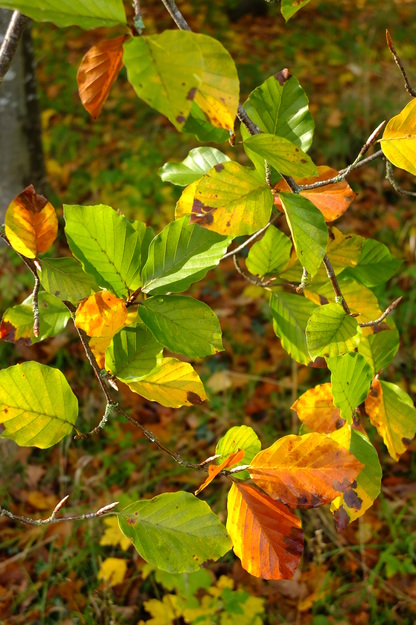
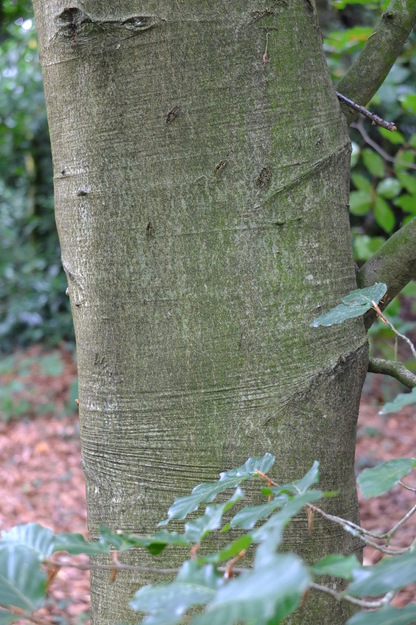
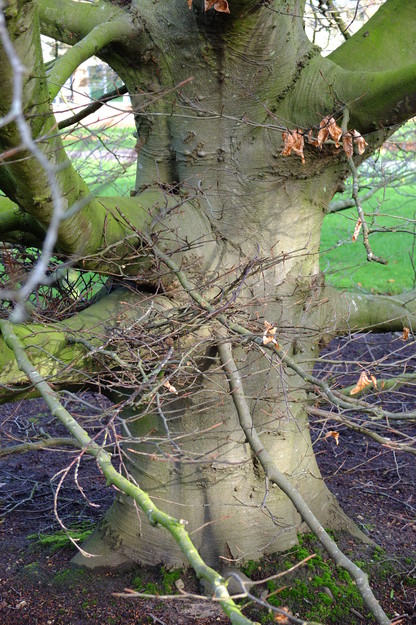
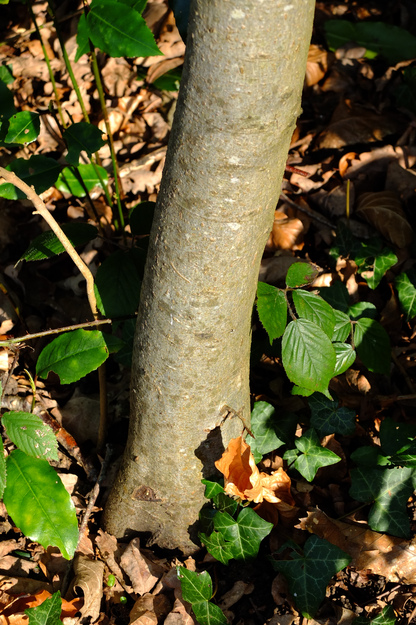
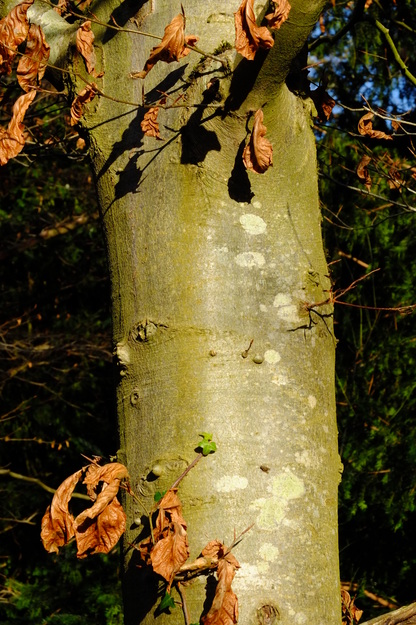
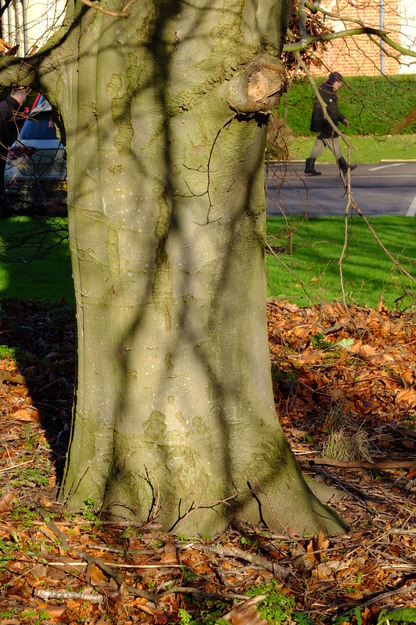
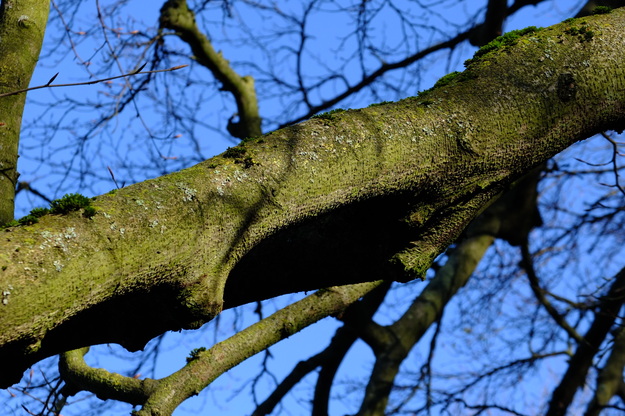
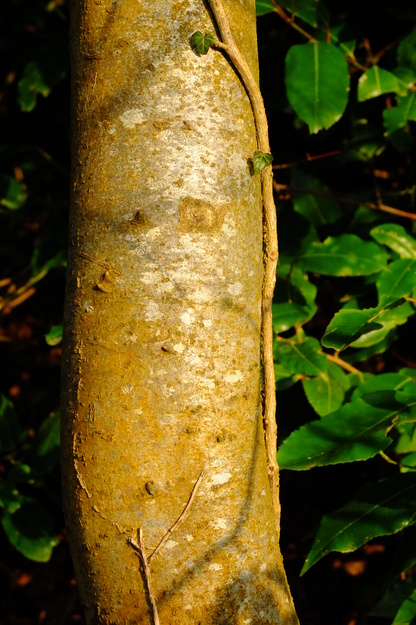
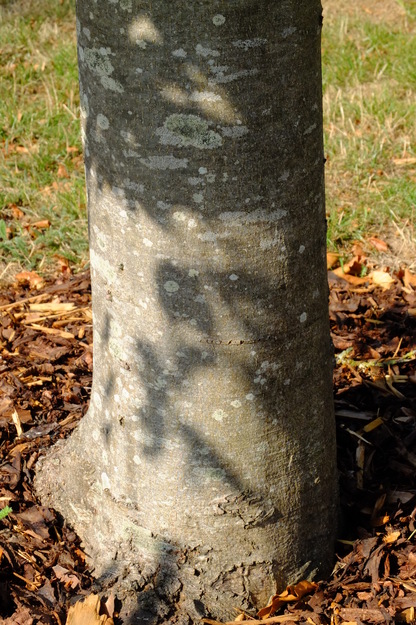
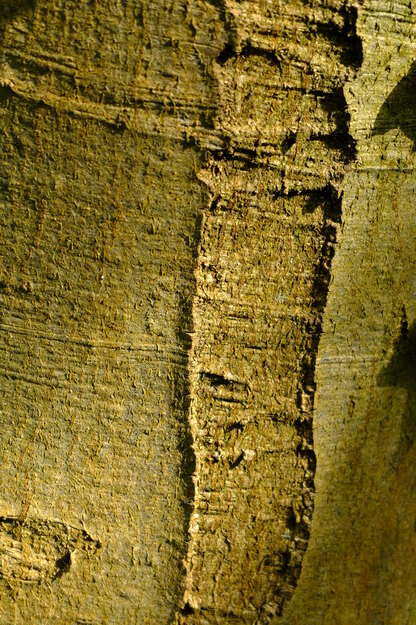
Fagus sylvatica is a species of deciduous broadleaf flowering plants (in the Fagaceae or Beech family), native to Britain and much of Europe. In British countryside, Fagus sylvatica is a monumental tree of great ecological importance. It can grow 30–40 metres tall and live for 300 years, forming a broad, dense crown with smooth, pale grey bark that remains relatively unbroken even in old age. It is often planted in parks as an impressive ornamental tree. Fagus sylvatica thrives in temperature climates on well-drained soils, such as chalk and limestone, naturally forming extensive forests. The remaining primaeval beech forests of Europe together compose a UNESO World Heritage site. Beech woods can be found nearby in the Chilterns and at Burnham. They are distinctive for having relatively little undergrowth, because of the deep shade cast by the canopy.
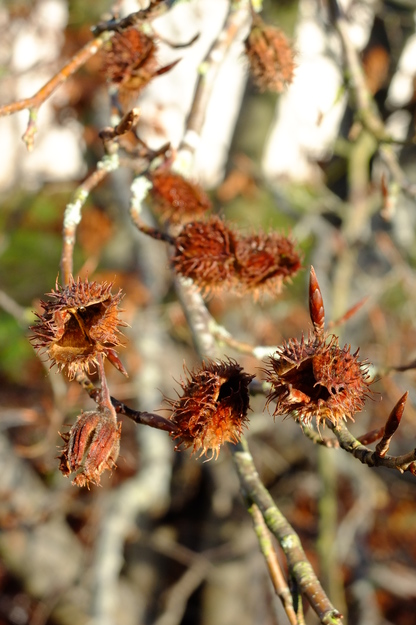
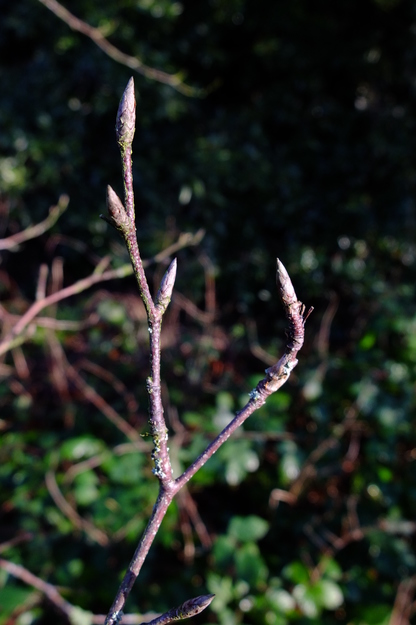
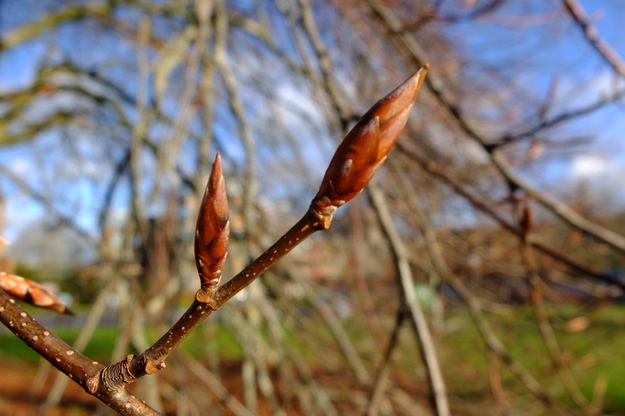
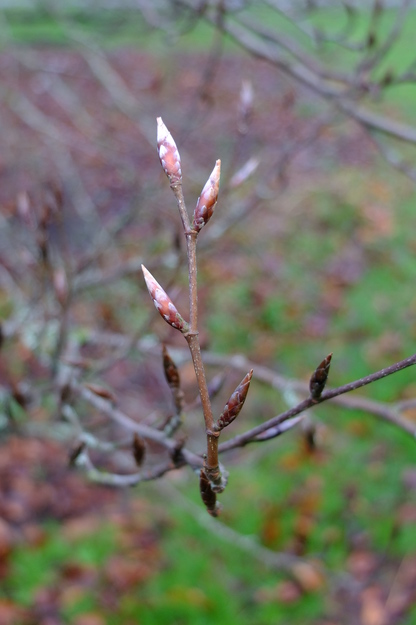
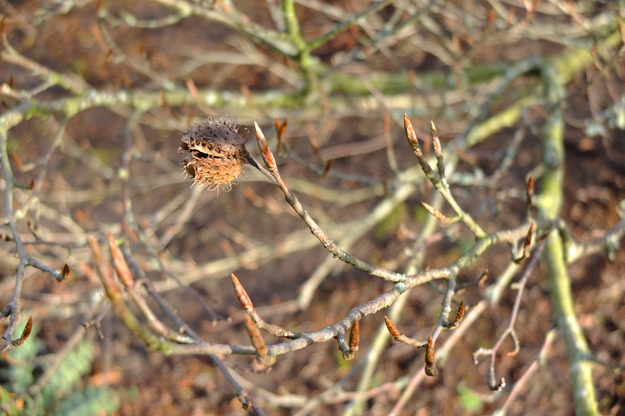
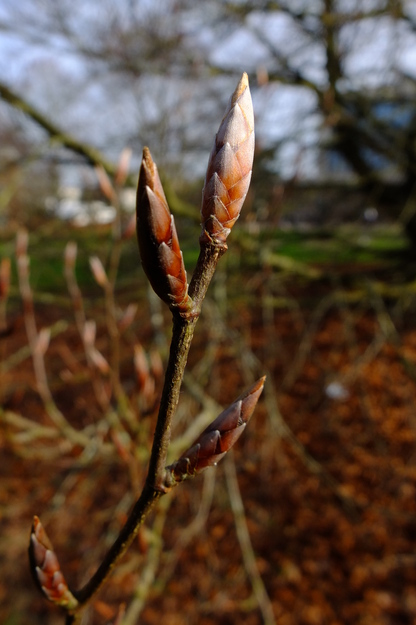
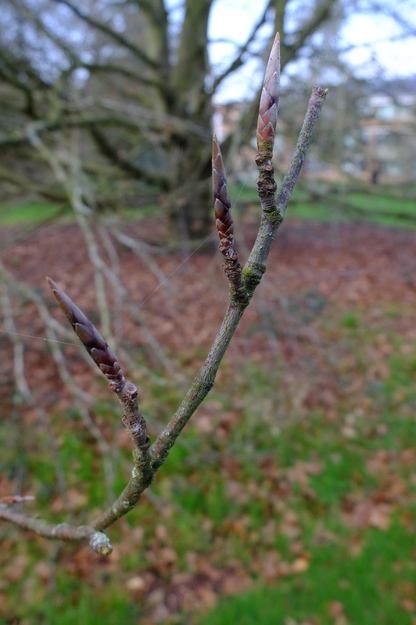
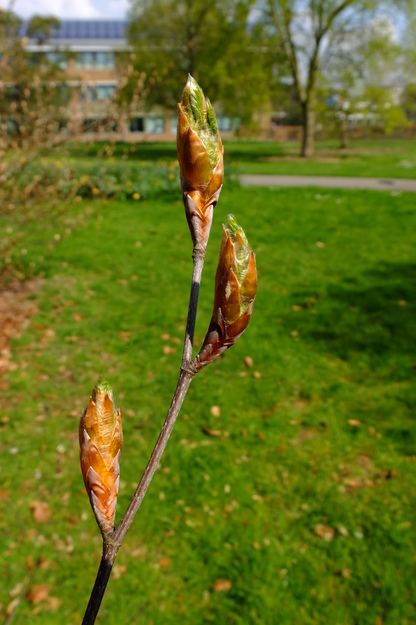
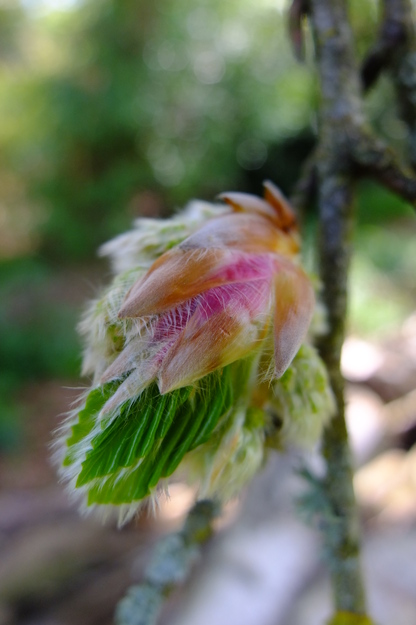
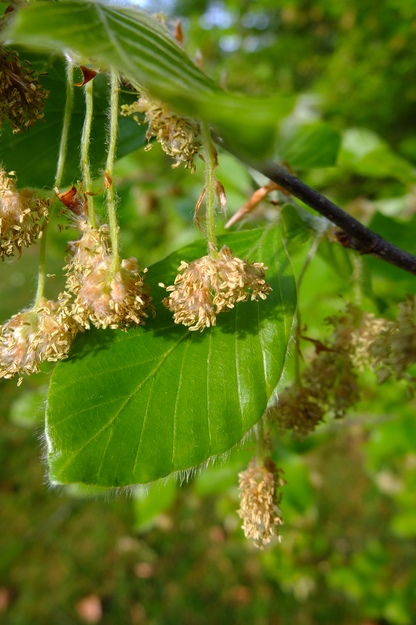
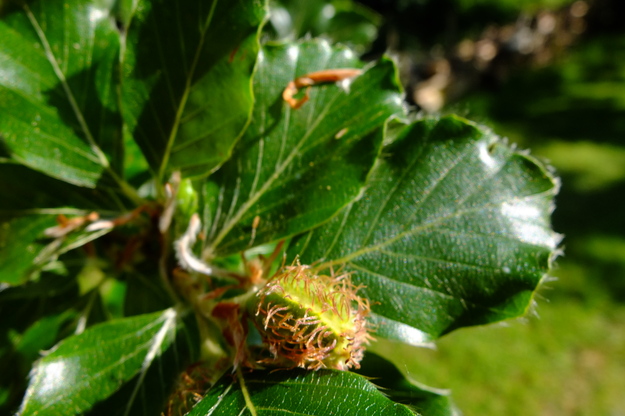
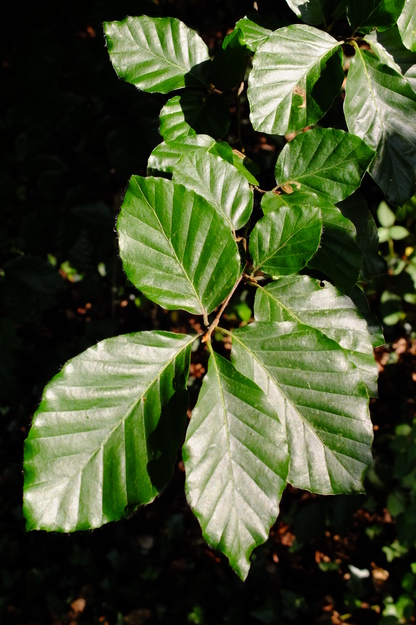
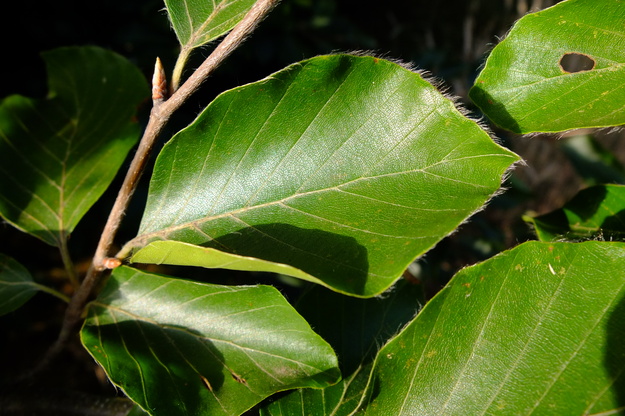
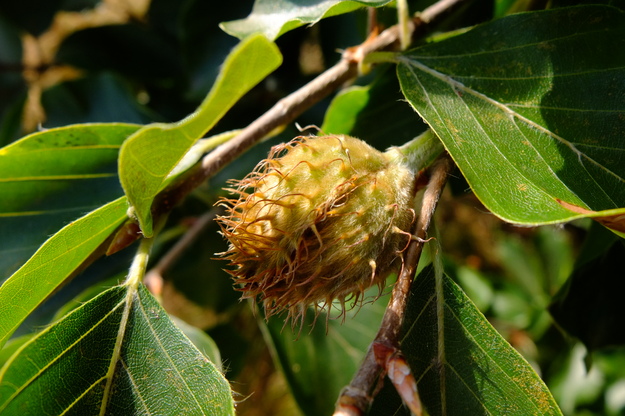
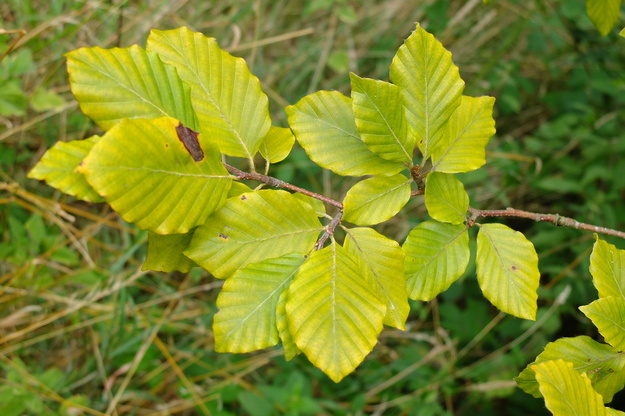
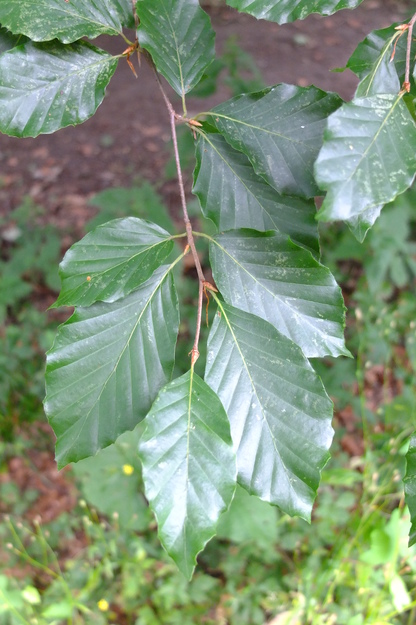
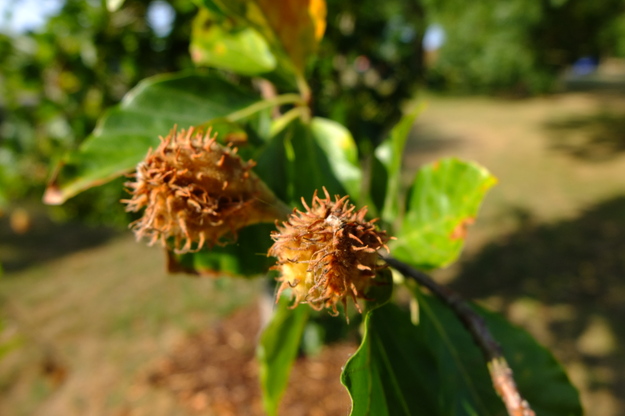
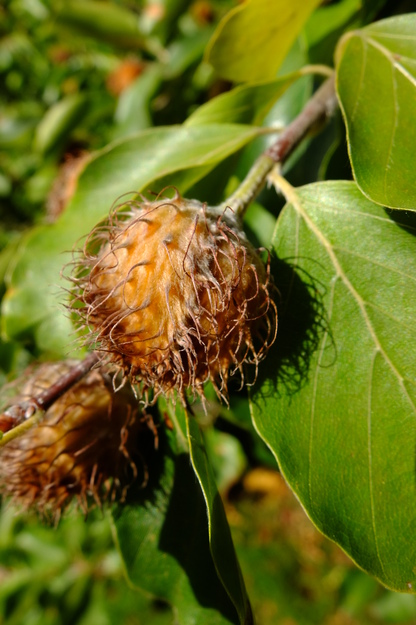
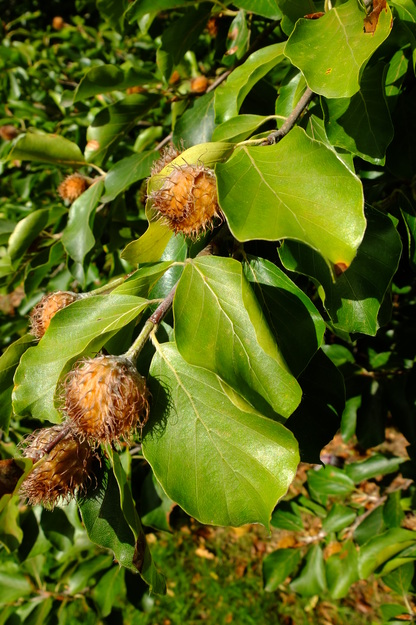
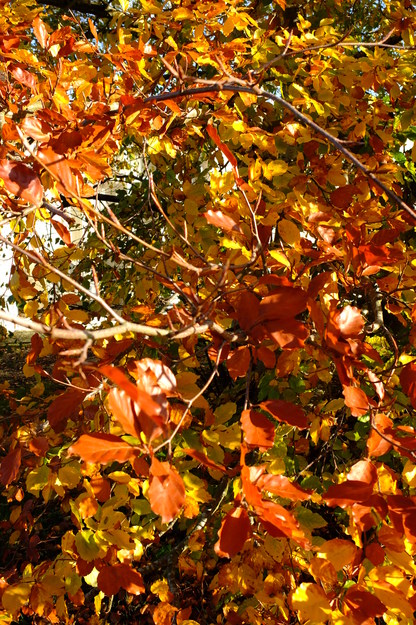
The tree has distinctive long, thin, pointed buds in winter, which open into glossy, oval green leaves. They resemble the leaves of hornbeam (Carpinus betulus) in their shape and arrangement of veins, but have slightly wavy edges, whereas those of hornbeam have a toothed edge. In spring the tree produces small flowers that develop into triangular beechnuts, which are edible by humans as well as wildlife. The leaves produce a beautiful yellow and golden brown display in autumn. When beech is cut short as hedging, it retains its leaves in winter; there are plenty of beech hedges in Whiteknights Park. Its wood is dense, strong, shock-resistant but bendable, and used for furniture, flooring, tools and kitchen utensils.
External webpages
about this species


about this species
How to use the map
Drag with your finger or mouse to move the map.
 Zoom in or out. You can also do this with the mousewheel or by pinching.
Marker of the position of an identified tree, while the map is zoomed out. For the details, zoom in until you see tree markers like the following …

 Clicking on a tree marker brings up a window (called a "popup")
identifying the species of the tree there, with a small photo of it and buttons
to display more photos and information. NB only a few hundred of the thousands
of trees are marked!
Clicking on a tree marker brings up a window (called a "popup")
identifying the species of the tree there, with a small photo of it and buttons
to display more photos and information. NB only a few hundred of the thousands
of trees are marked!
7Marker of a tree of the selected species; clicking it will zoom and centre the map on this tree, and bring up a photo of it in the frame.
 Marker of a British Isles champion tree in
The Tree Register.
Marker of a British Isles champion tree in
The Tree Register.
✕ Click the cross at the top right of any window, including this one, to get rid of it.
 ✕
Click to dismiss all the popups at once.
✕
Click to dismiss all the popups at once.
Choose alternative versions of the map. The tree markers, popups, map centre and zoom are all unaffected by switching.
 Turn on a flashing dot which tracks your live location on the map, surrounded
by a circle indicating the accuracy of the location. This will work
only if your device has a satellite navigation (GPS etc.) receiver which is
enabled and can acquire a signal. You will probably be asked to allow the
website to access "location services" the first time you press this button.
The button flashes orange while trying to locate you,
and green while your location is shown. Press it again to turn it off.
Turn on a flashing dot which tracks your live location on the map, surrounded
by a circle indicating the accuracy of the location. This will work
only if your device has a satellite navigation (GPS etc.) receiver which is
enabled and can acquire a signal. You will probably be asked to allow the
website to access "location services" the first time you press this button.
The button flashes orange while trying to locate you,
and green while your location is shown. Press it again to turn it off.
 Recentre the map on your present location, while live location is switched on.
 Reset the map to its original centre and zoom.
To click on a tree, zoom in until you see
tree markers
Whiteknights QuadSee all photos of this tree
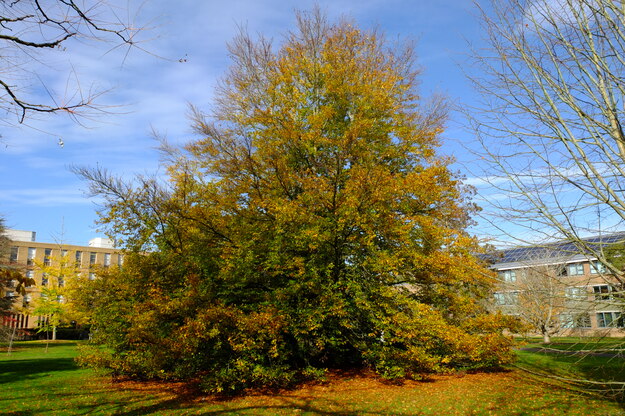
Whiteknights House WestSee all photos of this tree
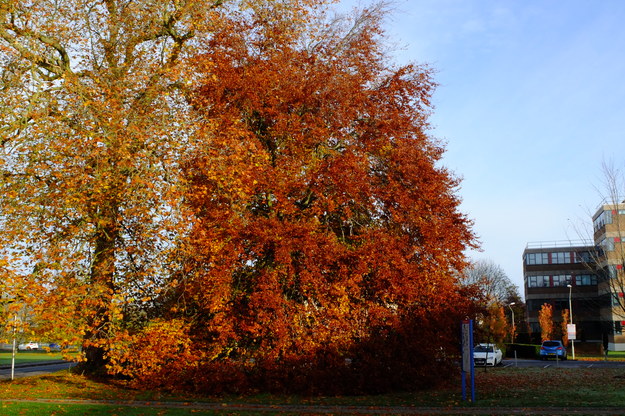
Zuckerman EastSee all photos of this tree
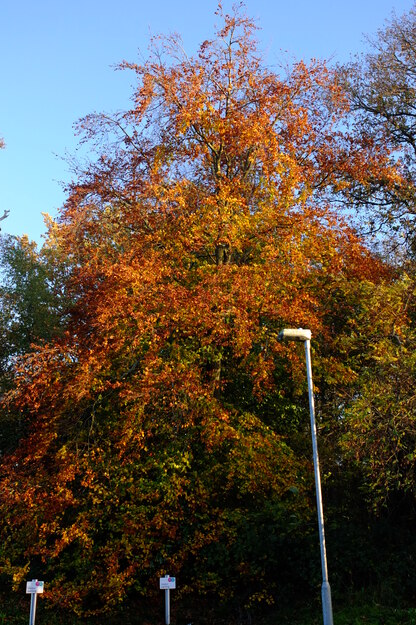
Harris GardenSee all photos of this tree
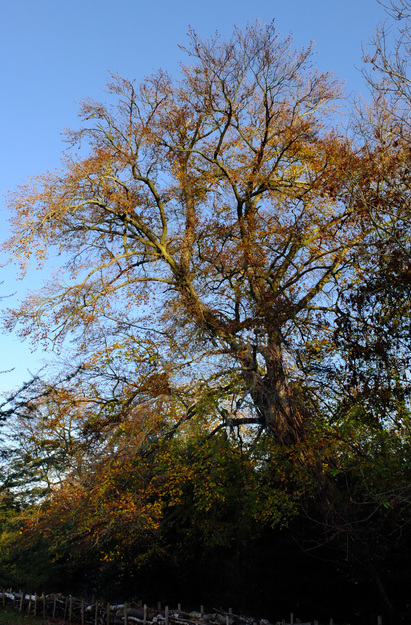
Silver Lime StreetSee all photos of this tree
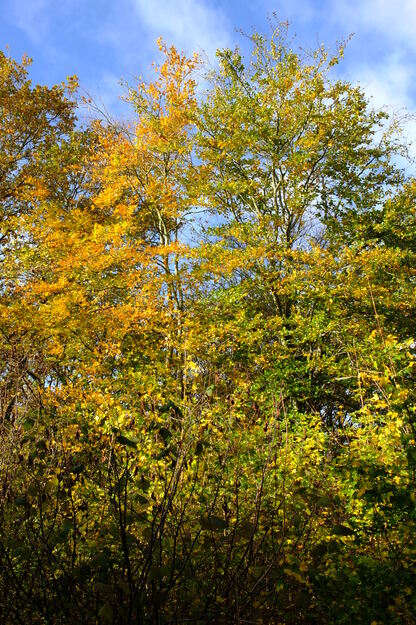
East lake woodSee all photos of this tree