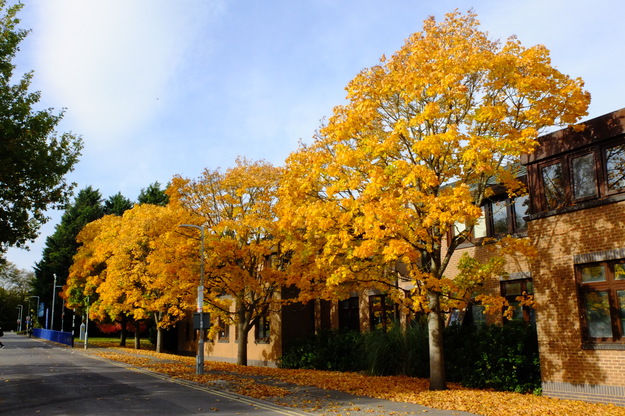
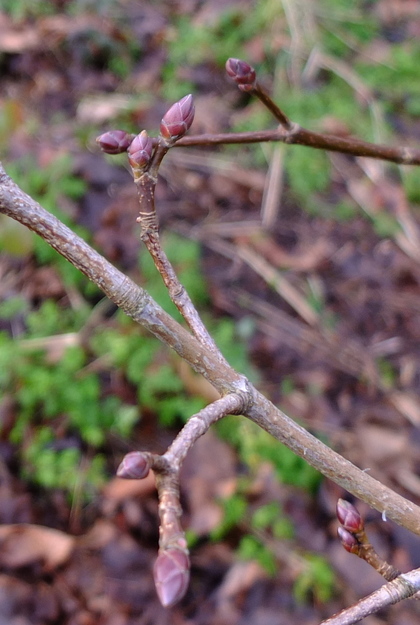
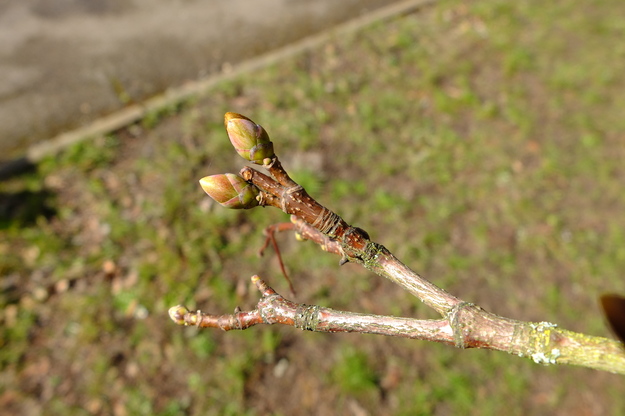
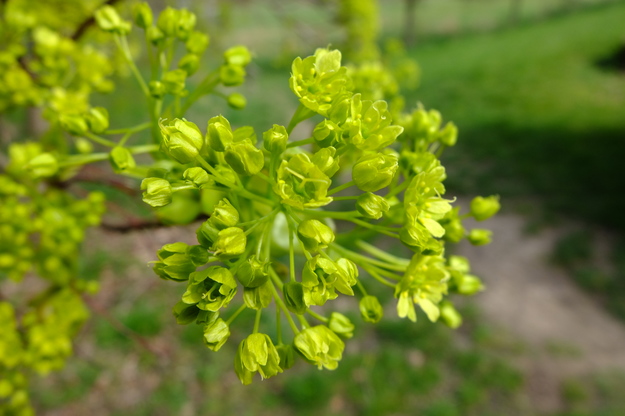
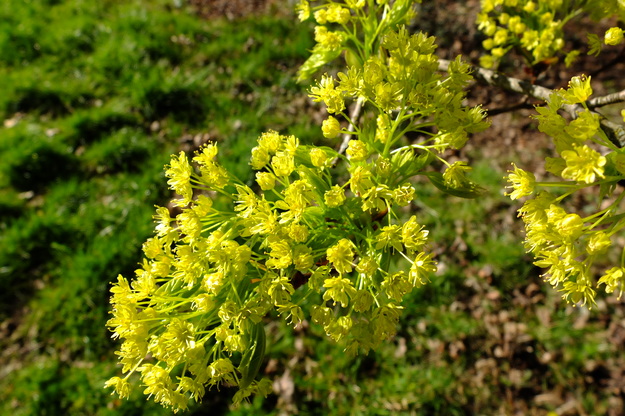
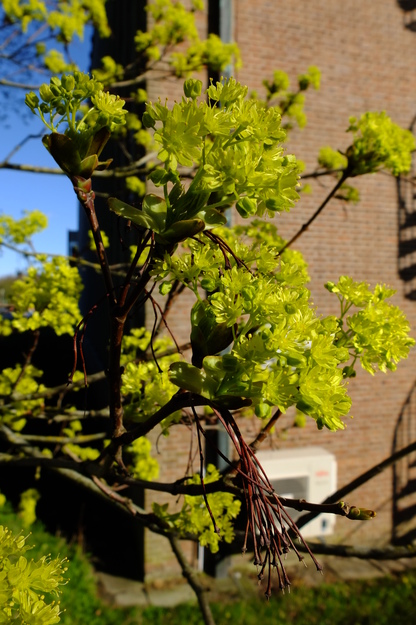
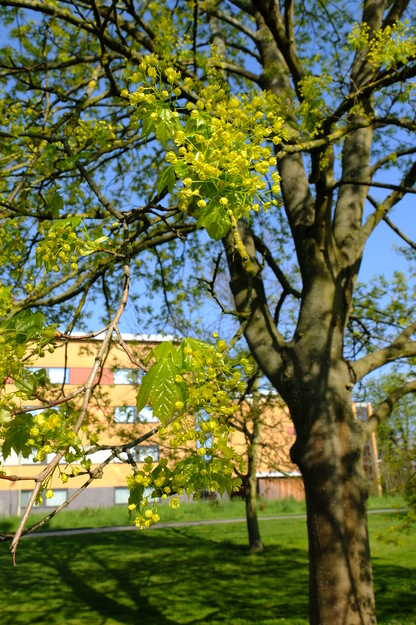
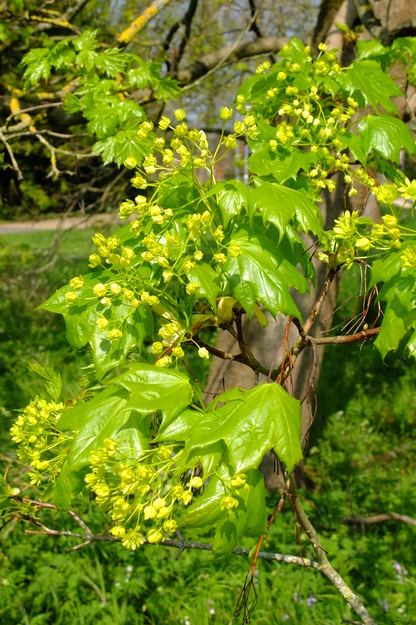
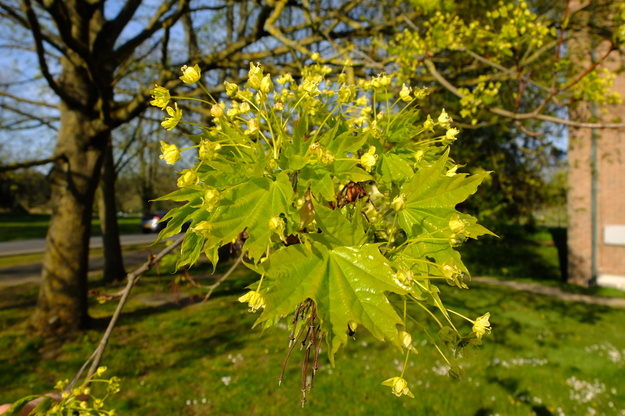
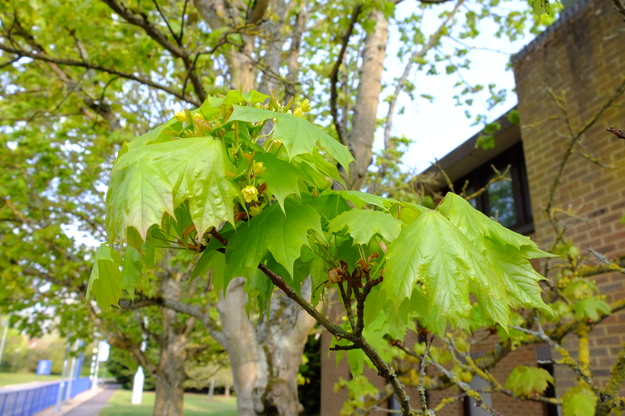
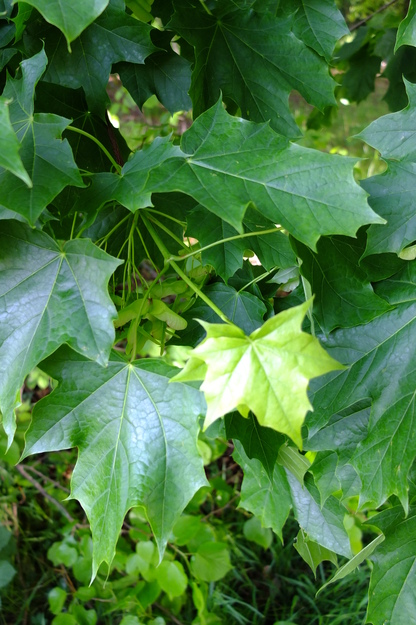
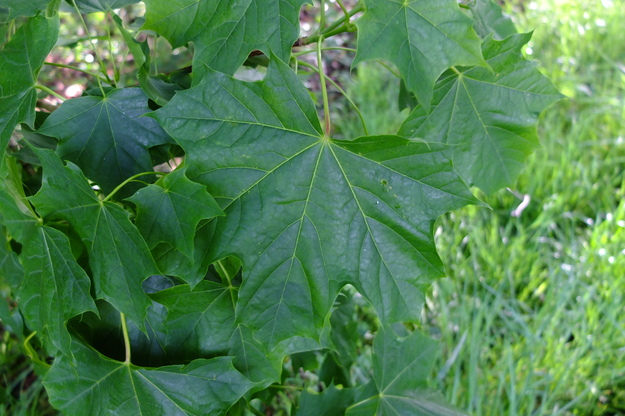
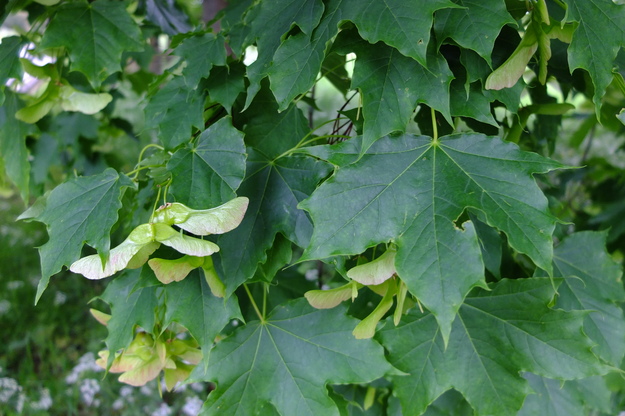
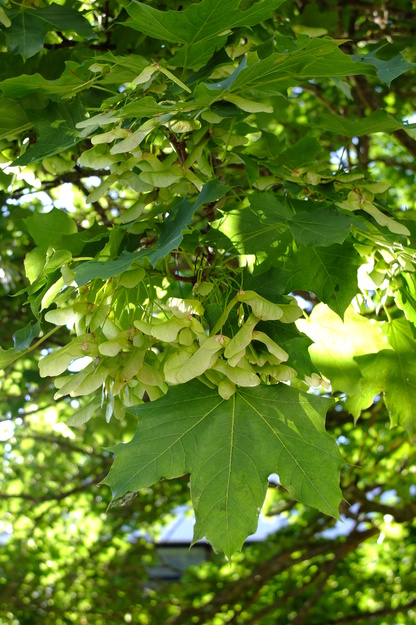
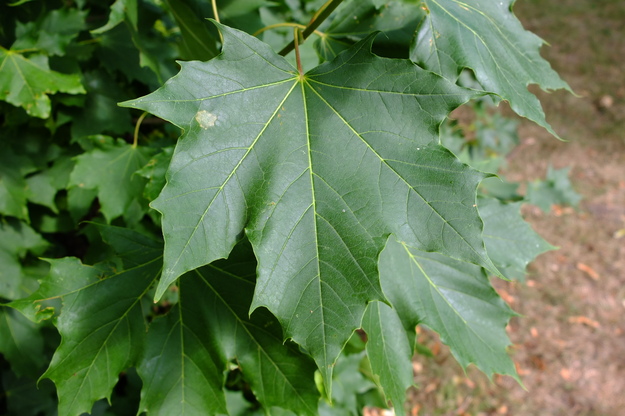
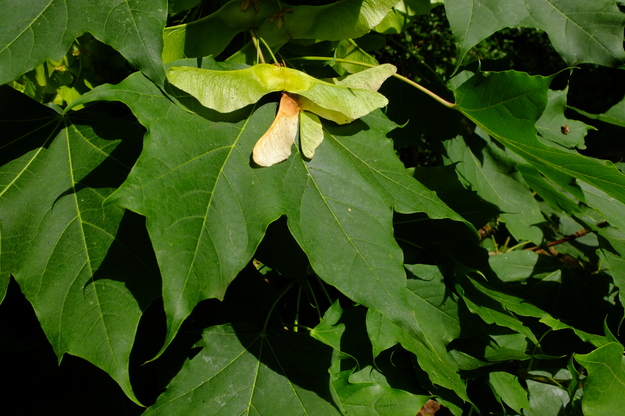
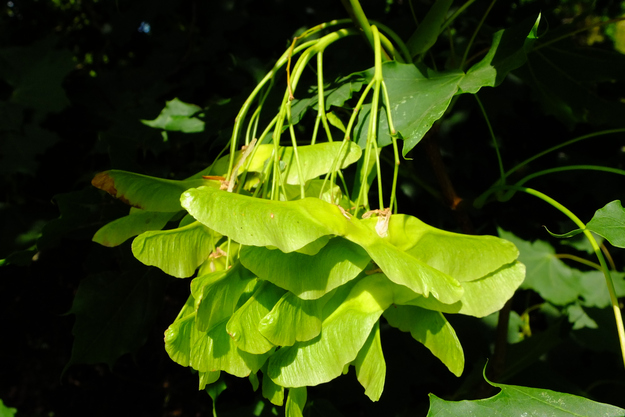
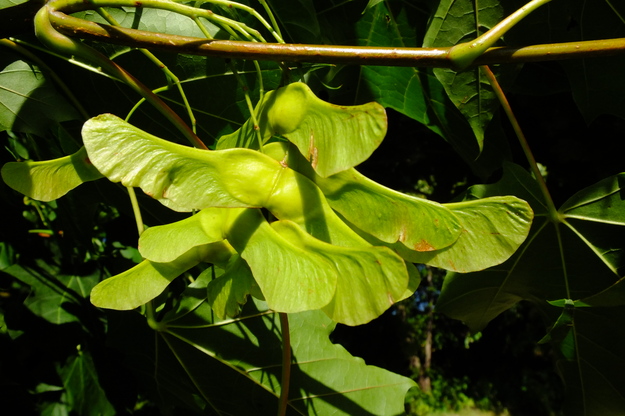
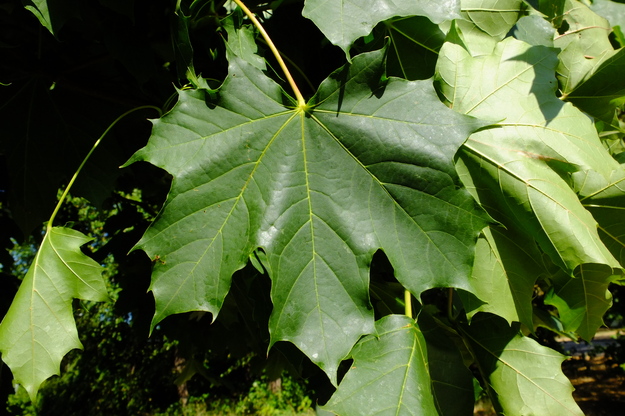
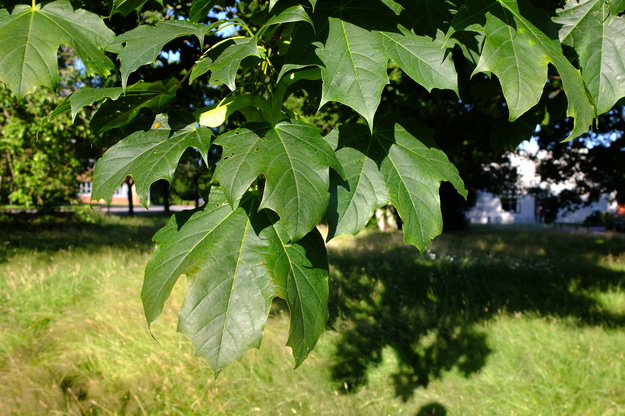
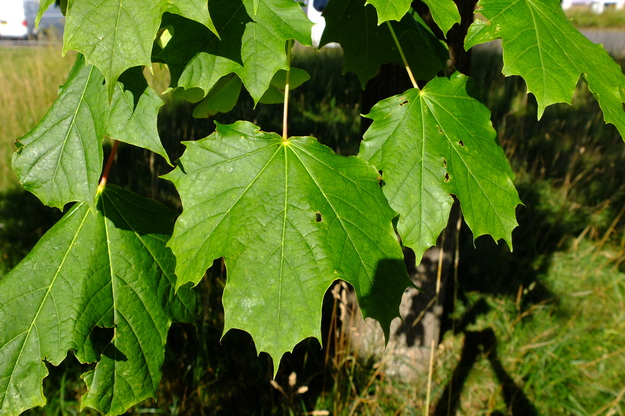
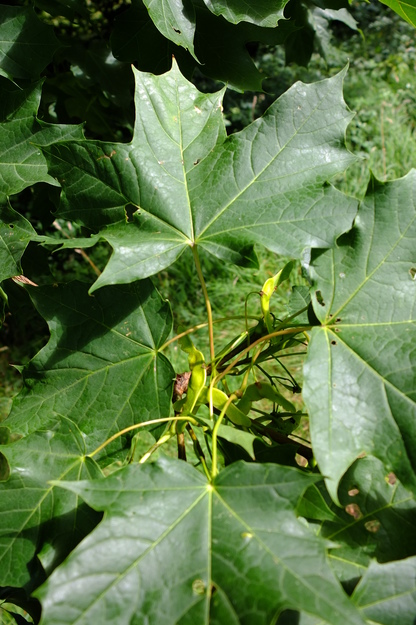
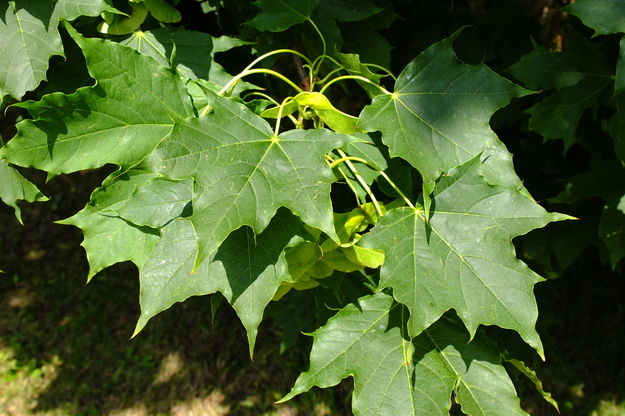
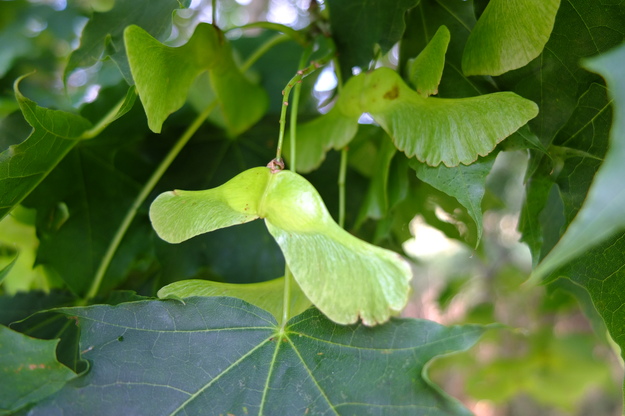
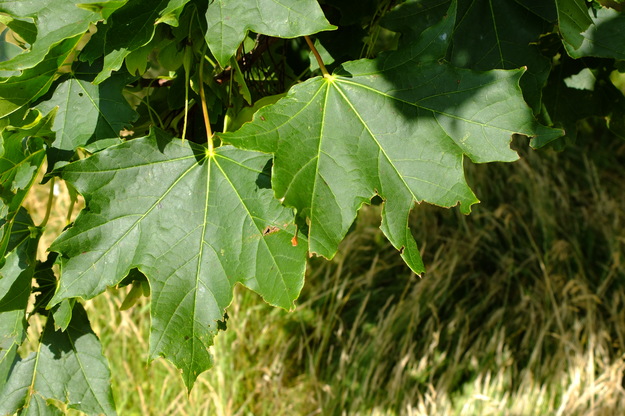
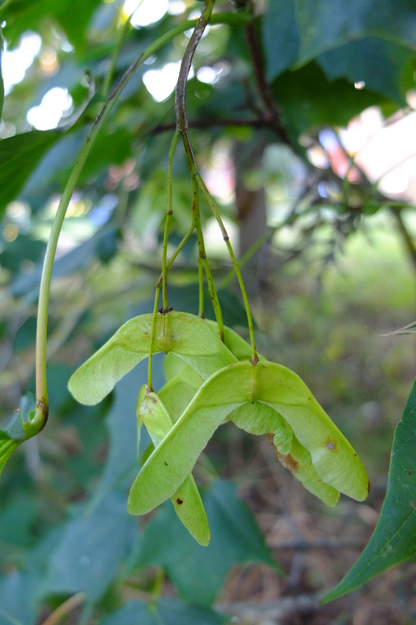
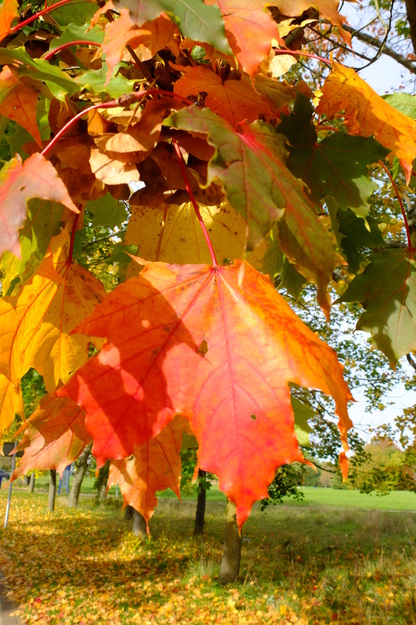
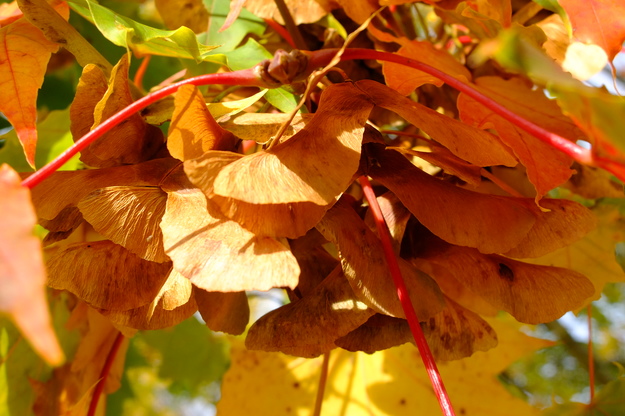
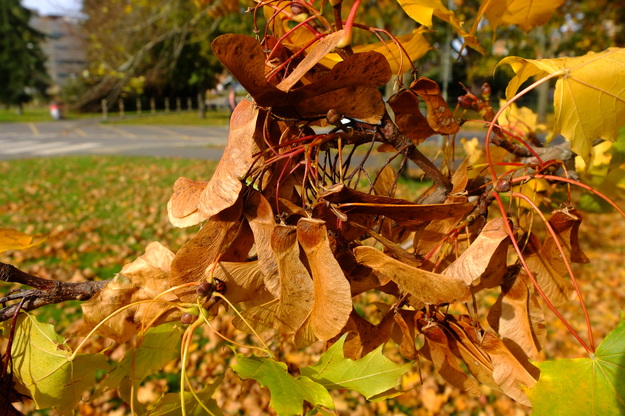
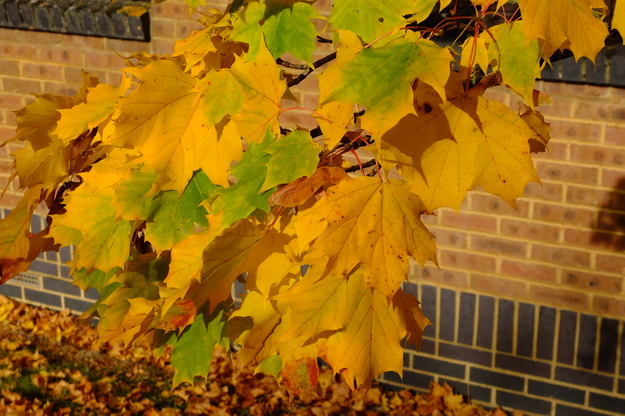
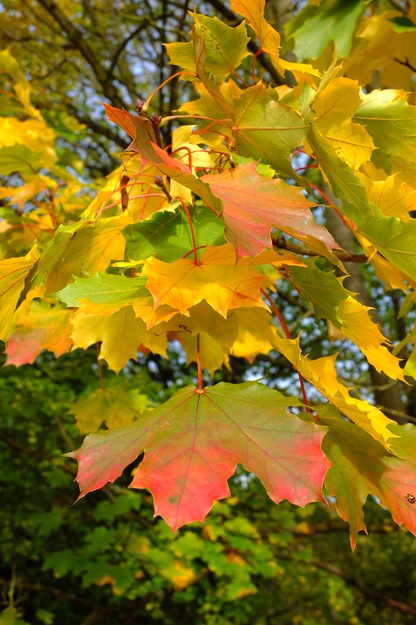
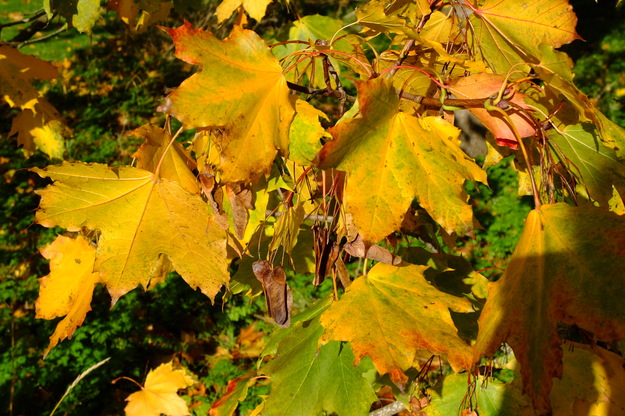
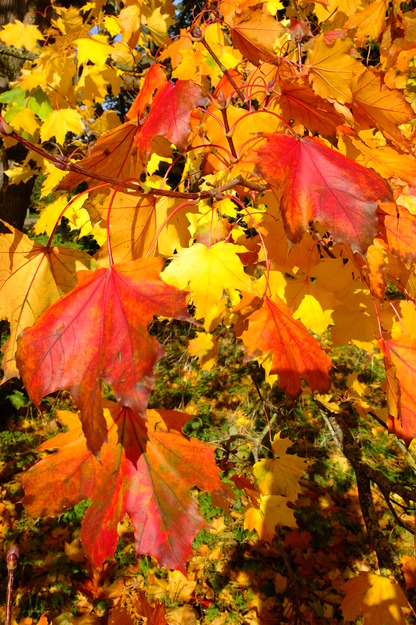
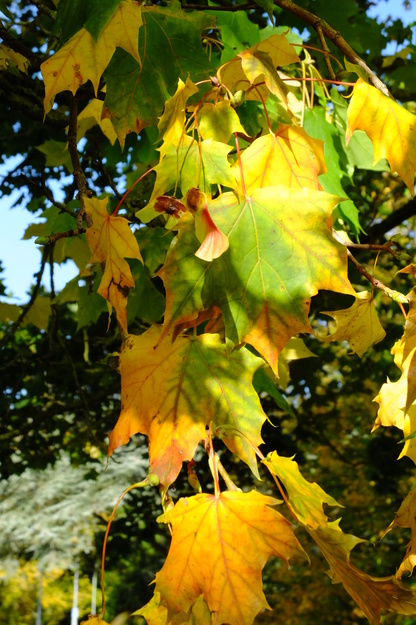
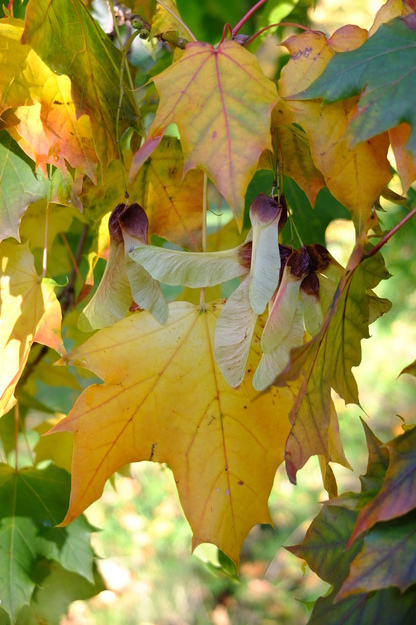
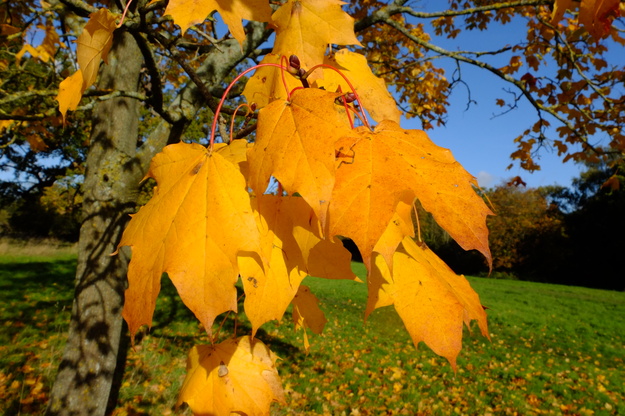
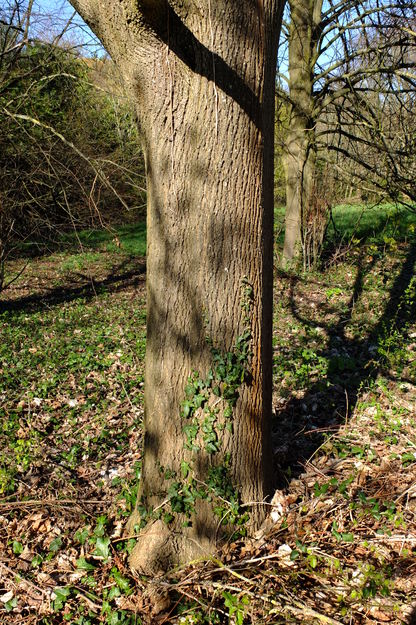
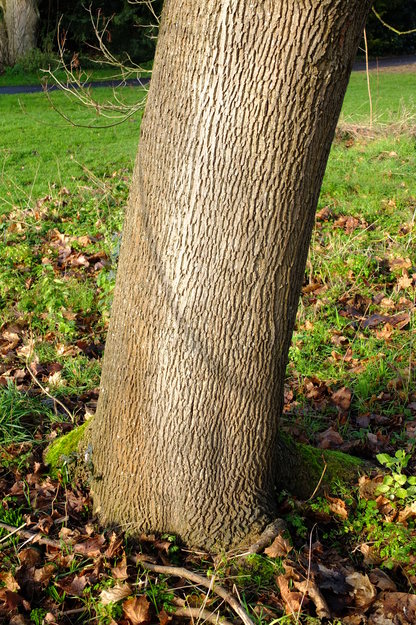
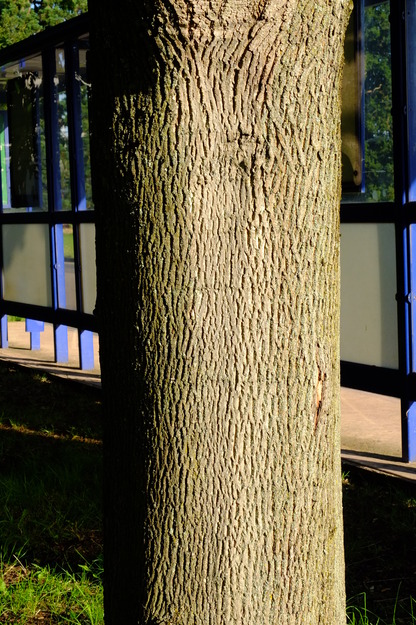
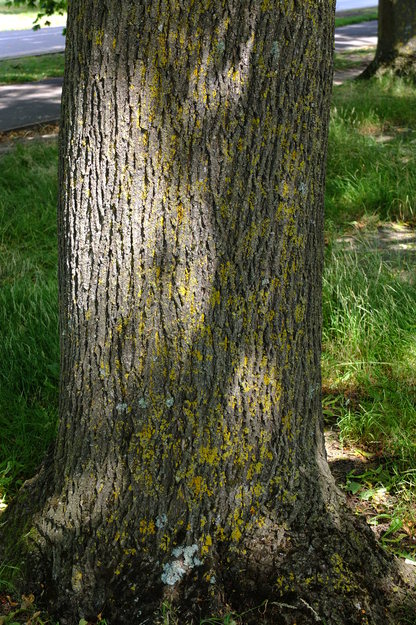
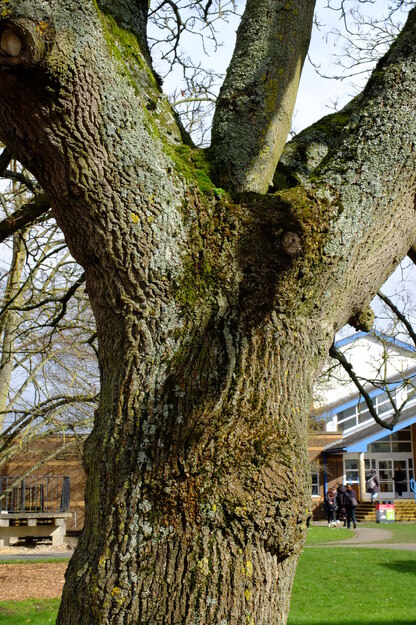
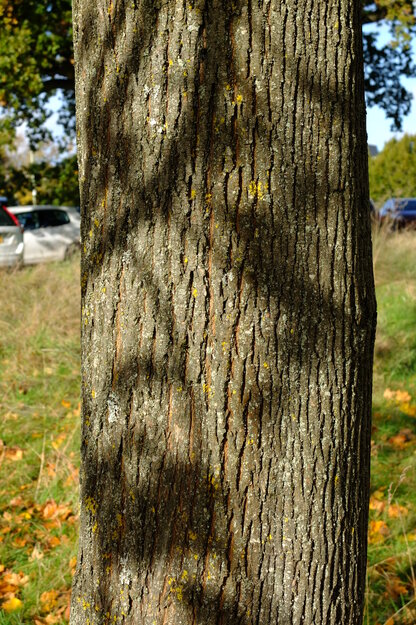
Acer platanoides is a species of deciduous broadleaf flowering plants (in the Sapindaceae or Soapberry family), native to Europe and western Asia. Acer platanoides is a large deciduous tree, recognisable from its broad, dense crown and distinctive large leaves that have five lobes, each with sharp points, often more than one point per lobe. In spring, Acer platanoides produces clusters of small yellow-green flowers before the leaves fully emerge, followed by widely angled pairs of winged seeds (samaras). (The leaves of Acer saccharum have rounded points, only one per lobe, and its samaras are horseshoe-shaped; see this comparison. The lobes of Acer pseudoplatanus leaves have blunt points, and its samaras are angled at 90 degrees or less.)
Tolerance to pollution, compacted soils and shade make Acer platanoides a popular street and park tree. However, it can become invasive where its dense canopy and prolific seed production may outcompete native vegetation. Its wood is used for furniture, flooring and musical instruments, especially for violins.
External webpages
about this species


about this species
How to use the map
Drag with your finger or mouse to move the map.
 Zoom in or out. You can also do this with the mousewheel or by pinching.
Marker of the position of an identified tree, while the map is zoomed out. For the details, zoom in until you see tree markers like the following …

 Clicking on a tree marker brings up a window (called a "popup")
identifying the species of the tree there, with a small photo of it and buttons
to display more photos and information. NB only a few hundred of the thousands
of trees are marked!
Clicking on a tree marker brings up a window (called a "popup")
identifying the species of the tree there, with a small photo of it and buttons
to display more photos and information. NB only a few hundred of the thousands
of trees are marked!
7Marker of a tree of the selected species; clicking it will zoom and centre the map on this tree, and bring up a photo of it in the frame.
 Marker of a British Isles champion tree in
The Tree Register.
Marker of a British Isles champion tree in
The Tree Register.
✕ Click the cross at the top right of any window, including this one, to get rid of it.
 ✕
Click to dismiss all the popups at once.
✕
Click to dismiss all the popups at once.
Choose alternative versions of the map. The tree markers, popups, map centre and zoom are all unaffected by switching.
 Turn on a flashing dot which tracks your live location on the map, surrounded
by a circle indicating the accuracy of the location. This will work
only if your device has a satellite navigation (GPS etc.) receiver which is
enabled and can acquire a signal. You will probably be asked to allow the
website to access "location services" the first time you press this button.
The button flashes orange while trying to locate you,
and green while your location is shown. Press it again to turn it off.
Turn on a flashing dot which tracks your live location on the map, surrounded
by a circle indicating the accuracy of the location. This will work
only if your device has a satellite navigation (GPS etc.) receiver which is
enabled and can acquire a signal. You will probably be asked to allow the
website to access "location services" the first time you press this button.
The button flashes orange while trying to locate you,
and green while your location is shown. Press it again to turn it off.
 Recentre the map on your present location, while live location is switched on.
 Reset the map to its original centre and zoom.
To click on a tree, zoom in until you see
tree markers
Childs lawnSee all photos of this tree
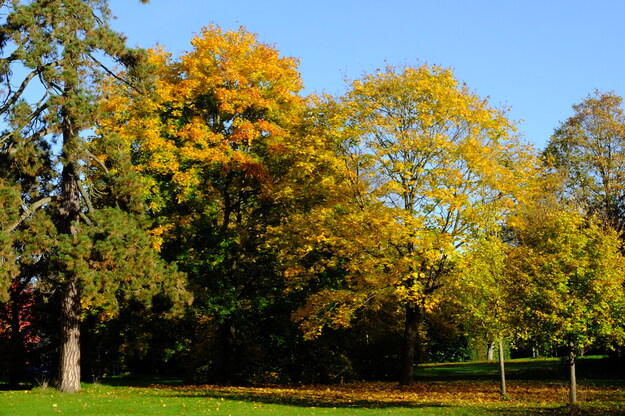
Childs lawnSee all photos of this tree
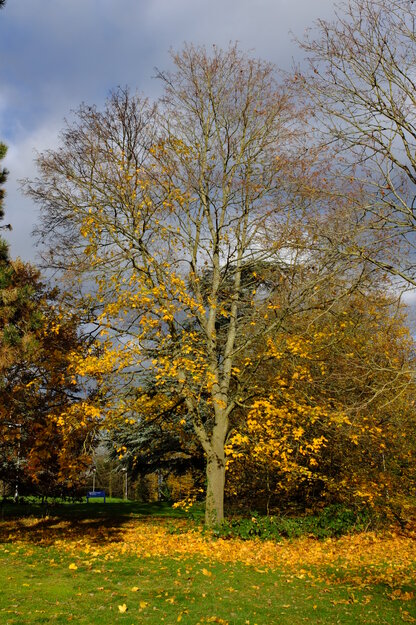
Carpark EatSee all photos of this tree
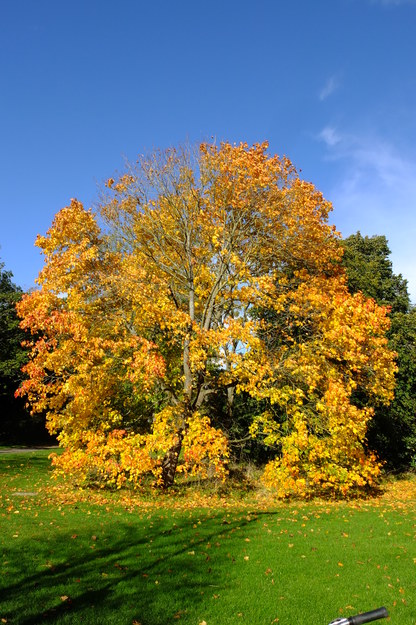
Henley HillSee all photos of this tree
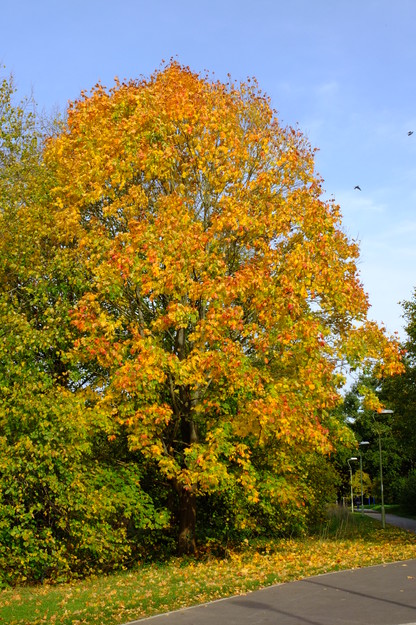
Minghella EastSee all photos of this tree
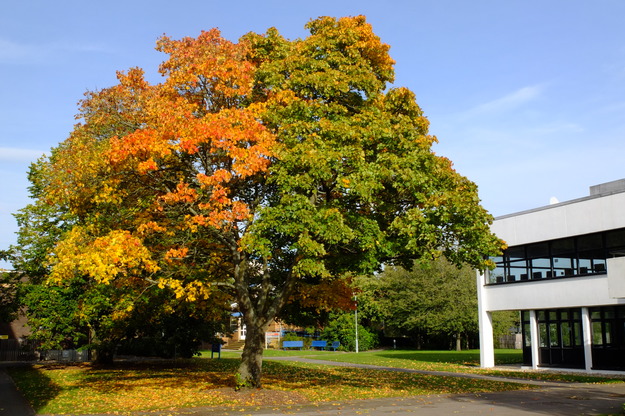
Nursery meadowSee all photos of this tree
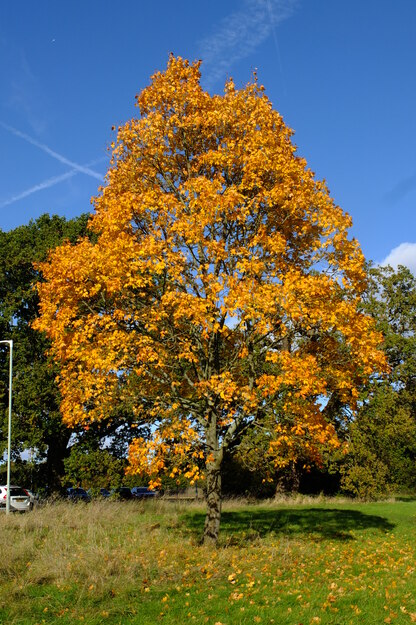
Chancellor's EastSee all photos of this tree
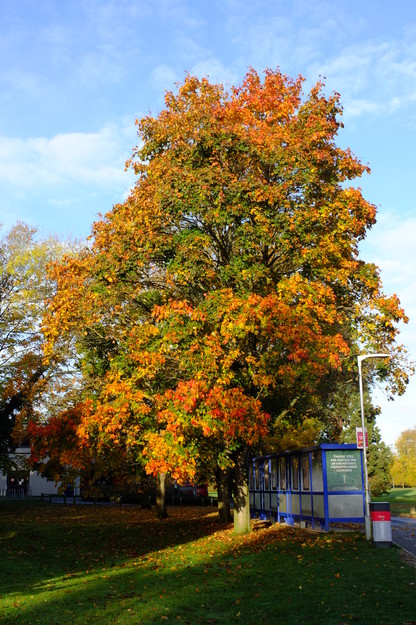
PharmacySee all photos of this tree
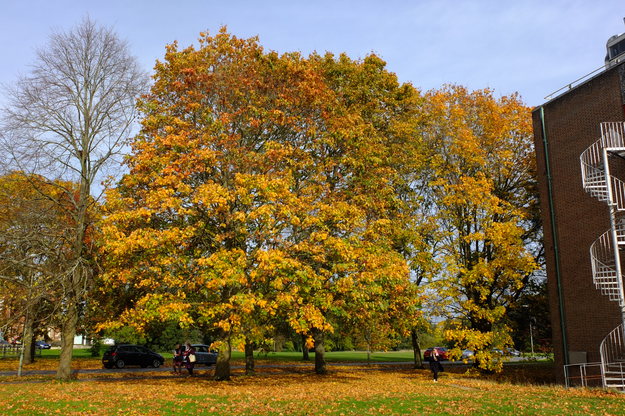
Southern meadowSee all photos of this tree
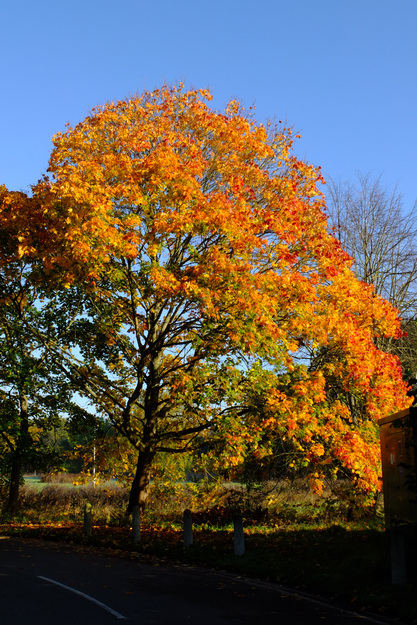
Polly Vacher SouthSee all photos of this tree