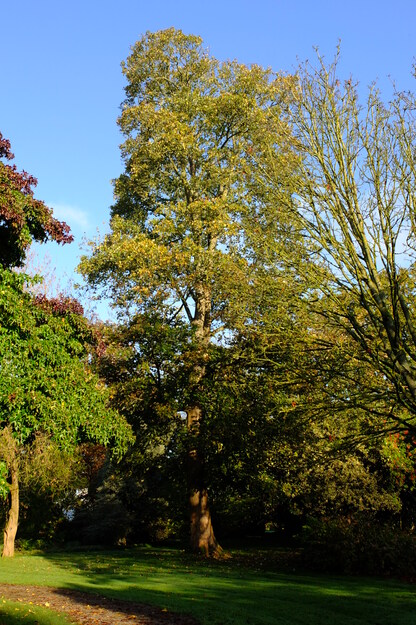
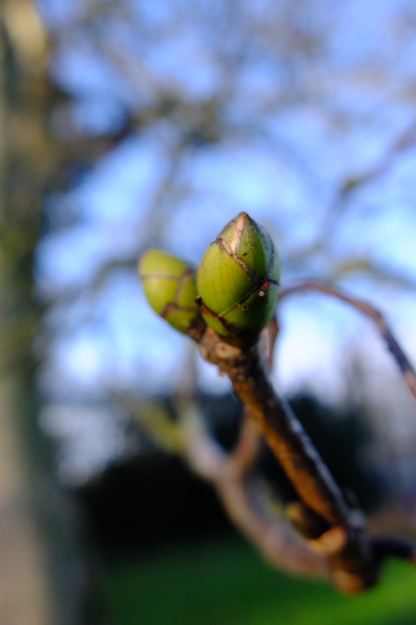
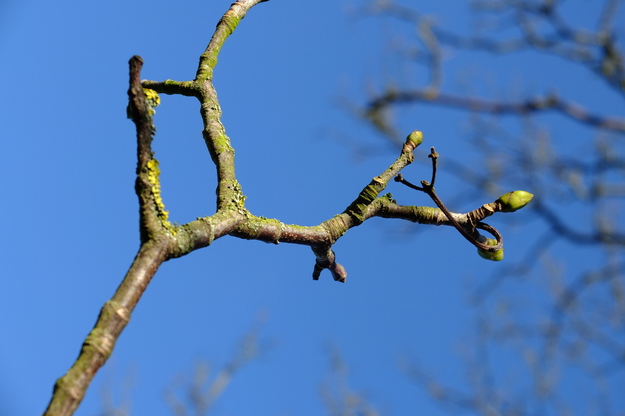
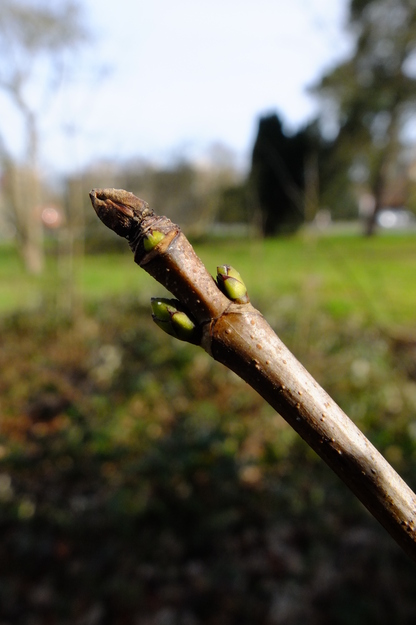
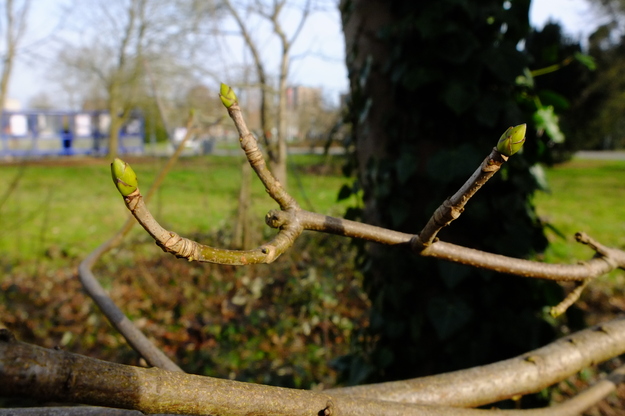
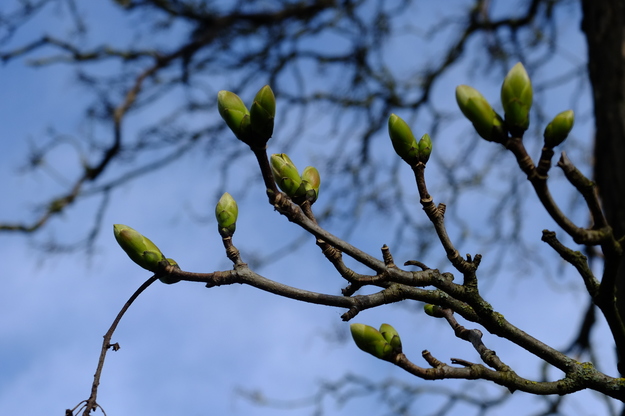
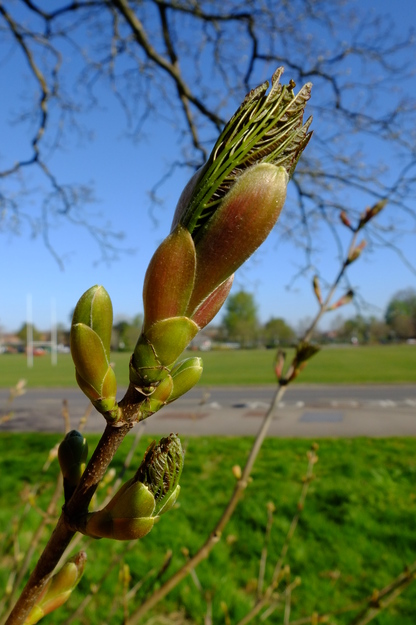
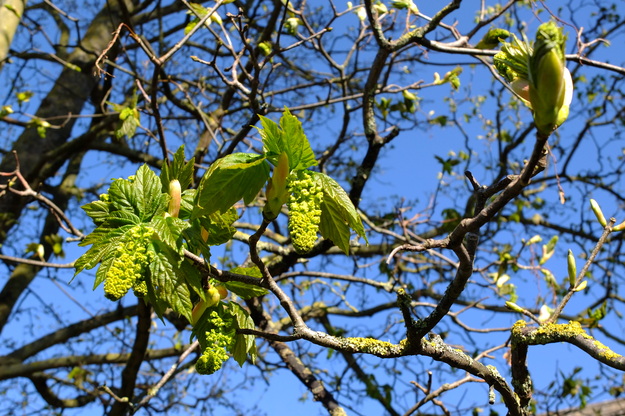
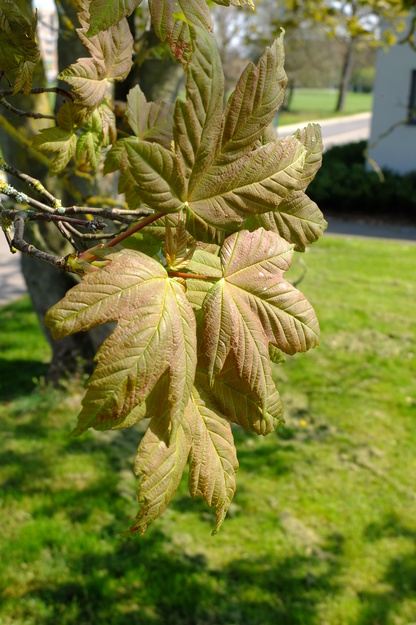
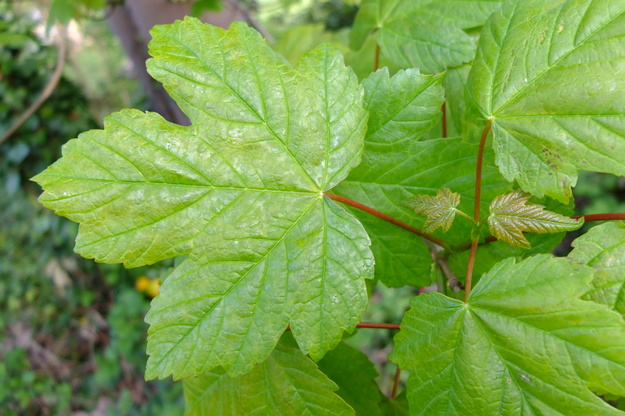
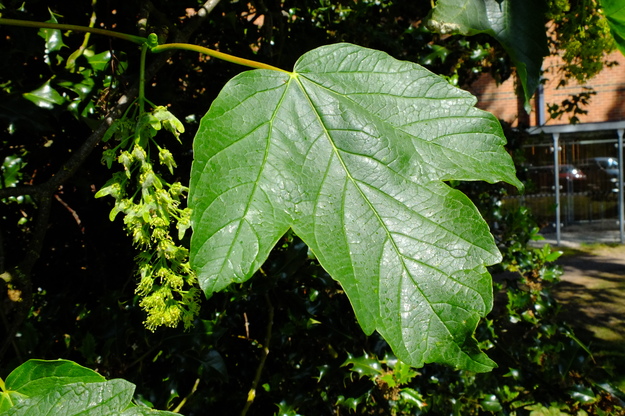
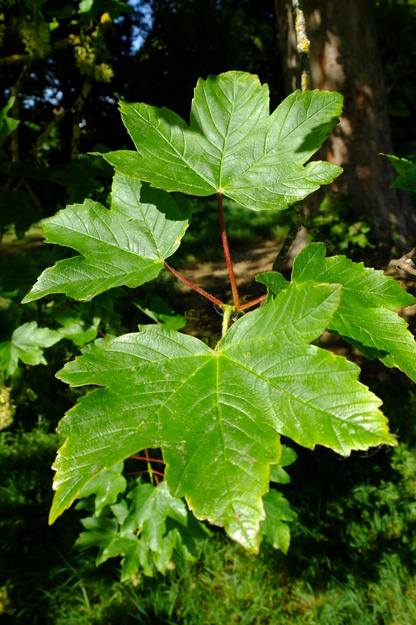
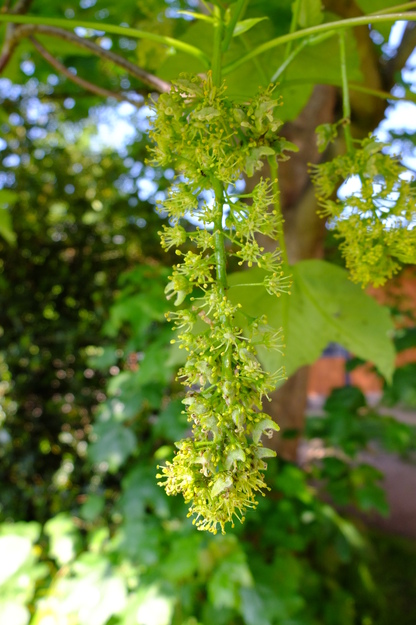
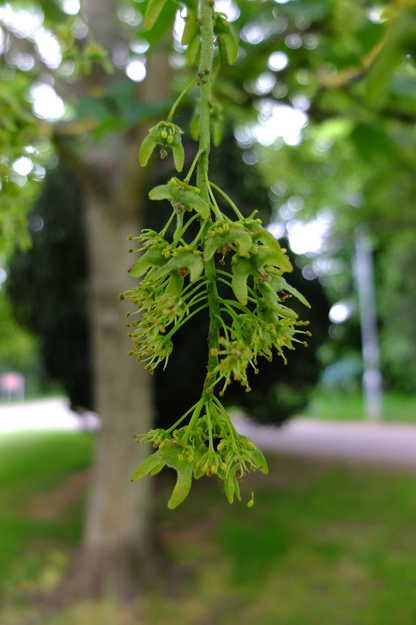
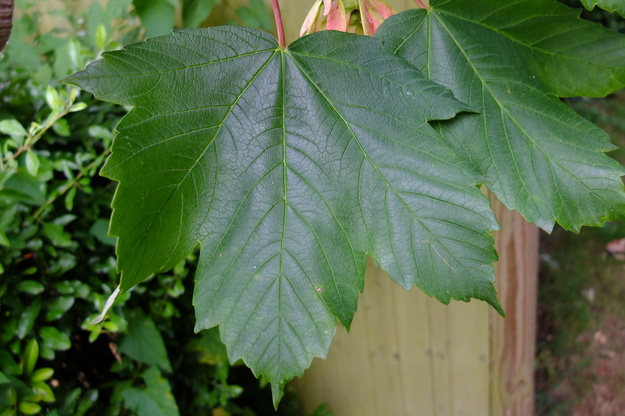
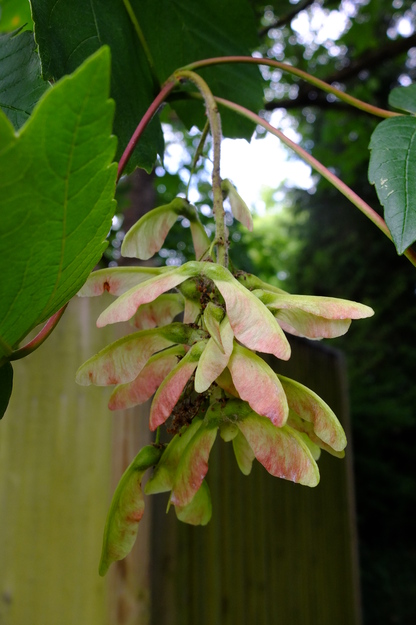
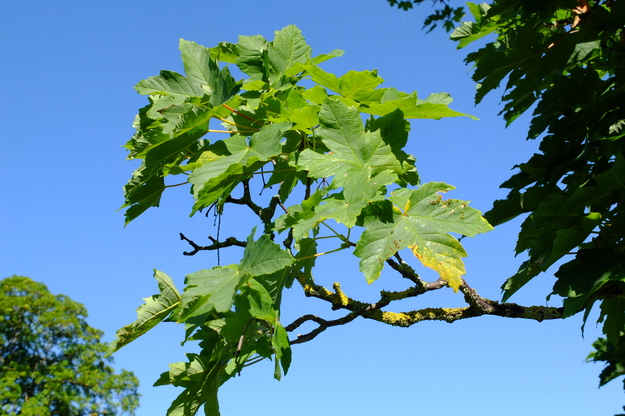
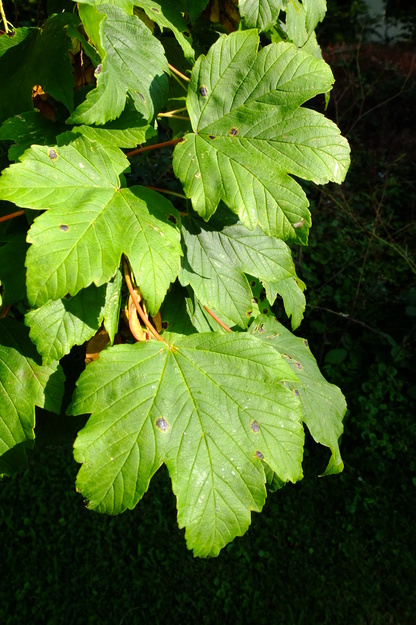
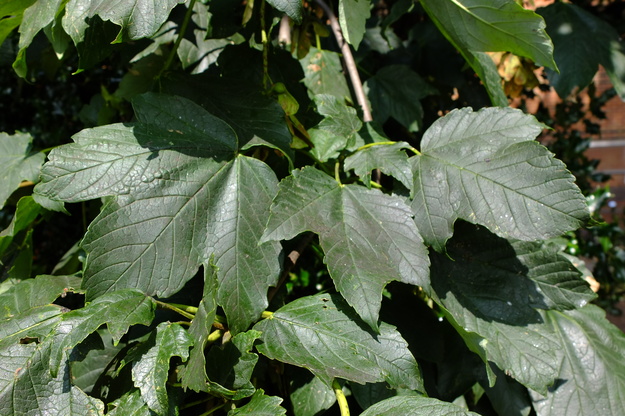
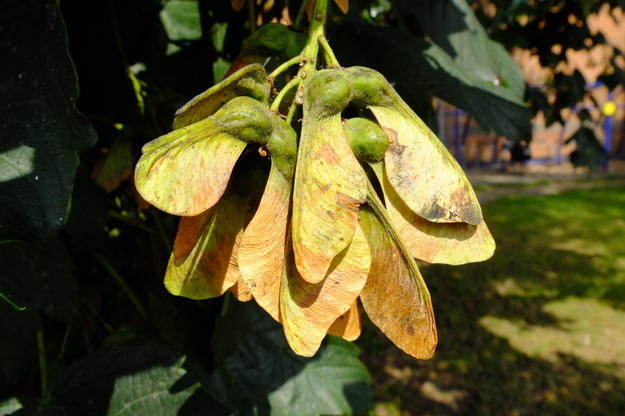
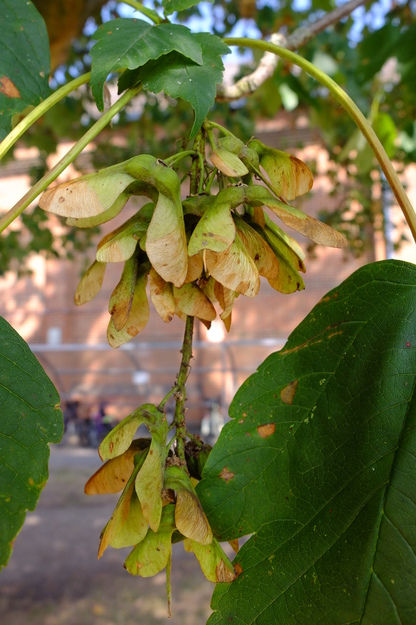
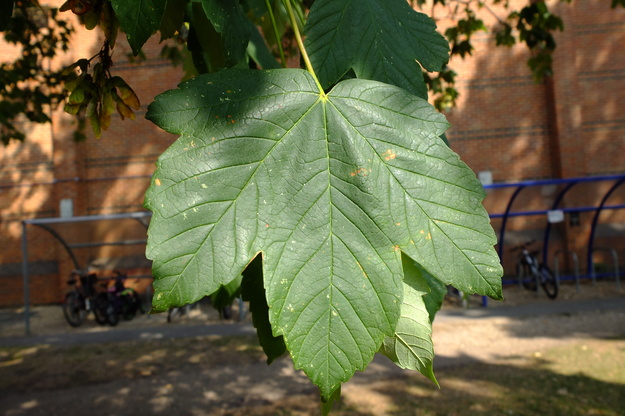
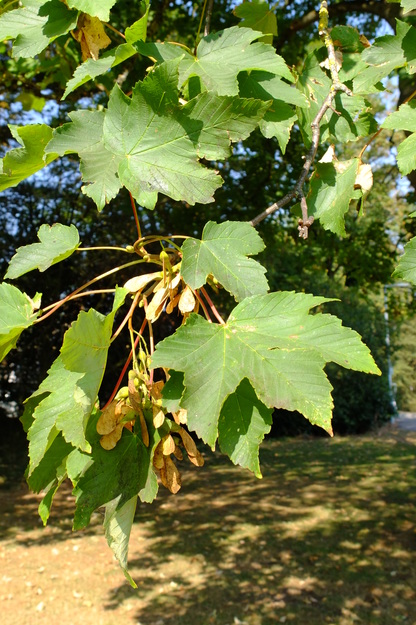
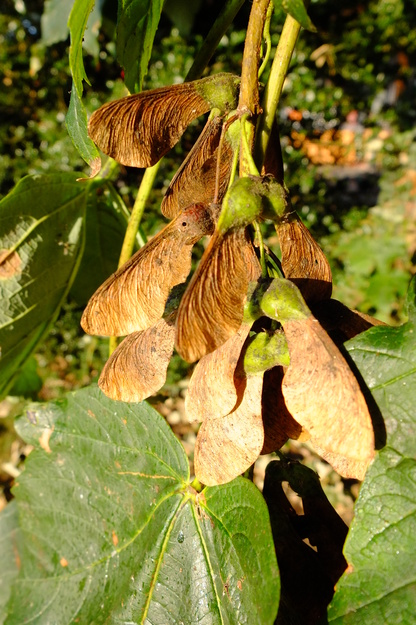
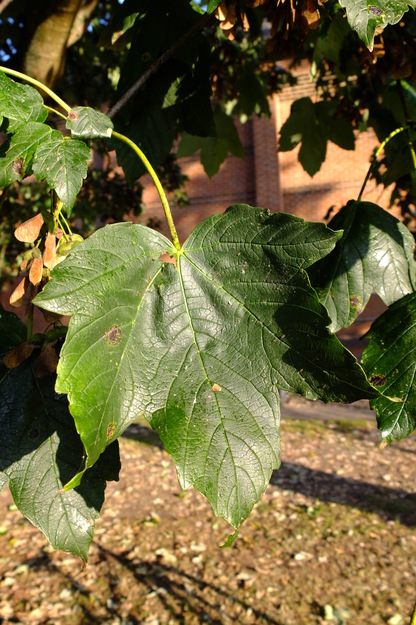
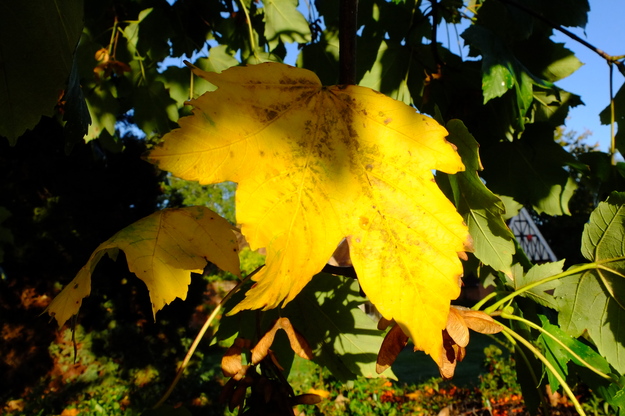
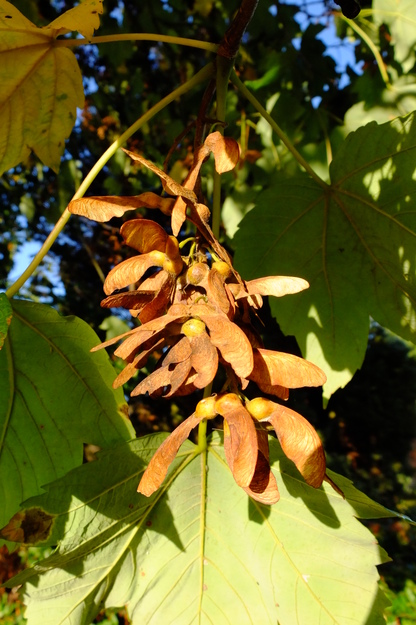
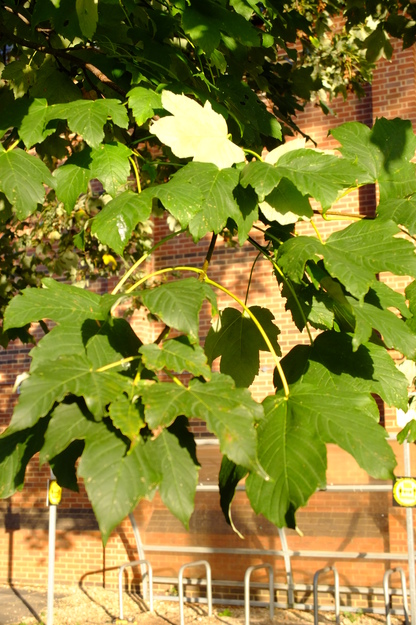
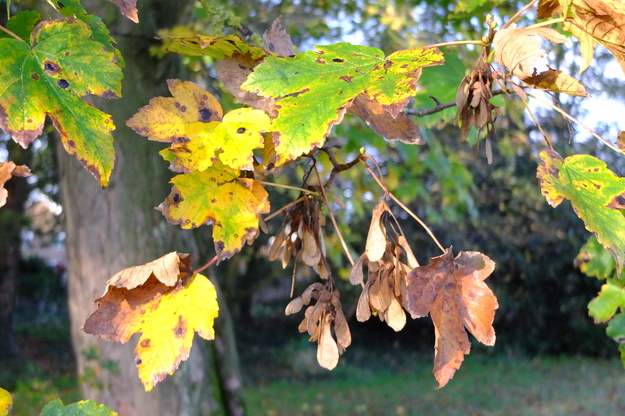
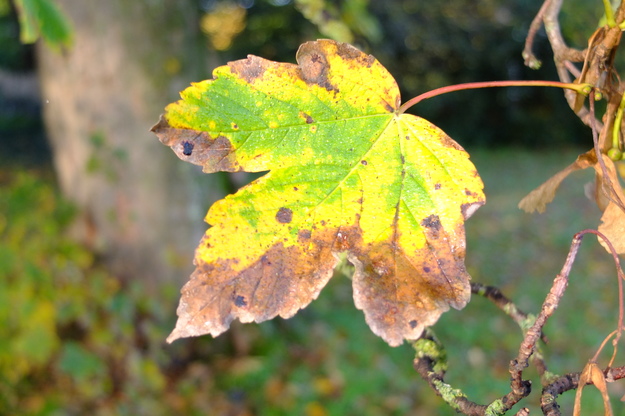
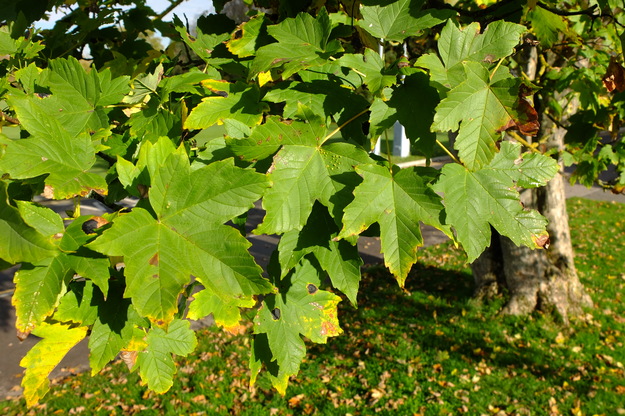
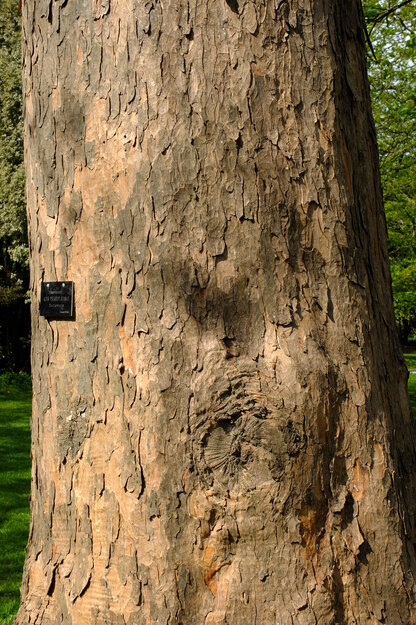
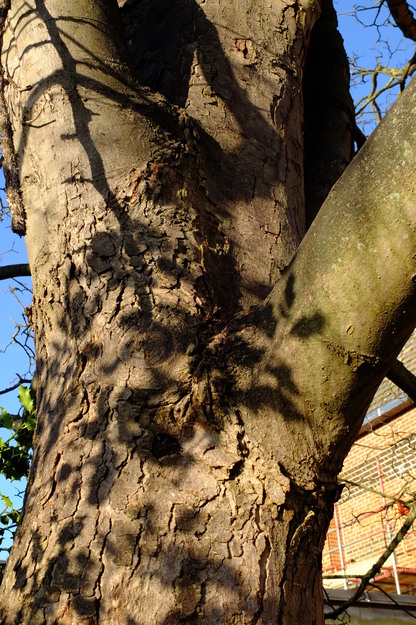
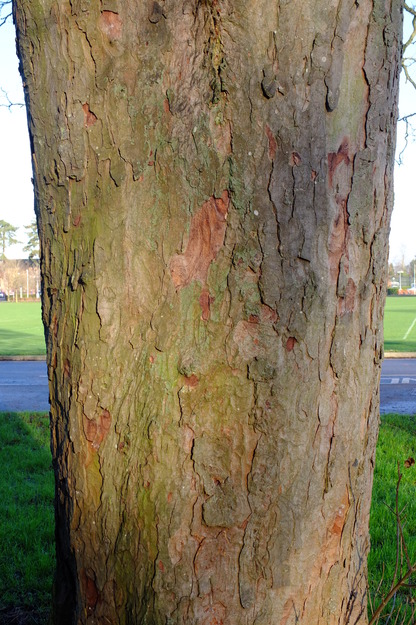
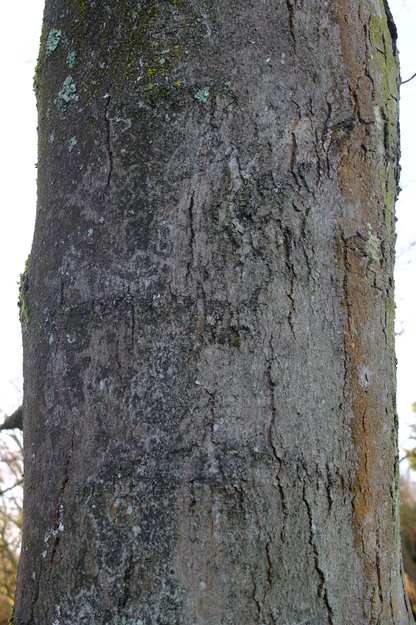
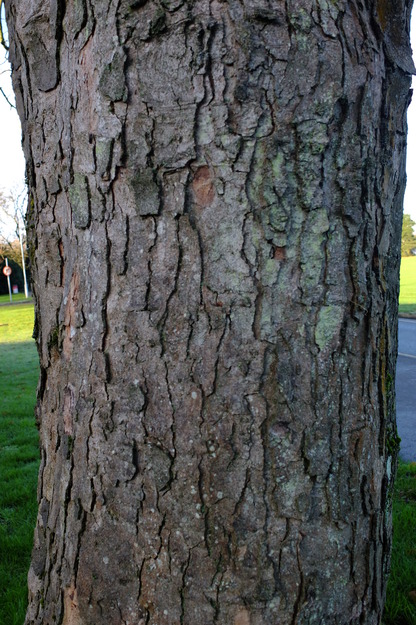
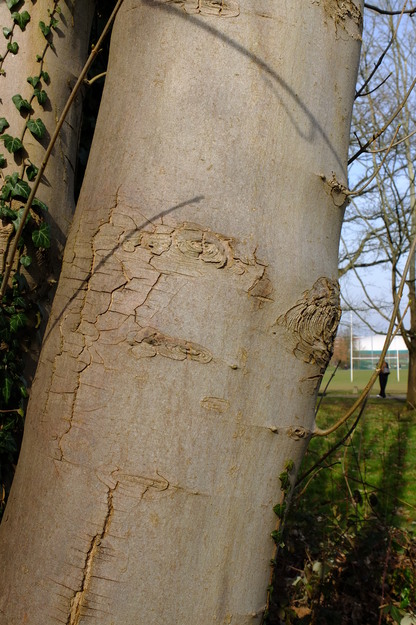
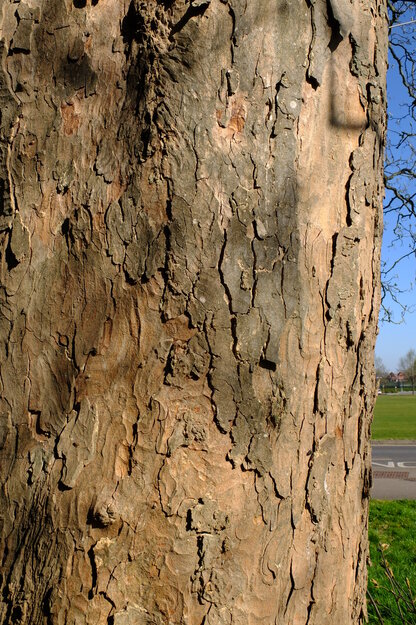
Acer pseudoplatanus is a species of deciduous broadleaf flowering plants (in the Sapindaceae or Soapberry family), native to central and southern Europe and the Caucasus, and naturalised in Britain. Acer pseudoplatanus can live to 400 years and grow to 35 metres tall. Its broad, rounded crown and dense foliage provide excellent shade. It has large five-lobed leaves with blunt points, and often with black spots, due to a fungus. The tree produces hanging clusters of small, greenish-yellow flowers in spring that develop into winged seeds (samaras), joined in pairs at an angle of 90 degrees or less. (The leaves of Acer saccharum have round-ended points, only one per lobe, and its samaras are horseshoe-shaped. The leaves of Acer platanoides have sharp points, often more than one per lobe, and its samaras are widely angled.)
On account of its adaptability, attractive form and relatively fast growth, Acer pseudoplatanus is often planted along streets, in parks and woodlands, and by reforestation and ecological restoration projects. It was introduced to Britain from mainland Europe, probably in the Middle Ages, and has been planted outside Europe as well, becoming an invasive species in some regions. Its creamy-white close-grained timber is used for musical instruments, furniture, joinery, wood flooring and kitchen utensils.
The Sycamore Gap Tree was a sycamore standing next to Hadrian's Wall in Northumberland, illegally felled in 2023. The Tolpuddle Martyrs' Tree is a sycamore in Dorset under which six agricultural labourers formed an early trades union in 1834, for which they were tried and transported to Australia, but three years later were reprieved and returned to Britain following public protest.
External webpages
about this species


about this species
How to use the map
Drag with your finger or mouse to move the map.
 Zoom in or out. You can also do this with the mousewheel or by pinching.
Marker of the position of an identified tree, while the map is zoomed out. For the details, zoom in until you see tree markers like the following …

 Clicking on a tree marker brings up a window (called a "popup")
identifying the species of the tree there, with a small photo of it and buttons
to display more photos and information. NB only a few hundred of the thousands
of trees are marked!
Clicking on a tree marker brings up a window (called a "popup")
identifying the species of the tree there, with a small photo of it and buttons
to display more photos and information. NB only a few hundred of the thousands
of trees are marked!
7Marker of a tree of the selected species; clicking it will zoom and centre the map on this tree, and bring up a photo of it in the frame.
 Marker of a British Isles champion tree in
The Tree Register.
Marker of a British Isles champion tree in
The Tree Register.
✕ Click the cross at the top right of any window, including this one, to get rid of it.
 ✕
Click to dismiss all the popups at once.
✕
Click to dismiss all the popups at once.
Choose alternative versions of the map. The tree markers, popups, map centre and zoom are all unaffected by switching.
 Turn on a flashing dot which tracks your live location on the map, surrounded
by a circle indicating the accuracy of the location. This will work
only if your device has a satellite navigation (GPS etc.) receiver which is
enabled and can acquire a signal. You will probably be asked to allow the
website to access "location services" the first time you press this button.
The button flashes orange while trying to locate you,
and green while your location is shown. Press it again to turn it off.
Turn on a flashing dot which tracks your live location on the map, surrounded
by a circle indicating the accuracy of the location. This will work
only if your device has a satellite navigation (GPS etc.) receiver which is
enabled and can acquire a signal. You will probably be asked to allow the
website to access "location services" the first time you press this button.
The button flashes orange while trying to locate you,
and green while your location is shown. Press it again to turn it off.
 Recentre the map on your present location, while live location is switched on.
 Reset the map to its original centre and zoom.
To click on a tree, zoom in until you see
tree markers
Chancellor's EastSee all photos of this tree
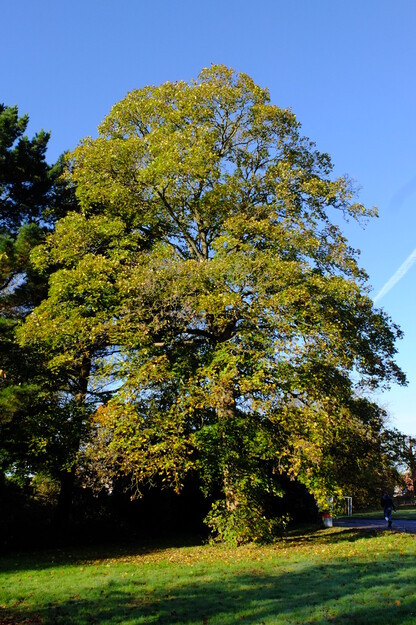
Chancellor's SouthSee all photos of this tree
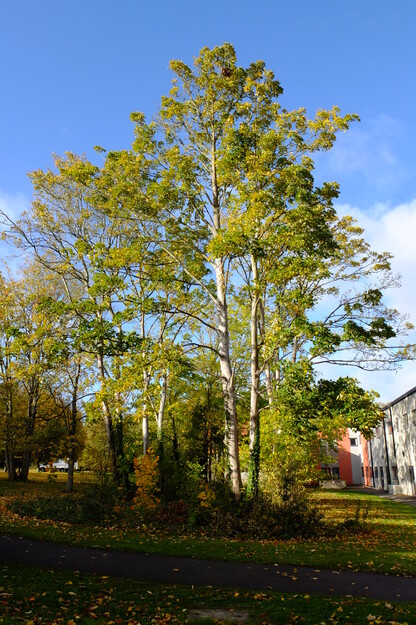
Chancellor's EastSee all photos of this tree
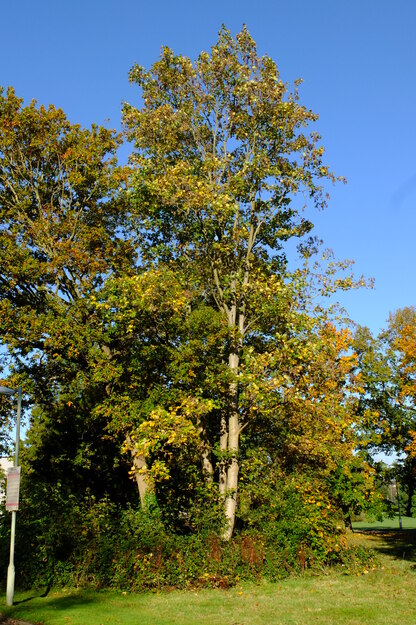
Fountain StreetSee all photos of this tree
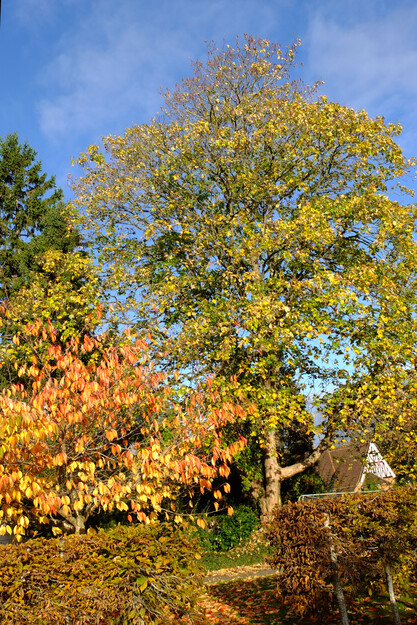
Harris GardenSee all photos of this tree