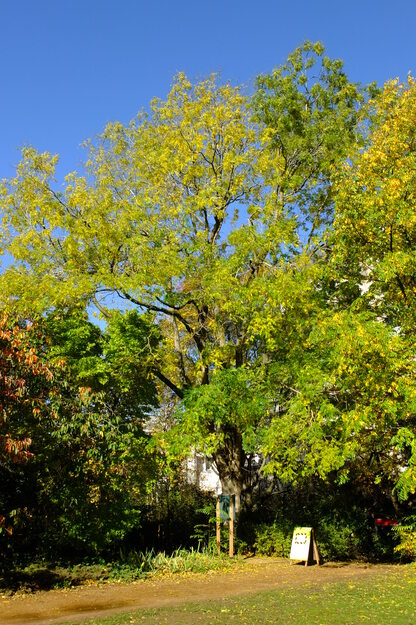
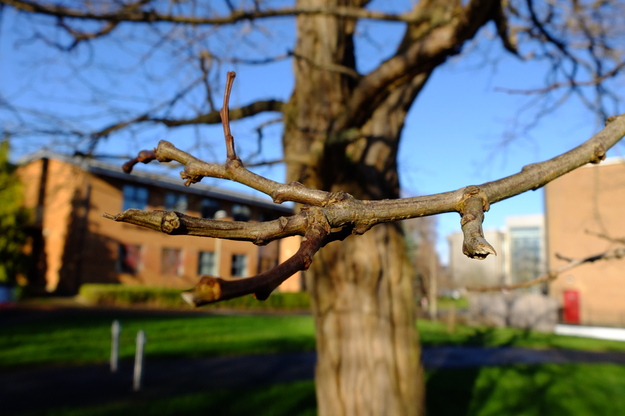
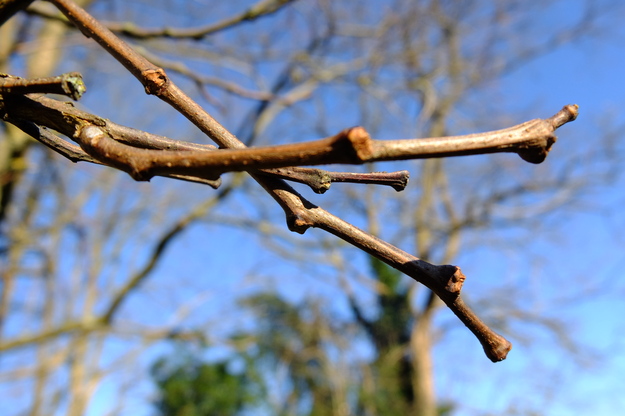
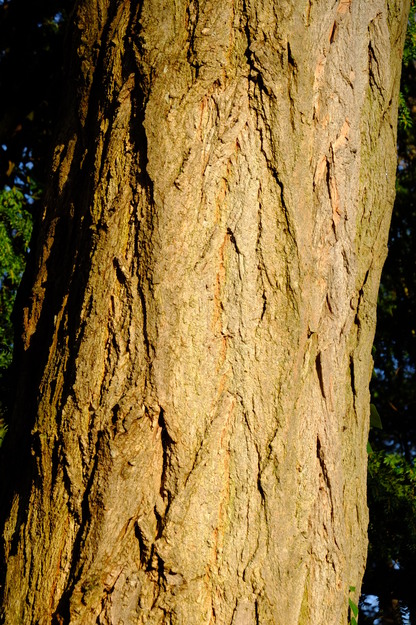
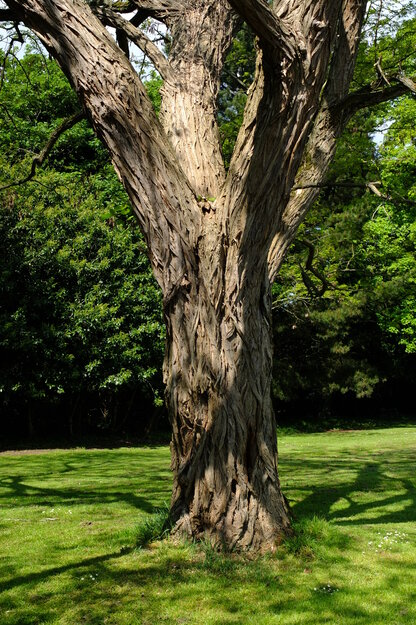
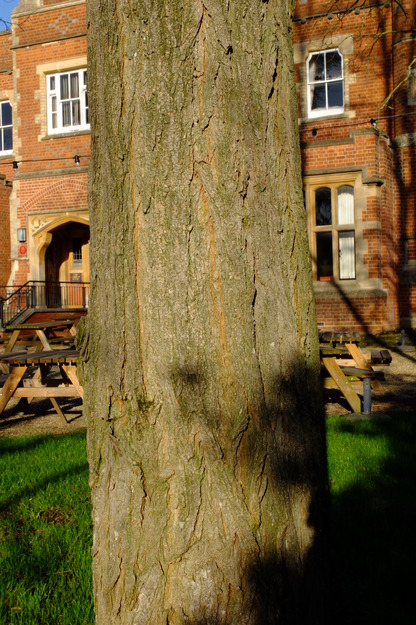
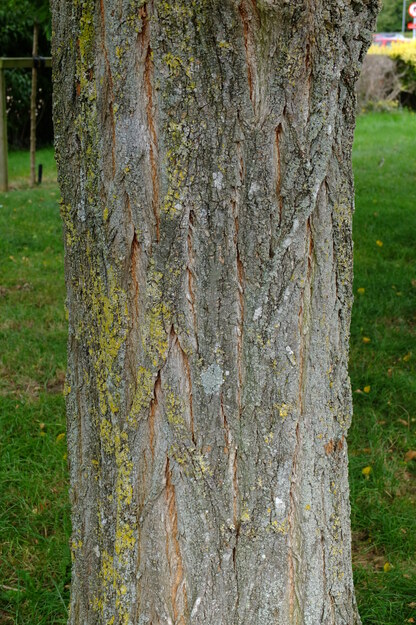
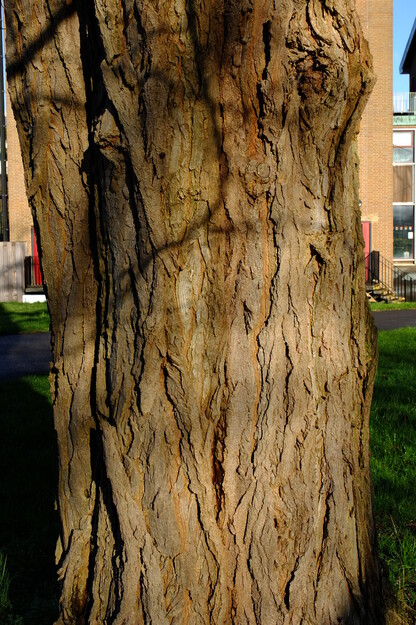
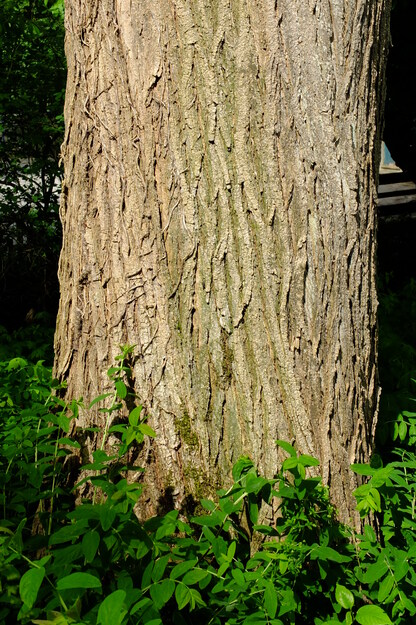
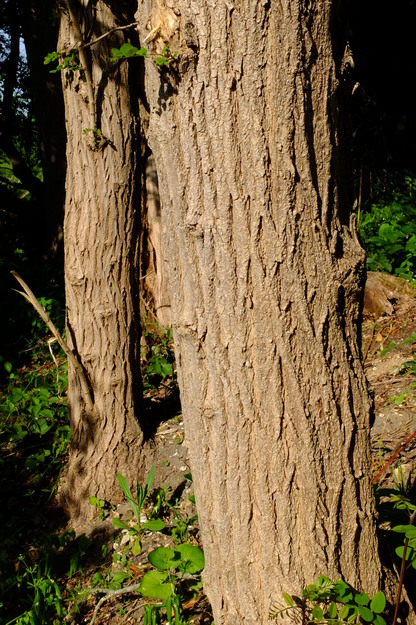
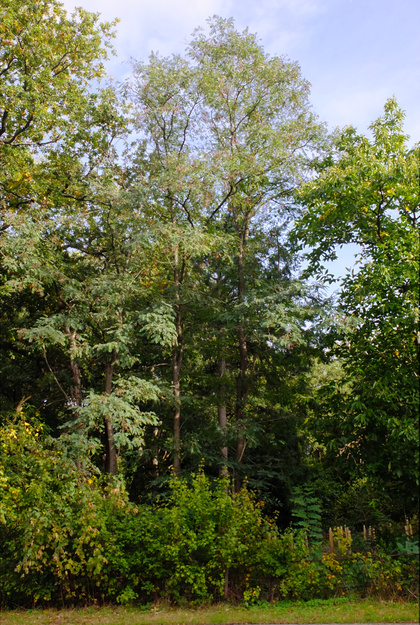
Robinia pseudoacacia is a species of deciduous broadleaf flowering plants (in the Fabaceae or Legume, pea or bean family), native to the Appalachian and Ozark mountains of eastern North America. It is a fast-growing tree, which can reach 30 metres. Its bark is reddish-brown or grey and deeply furrowed, with criss-crossing ridges. The tree forms a relatively narrow but spacious crown, which casts light shade. It is widely planted as ornamental in parks and streets.
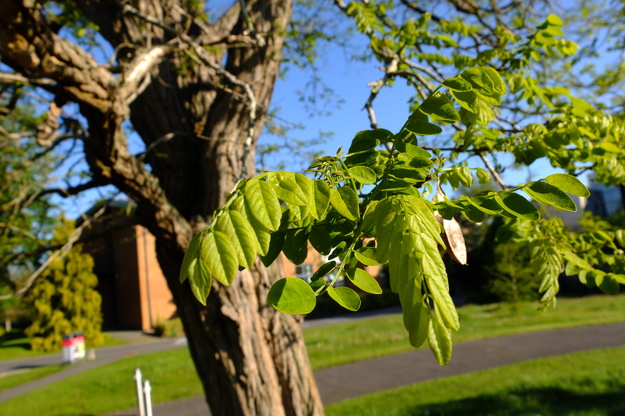
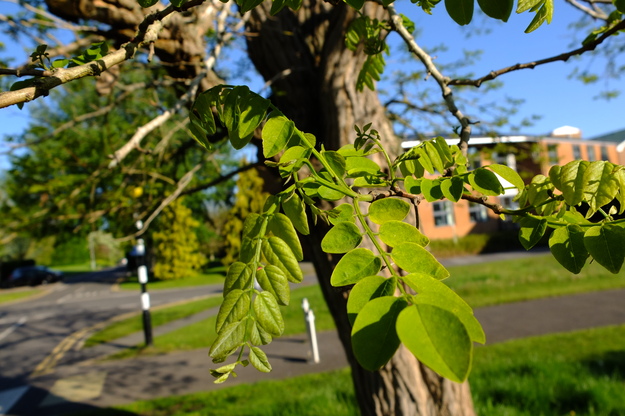
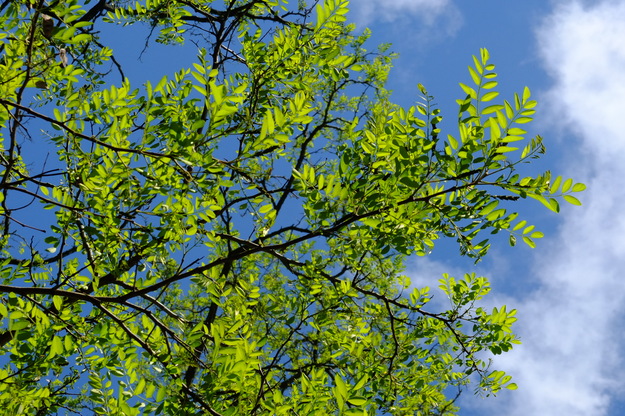
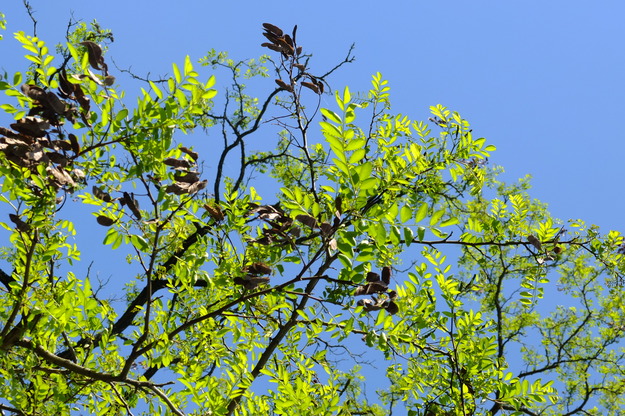
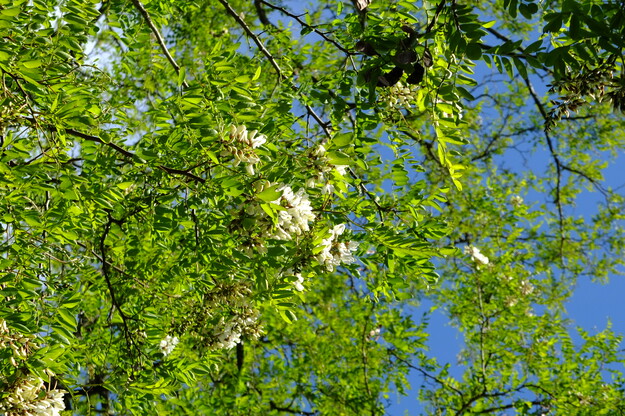
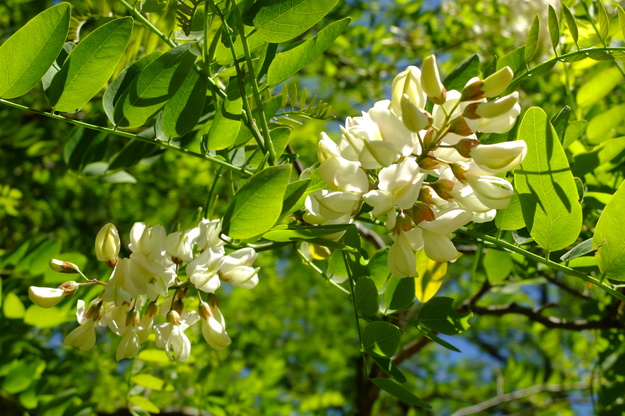
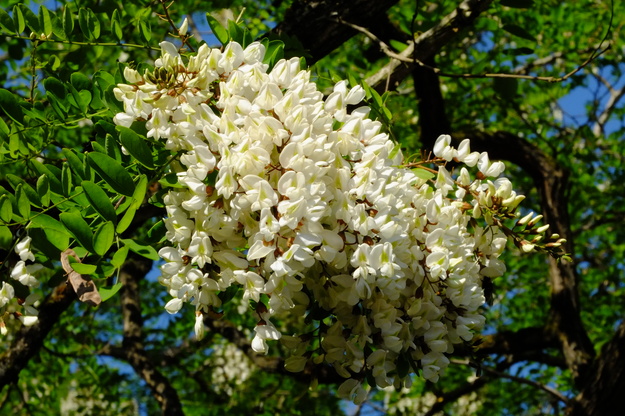
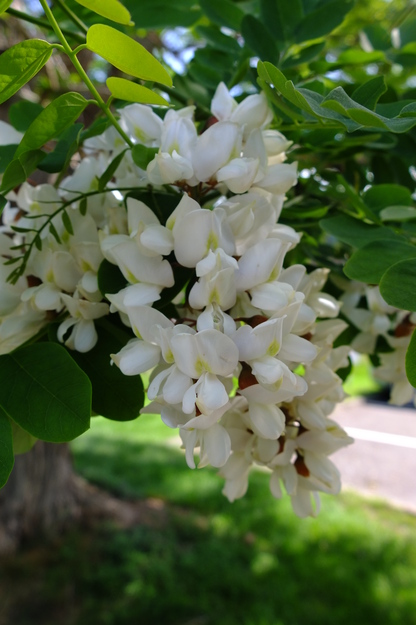
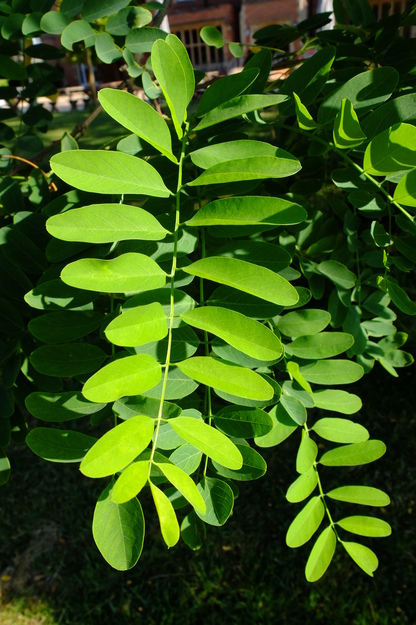
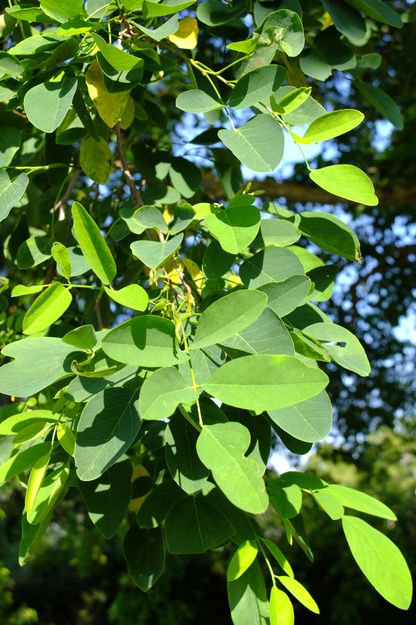
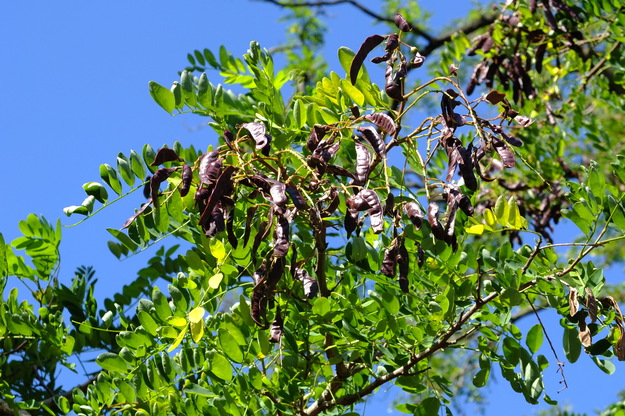
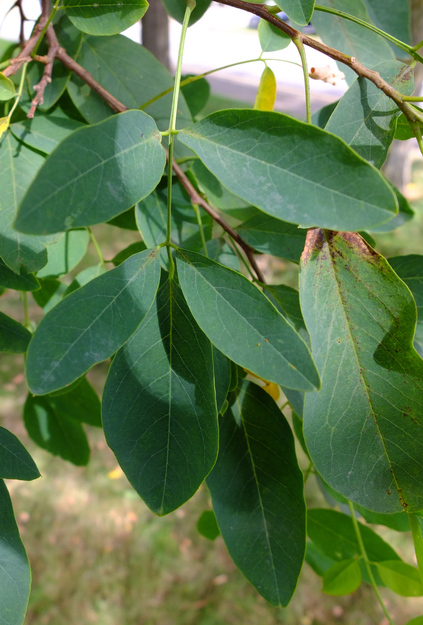
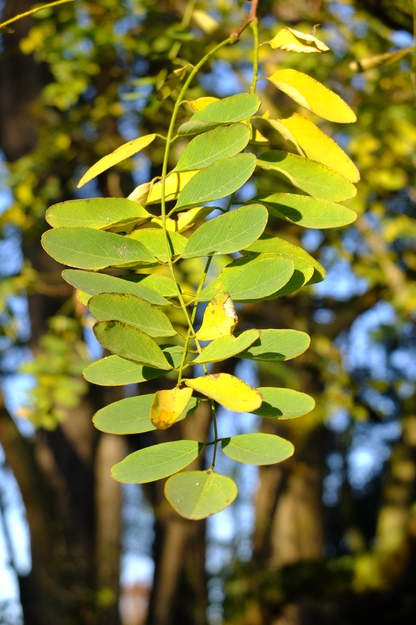
The leaves are yellow-green or blue-green, arranged on stems with many opposite pairs (technically a compound leaf). They open in May, and turn yellow before falling in autumn. In late spring and early summer the tree produces hanging clusters of fragrant white flowers, followed by brown seed pods, like pea pods; peas and beans, as well as true acacia, also belong to the Fabaceae family. Like many plants of that family, Robinia pseudoacacia can grow in poor soils, which it can improve by fixing nitrogen. It tolerates drought but does not grow well in shade, being a pioneer species, and can colonise open areas by root suckers as well as by seed.
Robinia pseudoacacia has become naturalised, and in some regions invasive, throughout North America and elsewhere, including mainland Europe and Australia. The flowers are the source of nectar for "acacia honey", for which it is extensively planted in eastern and southern Europe. It is planted also for erosion control, windbreaks and land reclamation. Its wood is strong and durable, often used for fencing and furniture.
External webpages
about this species


about this species
How to use the map
Drag with your finger or mouse to move the map.
 Zoom in or out. You can also do this with the mousewheel or by pinching.
Marker of the position of an identified tree, while the map is zoomed out. For the details, zoom in until you see tree markers like the following …

 Clicking on a tree marker brings up a window (called a "popup")
identifying the species of the tree there, with a small photo of it and buttons
to display more photos and information. NB only a few hundred of the thousands
of trees are marked!
Clicking on a tree marker brings up a window (called a "popup")
identifying the species of the tree there, with a small photo of it and buttons
to display more photos and information. NB only a few hundred of the thousands
of trees are marked!
7Marker of a tree of the selected species; clicking it will zoom and centre the map on this tree, and bring up a photo of it in the frame.
 Marker of a British Isles champion tree in
The Tree Register.
Marker of a British Isles champion tree in
The Tree Register.
✕ Click the cross at the top right of any window, including this one, to get rid of it.
 Click to choose whether more than one popup can be open at once.

 Click to dismiss the open popup, or all open popups. You can also close
the popups by clicking on the map anywhere apart from a popup or marker.
Click to dismiss the open popup, or all open popups. You can also close
the popups by clicking on the map anywhere apart from a popup or marker.
Choose alternative versions of the map. The tree markers, popups, map centre and zoom are all unaffected by switching.
 Turn on a flashing dot which tracks your live location on the map, surrounded
by a circle indicating the accuracy of the location. This will work
only if your device has a satellite navigation (GPS etc.) receiver which is
enabled and can acquire a signal. You will probably be asked to allow the
website to access "location services" the first time you press this button.
The button flashes orange while trying to locate you,
and green while your location is shown. Press it again to turn it off.
Turn on a flashing dot which tracks your live location on the map, surrounded
by a circle indicating the accuracy of the location. This will work
only if your device has a satellite navigation (GPS etc.) receiver which is
enabled and can acquire a signal. You will probably be asked to allow the
website to access "location services" the first time you press this button.
The button flashes orange while trying to locate you,
and green while your location is shown. Press it again to turn it off.
 Recentre the map on your present location, while live location is active.
 Reset the map to its original centre and zoom.
To click on a tree, zoom in until you see
tree markers
Park HouseSee all photos of this tree
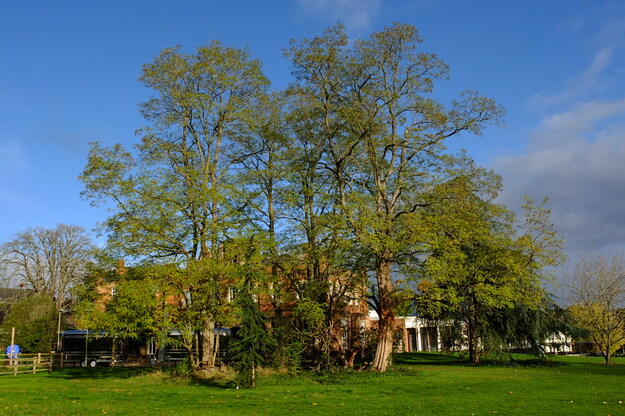
FoxhillSee all photos of this tree
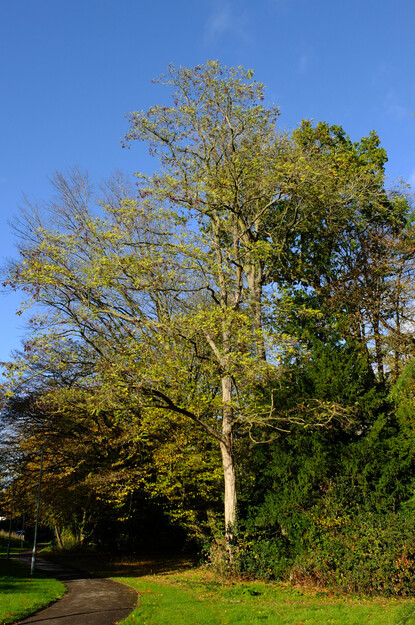
Chancellor's WestSee all photos of this tree
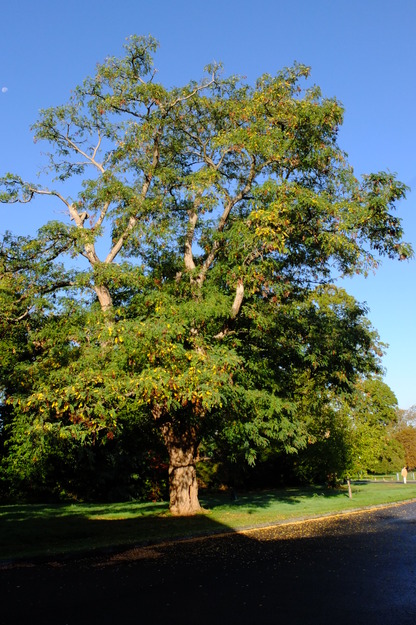
East RoadSee all photos of this tree
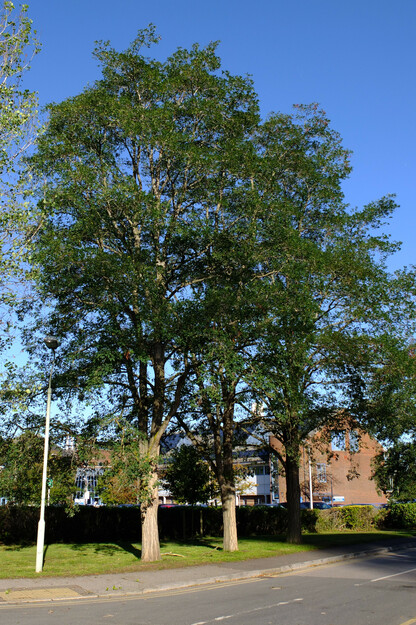
Thomson SouthSee all photos of this tree
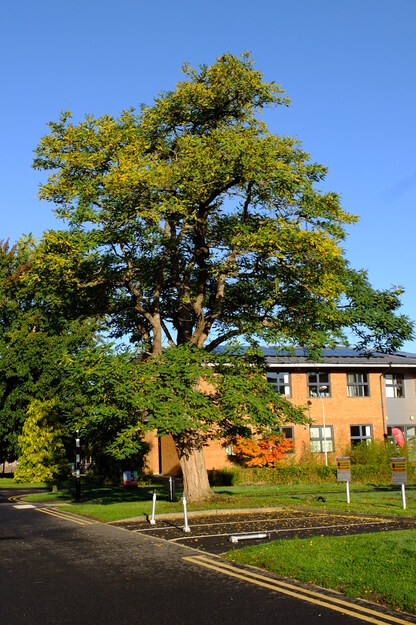
Zuckerman EastSee all photos of this tree
Harris GardenSee all photos of this tree