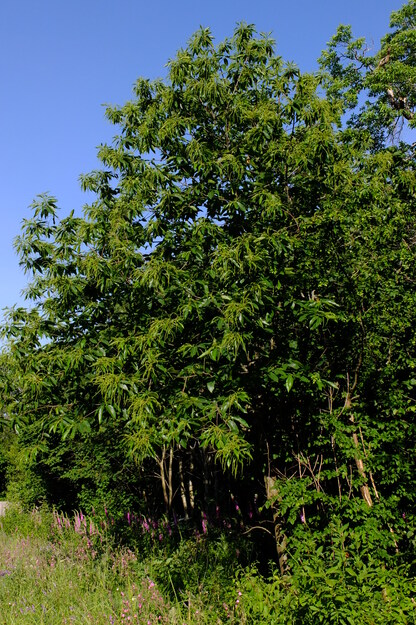
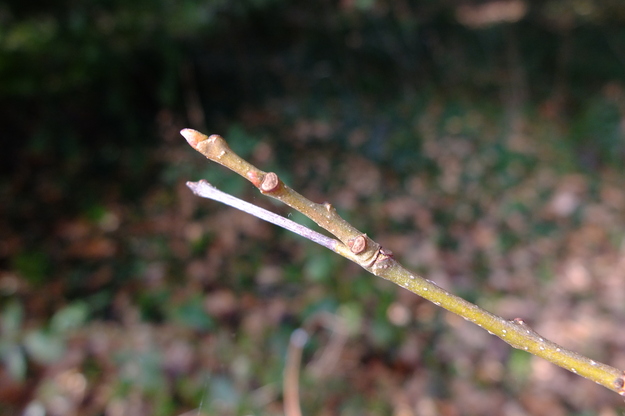
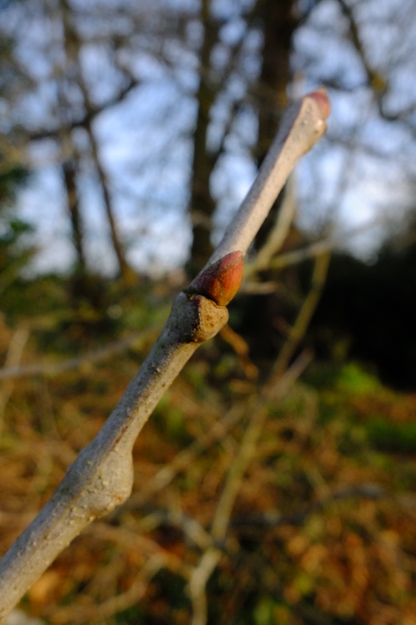
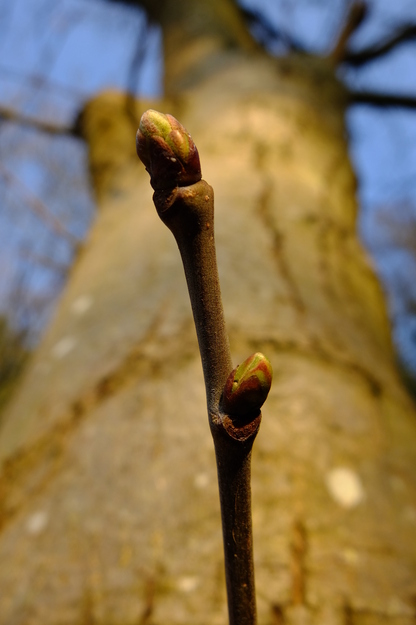
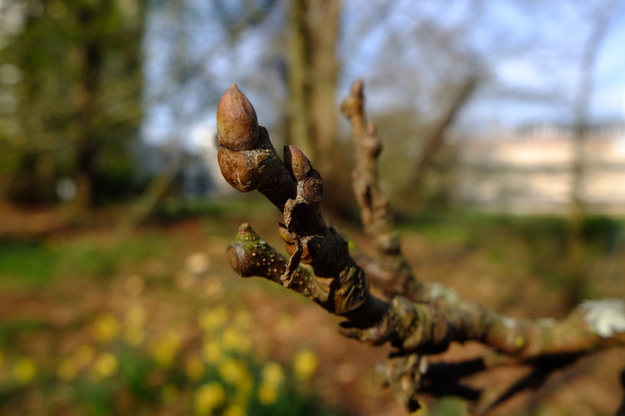
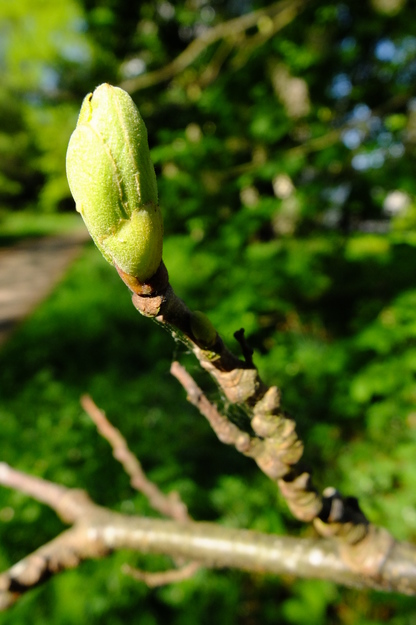
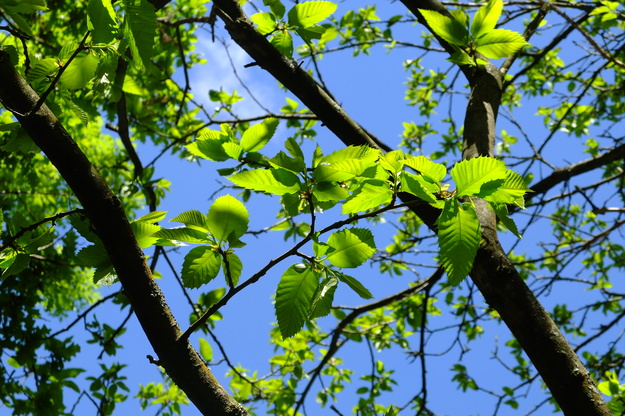
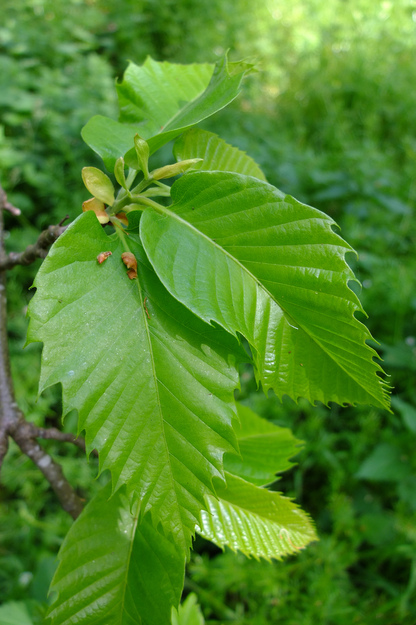
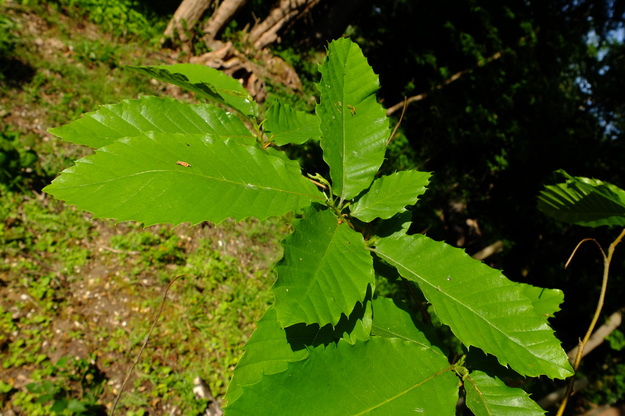
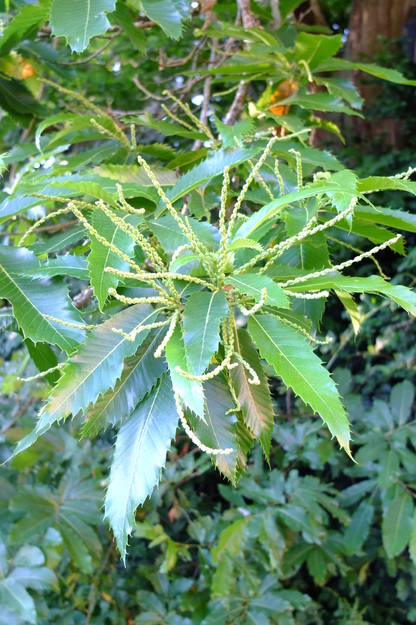
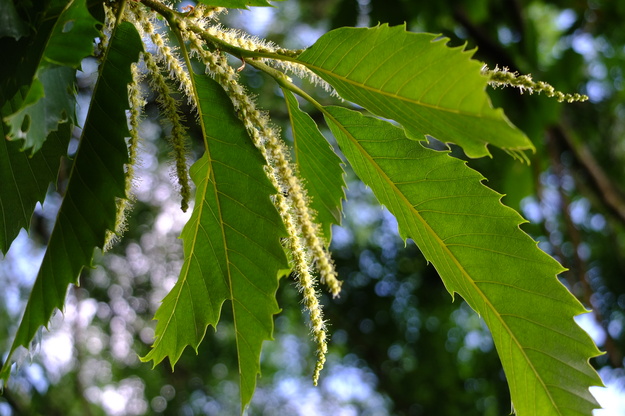
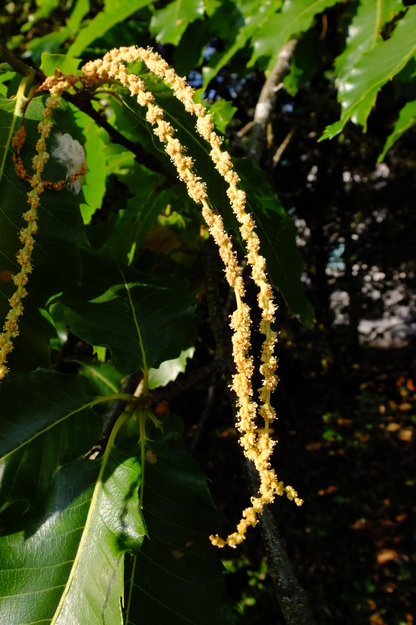
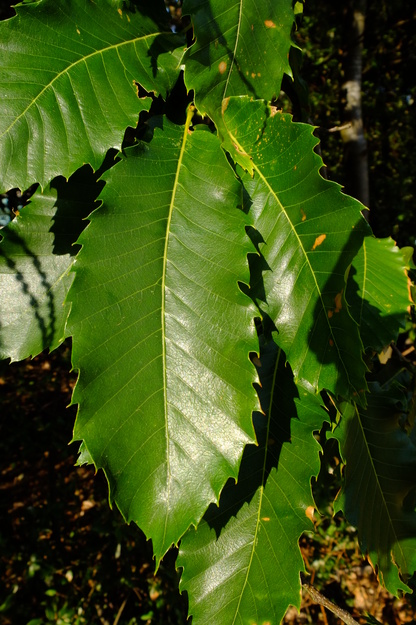
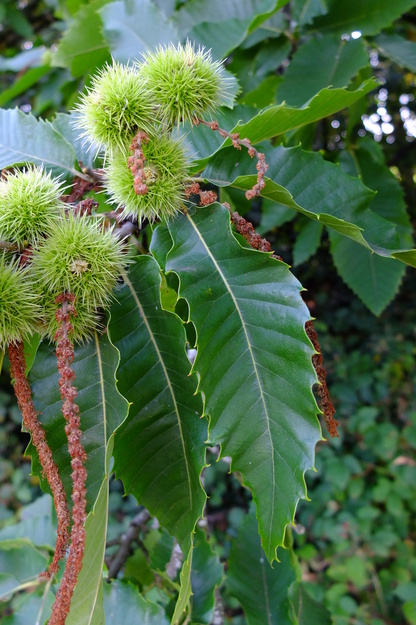
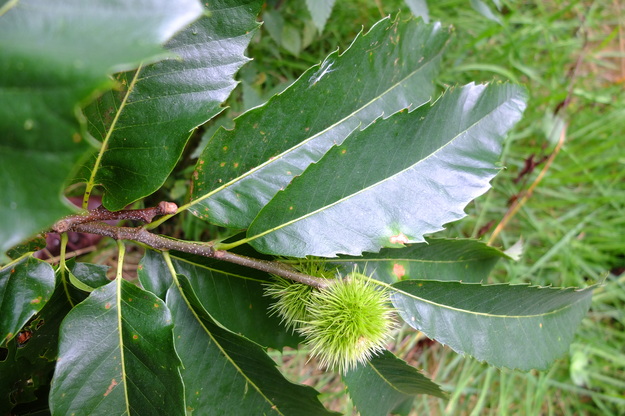
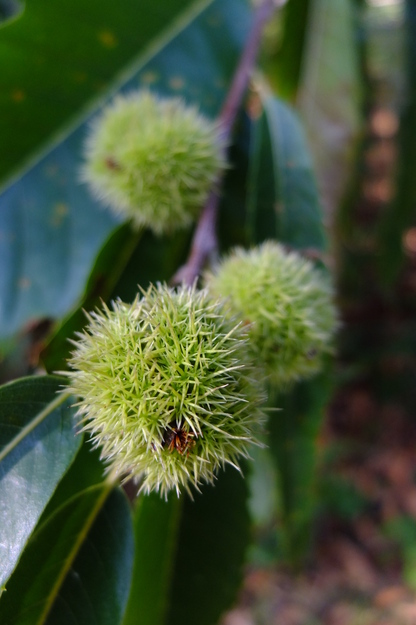
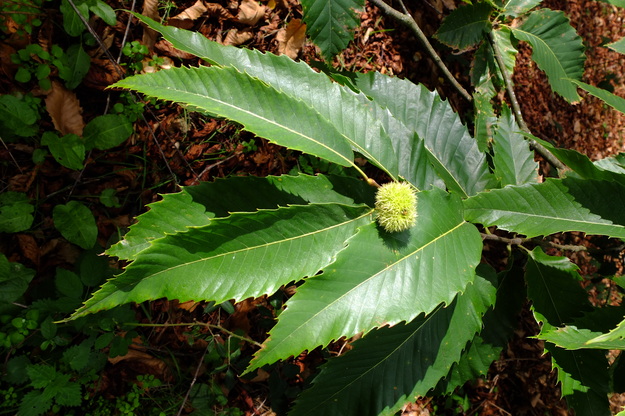
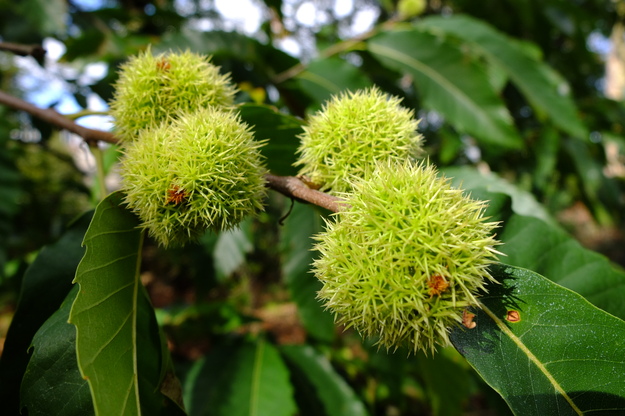
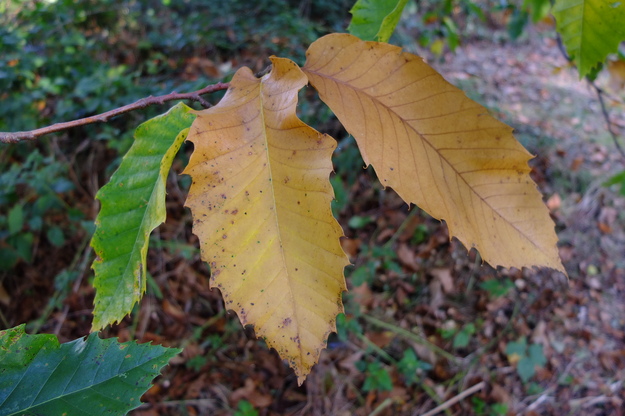
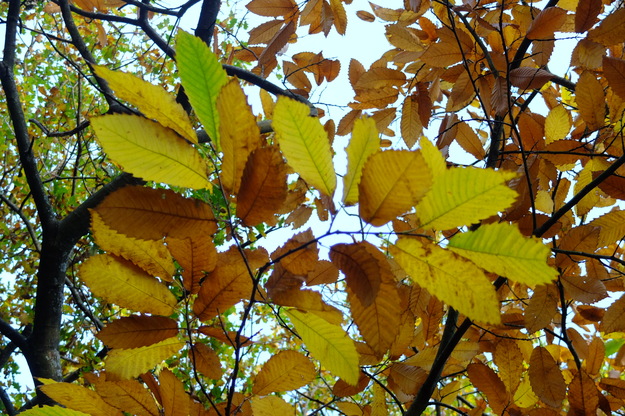
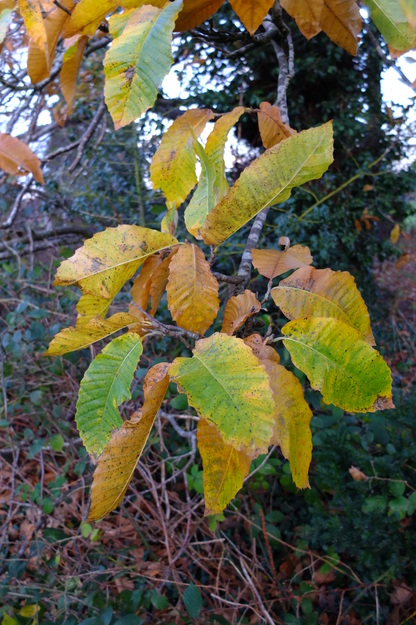
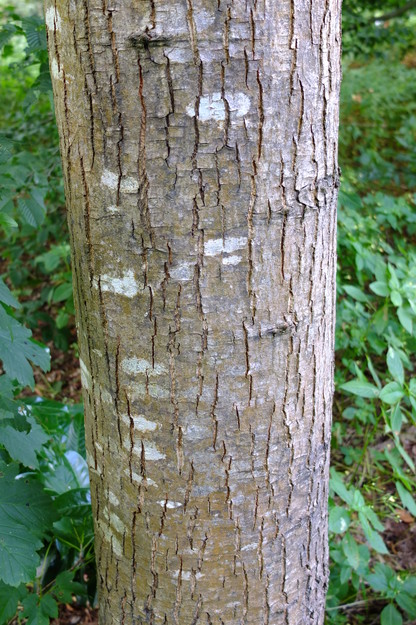
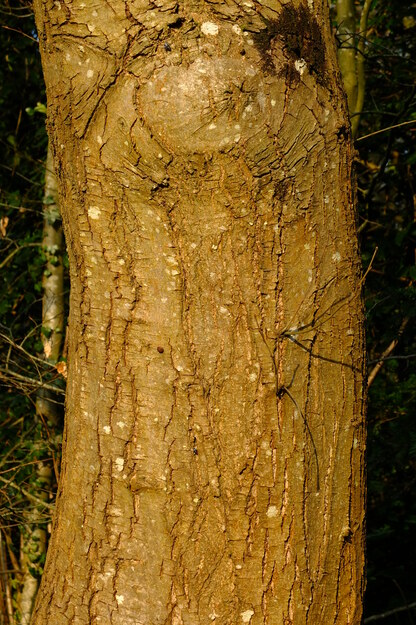
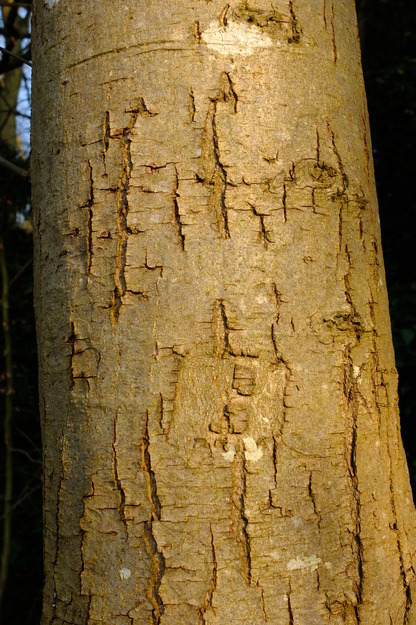
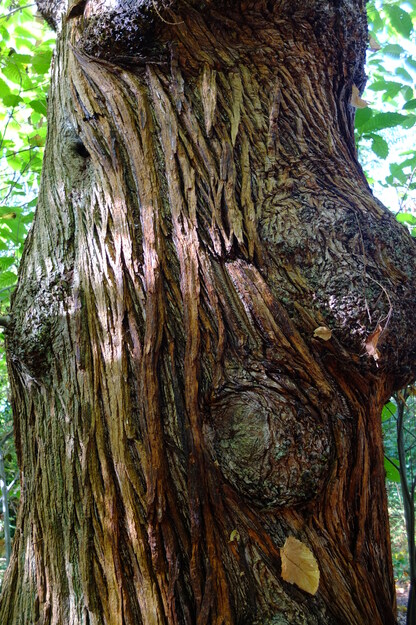
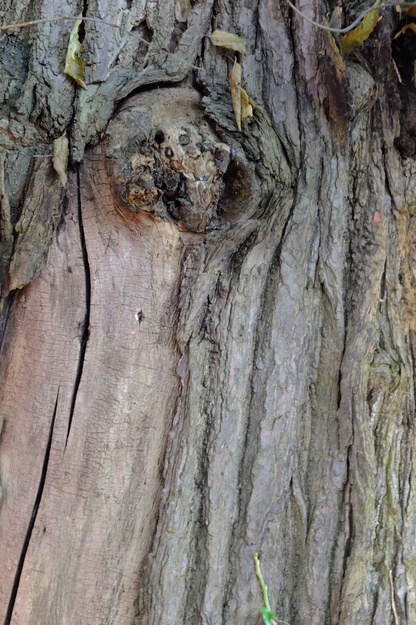
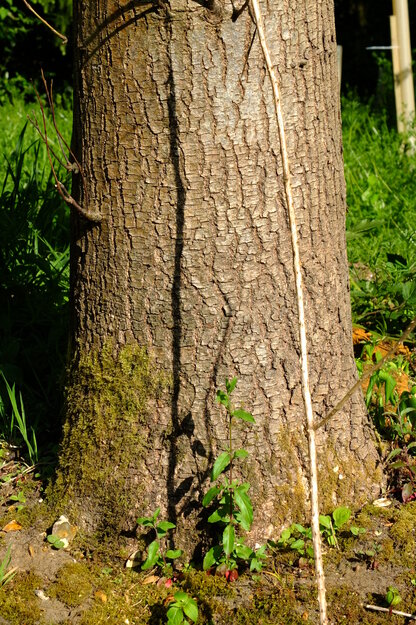
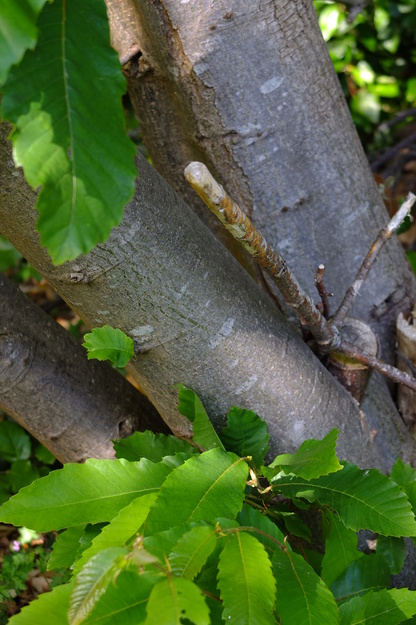
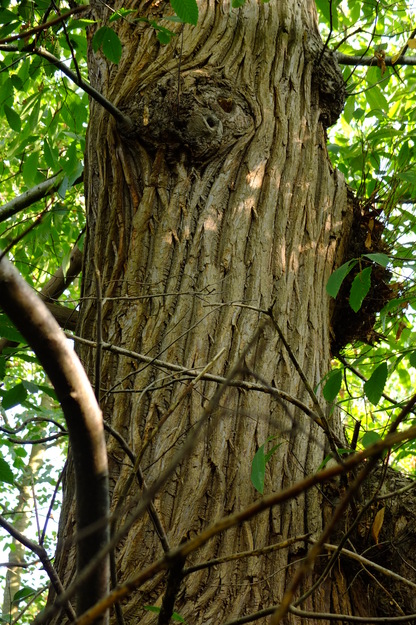
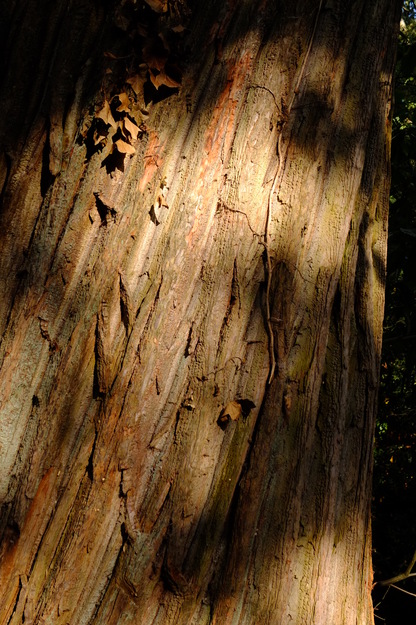
Castanea sativa is a species of deciduous broadleaf flowering plants (in the Fagaceae or Beech family), native to the Balkans, Turkey, northern Iran and perhaps Italy, and naturalised in Britain. It is a large tree of up to 35 metres in height and sometimes enormous girth, and lives for 500–700 years or even longer when cultivated. Its new bark is light grey-brown and smooth; as it ages it becomes darker, with deep vertical fissures that spiral round the trunk. It has large light brown buds in winter, which open in spring into large somewhat glossy leaves, oval in shape with a pointed end, prominently serrated edges (forward-pointing teeth), and veins running forwards in pairs from the central vein, in parallel on each side. In May and June it has long thin yellow catkins, and produces green nutcases with many soft spines in late summer and autumn, each containing several edible brown chestnuts. Although the nutcases and nuts look similar, Castanea sativa is not closely related to Aesculus hippocastanum, the horsechestnut.
Castanea sativa has been cultivated since around 2000 BC in parts of its native range for wood and nuts. As a crop it was introduced to Italy from Greece, and may have been spread by the Romans, but did not become widely grown outside Italy until the Middle Ages. It is planted as forests and grown as coppice, preferring neutral or acidic well-drained soils. The timber is creamy-brown, hard and durable, splits easily, and is used for furniture, veneer, posts, cladding and decking.
External webpages
about this species


about this species
How to use the map
Drag with your finger or mouse to move the map.
 Zoom in or out. You can also do this with the mousewheel or by pinching.
Marker of the position of an identified tree, while the map is zoomed out. For the details, zoom in until you see tree markers like the following …

 Clicking on a tree marker brings up a window (called a "popup")
identifying the species of the tree there, with a small photo of it and buttons
to display more photos and information. NB only a few hundred of the thousands
of trees are marked!
Clicking on a tree marker brings up a window (called a "popup")
identifying the species of the tree there, with a small photo of it and buttons
to display more photos and information. NB only a few hundred of the thousands
of trees are marked!
7Marker of a tree of the selected species; clicking it will zoom and centre the map on this tree, and bring up a photo of it in the frame.
 Marker of a British Isles champion tree in
The Tree Register.
Marker of a British Isles champion tree in
The Tree Register.
✕ Click the cross at the top right of any window, including this one, to get rid of it.
 ✕
Click to dismiss all the popups at once.
✕
Click to dismiss all the popups at once.
Choose alternative versions of the map. The tree markers, popups, map centre and zoom are all unaffected by switching.
 Turn on a flashing dot which tracks your live location on the map, surrounded
by a circle indicating the accuracy of the location. This will work
only if your device has a satellite navigation (GPS etc.) receiver which is
enabled and can acquire a signal. You will probably be asked to allow the
website to access "location services" the first time you press this button.
The button flashes orange while trying to locate you,
and green while your location is shown. Press it again to turn it off.
Turn on a flashing dot which tracks your live location on the map, surrounded
by a circle indicating the accuracy of the location. This will work
only if your device has a satellite navigation (GPS etc.) receiver which is
enabled and can acquire a signal. You will probably be asked to allow the
website to access "location services" the first time you press this button.
The button flashes orange while trying to locate you,
and green while your location is shown. Press it again to turn it off.
 Recentre the map on your present location, while live location is switched on.
 Reset the map to its original centre and zoom.
To click on a tree, zoom in until you see
tree markers
WildernessSee all photos of this tree
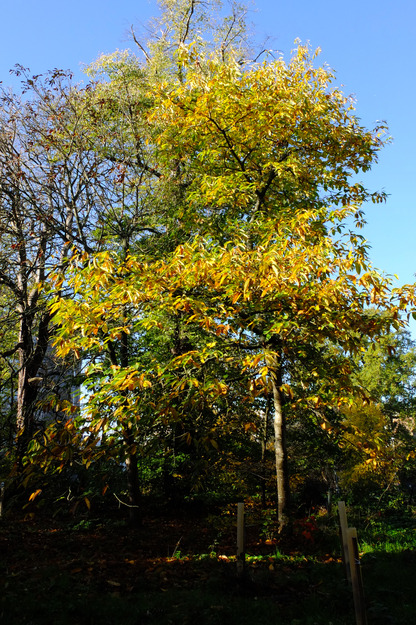
East lakesideSee all photos of this tree
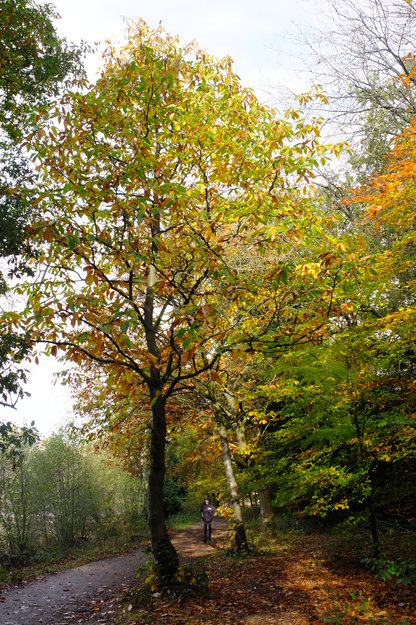
Zuckerman EastSee all photos of this tree
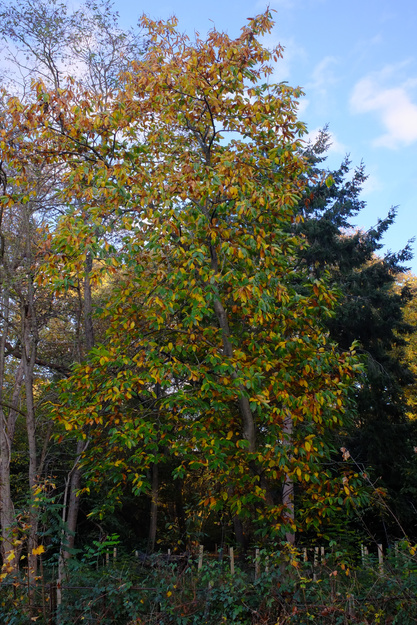
Redrow DriveSee all photos of this tree
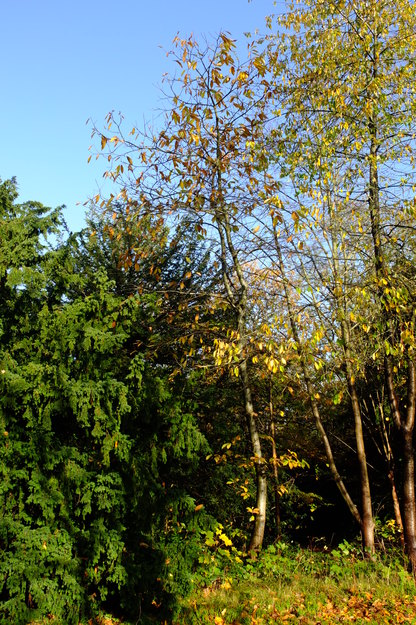
Sports fieldSee all photos of this tree
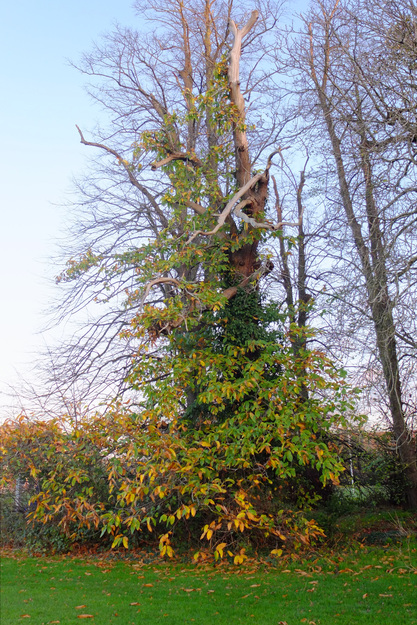
Bridges HallSee all photos of this tree
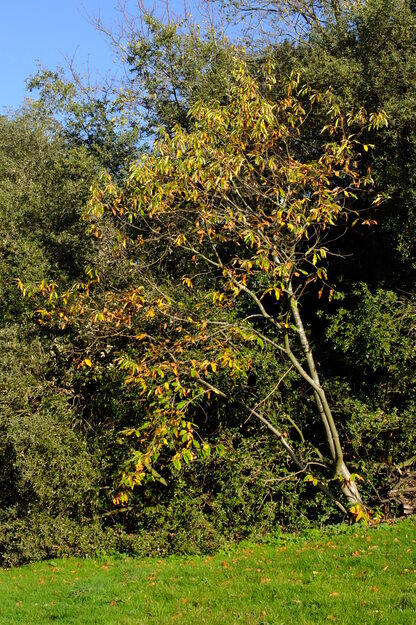
Agromet SouthSee all photos of this tree
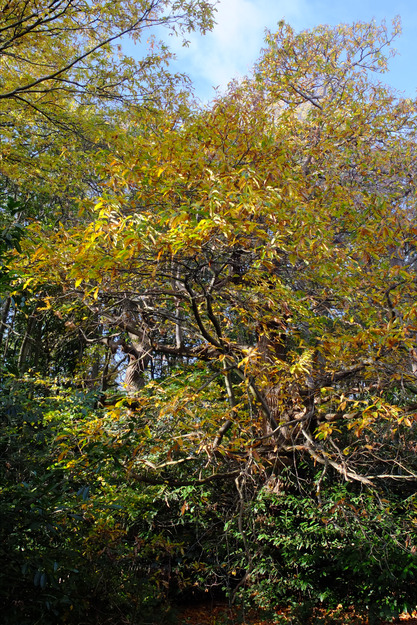
Earley GateSee all photos of this tree
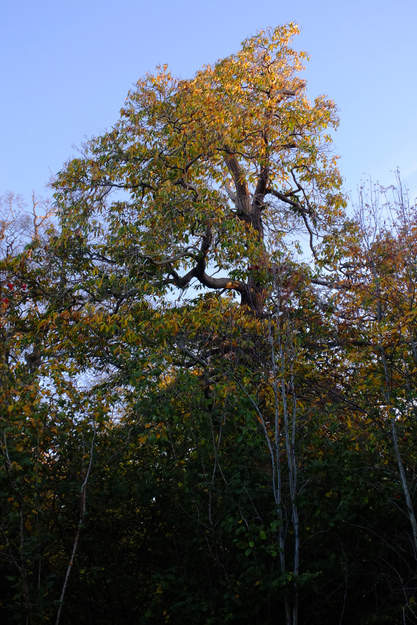
Earley GateSee all photos of this tree