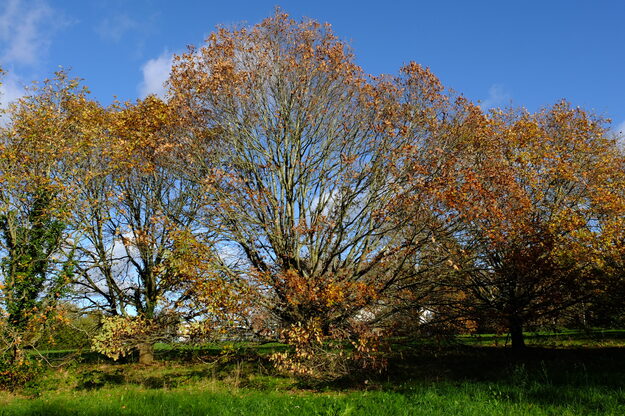
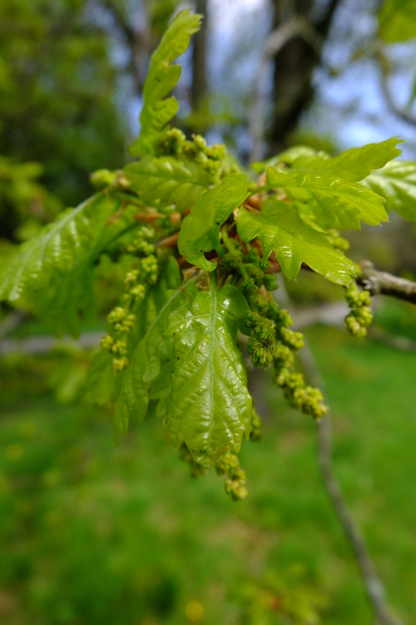
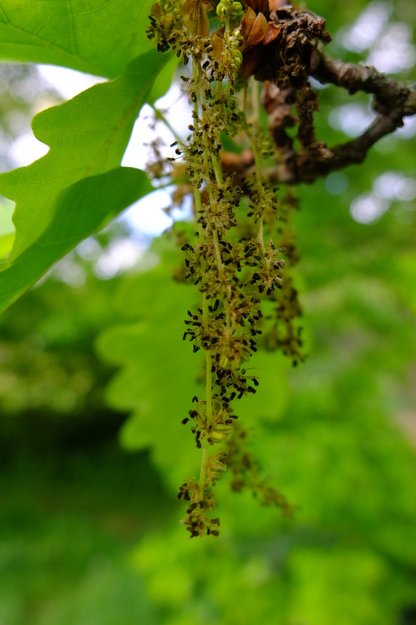
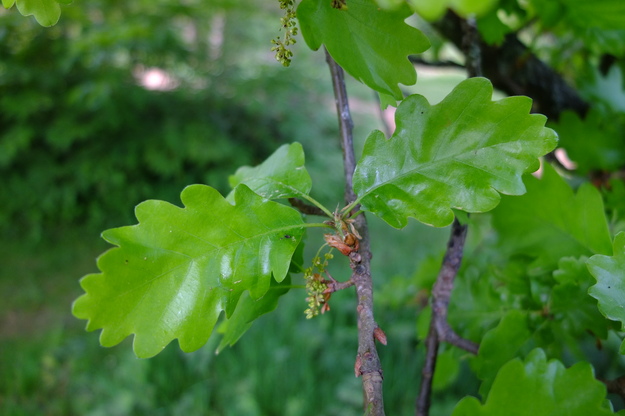
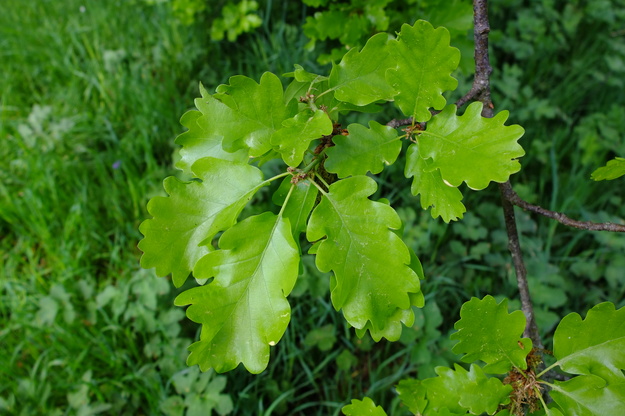
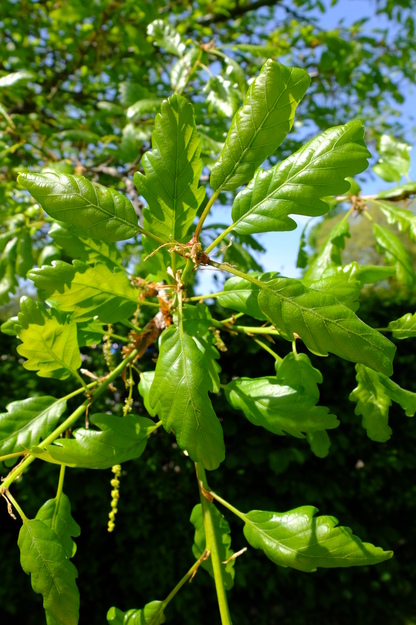
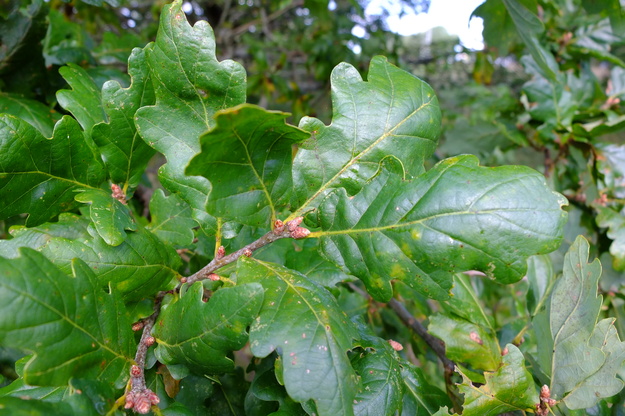
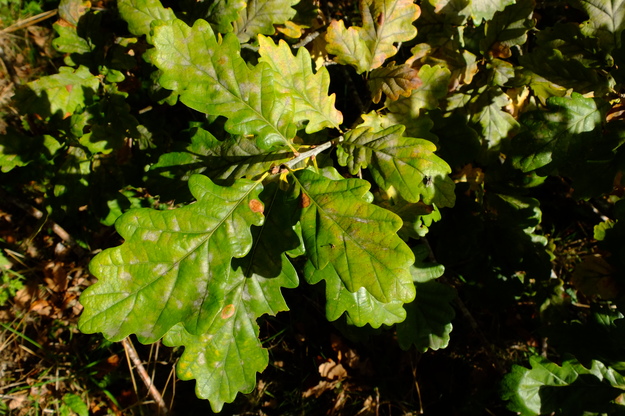
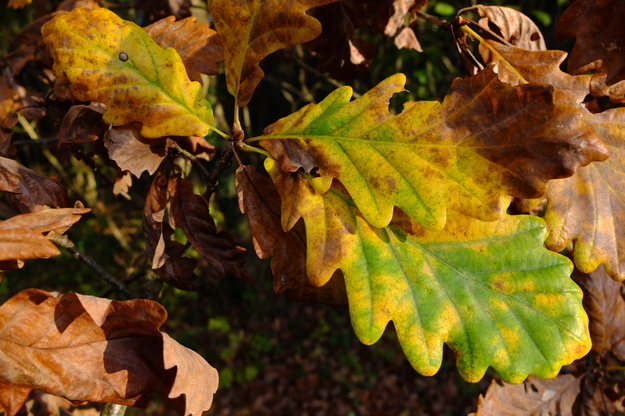
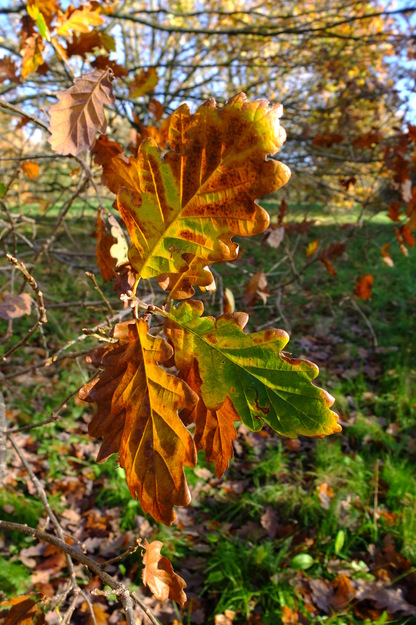
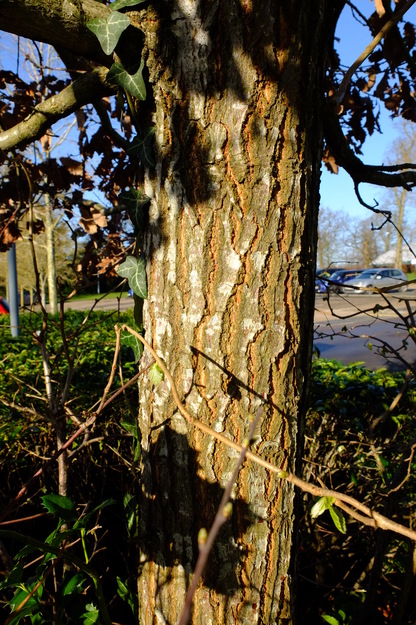
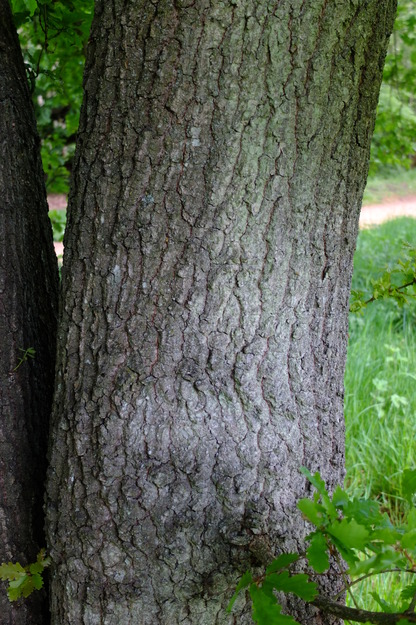
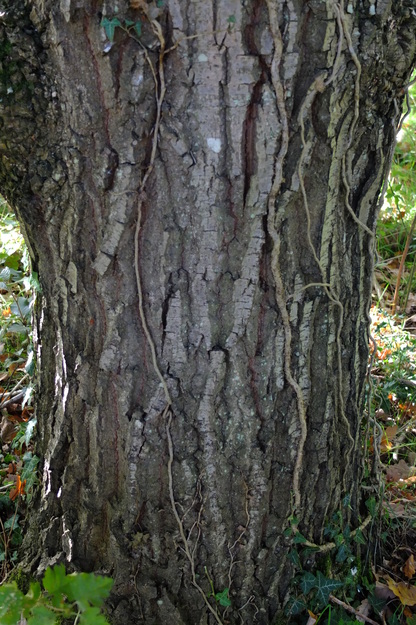
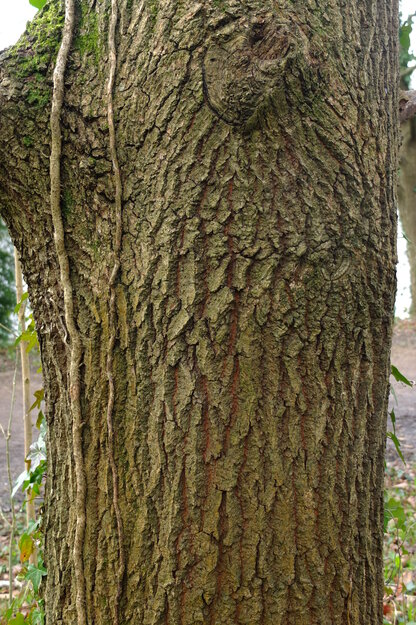
Quercus petraea is a species of deciduous broadleaf flowering plants (in the Fagaceae or Beech family), native to Britain, Europe and northern Iran. It is a large tree, which can live for many centuries and reach 30–40 metres tall. It develops a broad and rounded but open crown supported by a strong trunk with rugged, grey-brown bark. Quercus petraea is found throughout European woodlands, and is a key species in forest ecosystems.
The closely related Quercus robur (also present in Whiteknights Park) is the only other native Quercus (oak) species. Both are widespread in Britain. Quercus robur is more numerous in southern England, but Quercus petraea occurs in lighter soils, and generally does better in uplands, on shallow sandy soil (petraea means "rocky"), and in places with higher rainfall. Consequently Quercus petraea prefers Cornwall, Wales, Scotland and Ireland; it is the national tree of the latter country.
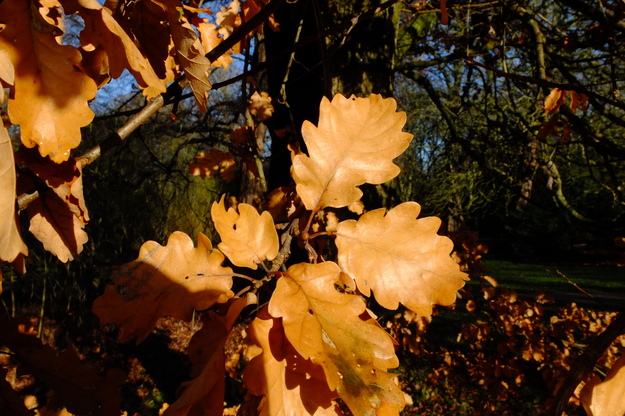
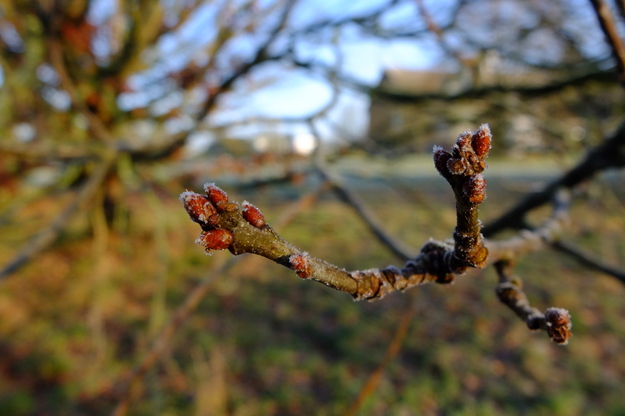
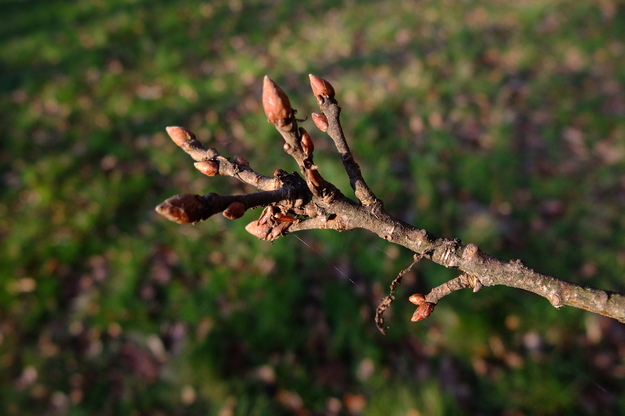
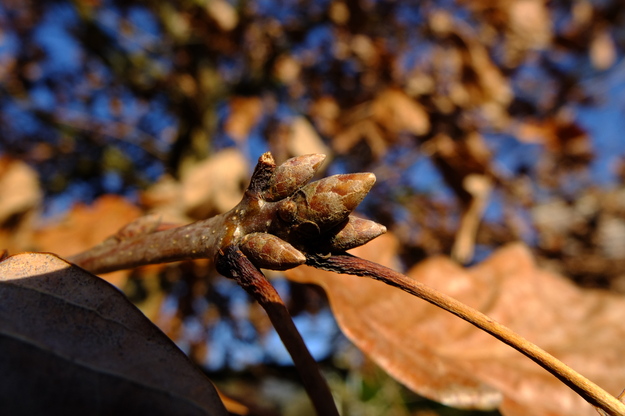
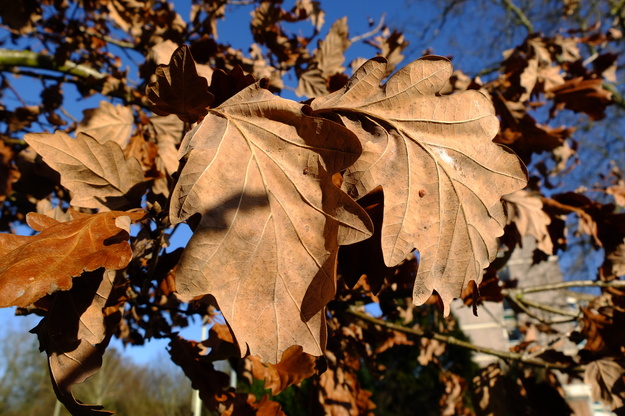
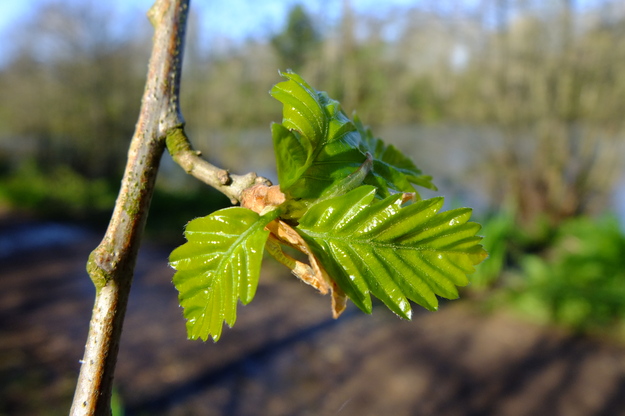
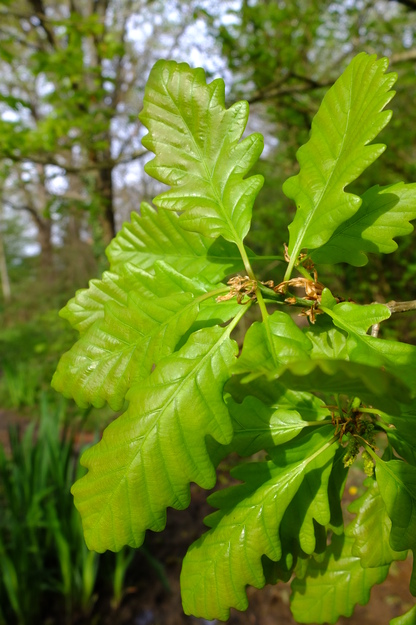
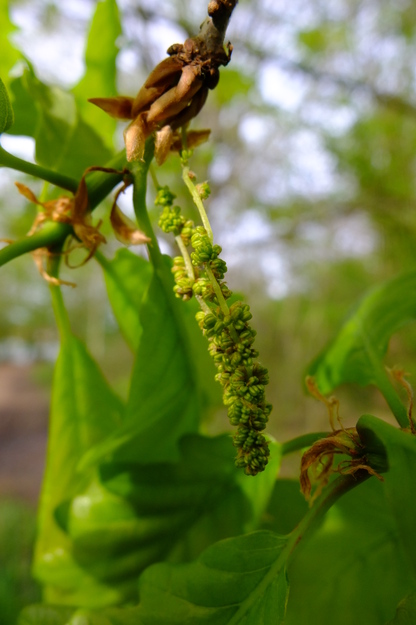
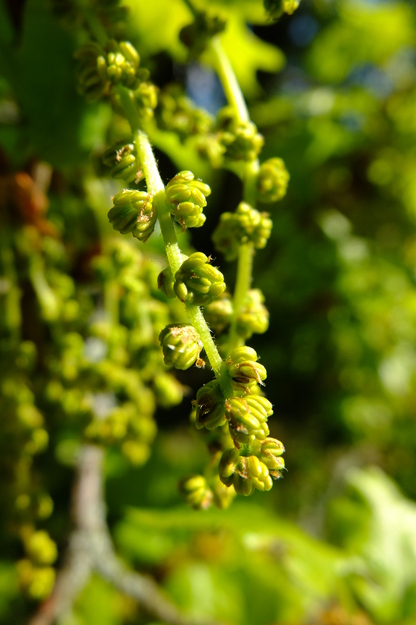
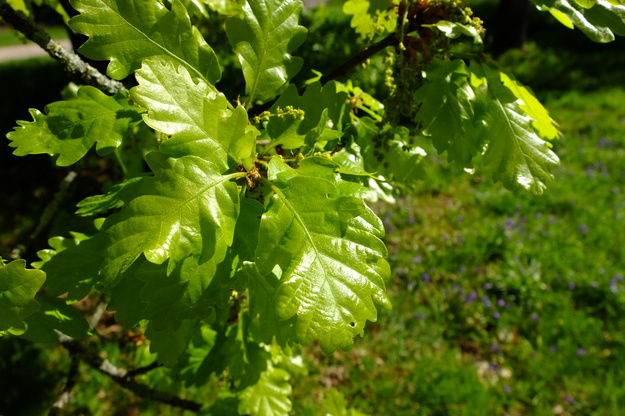
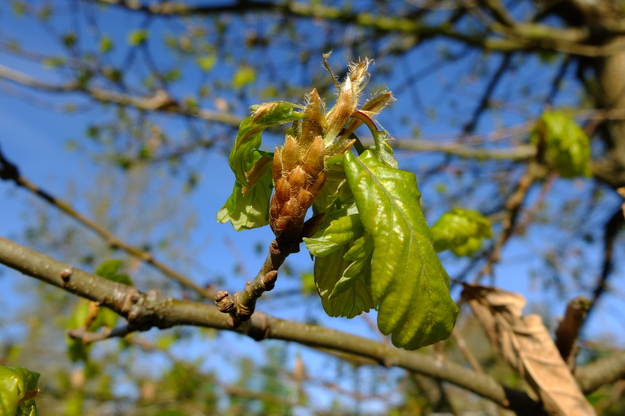
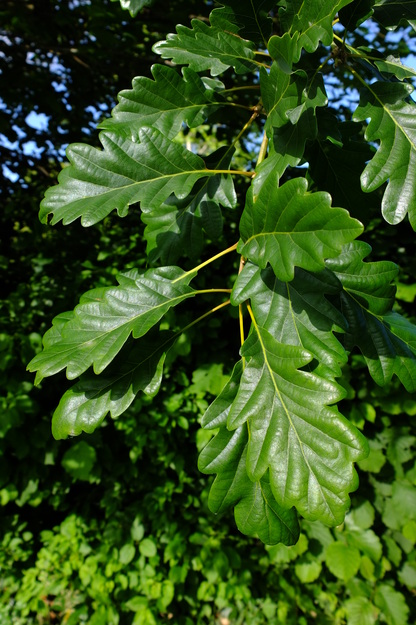
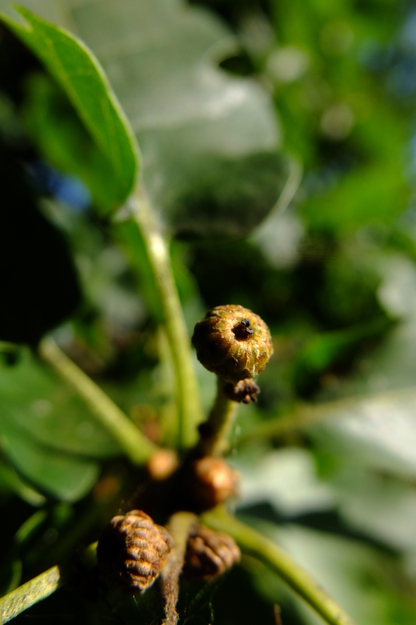
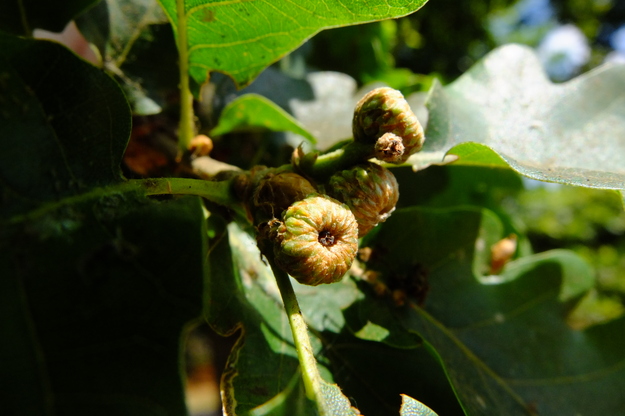
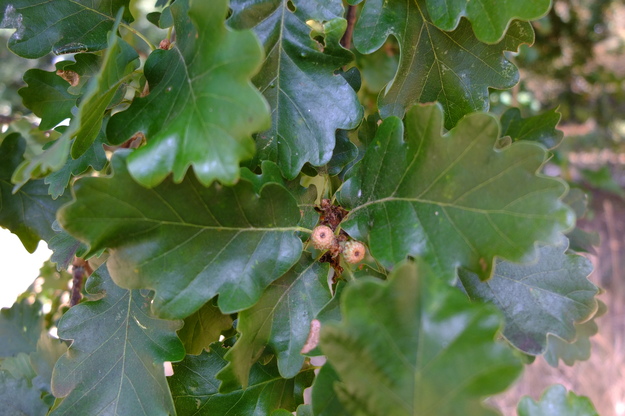
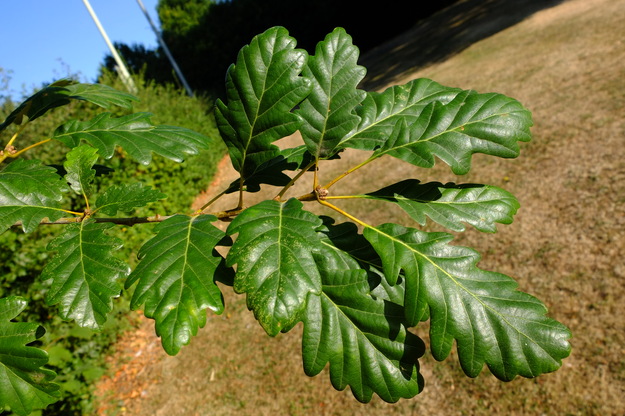
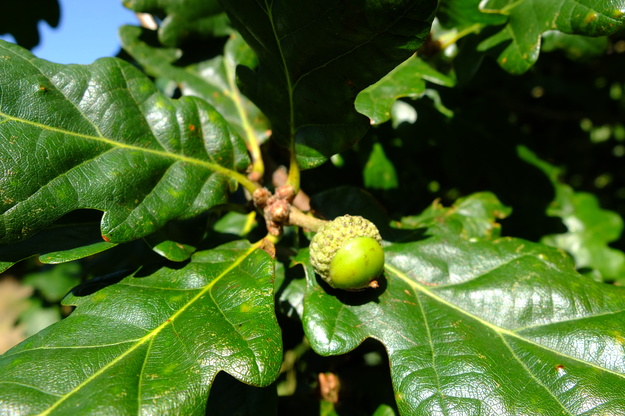
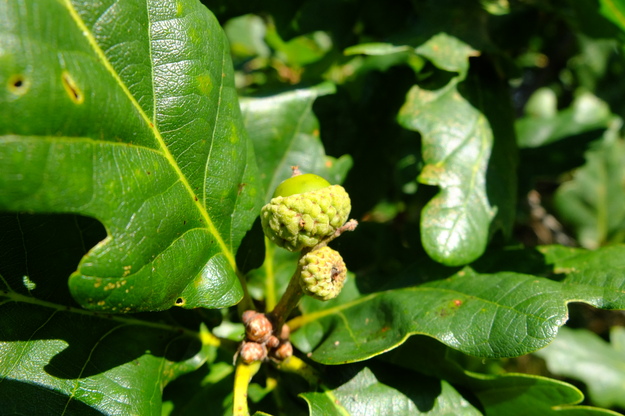
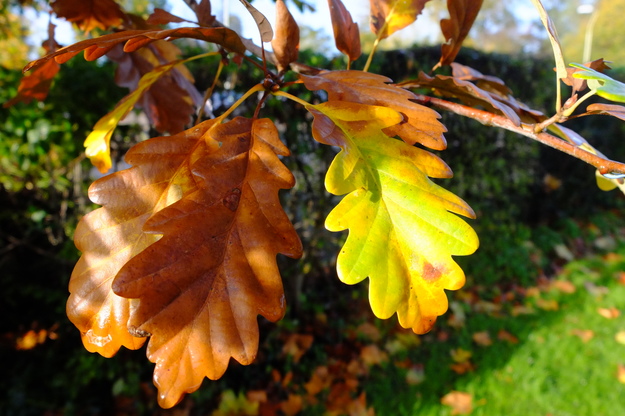
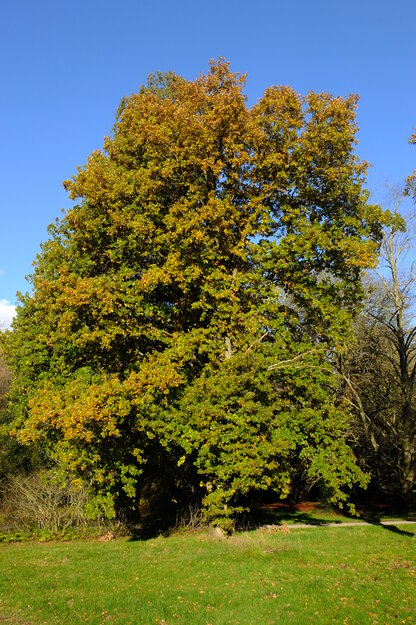
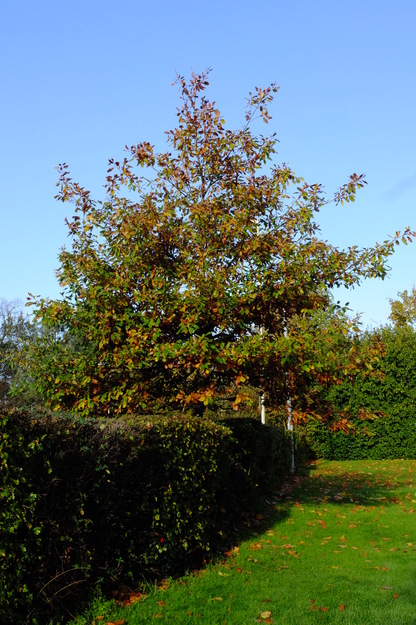
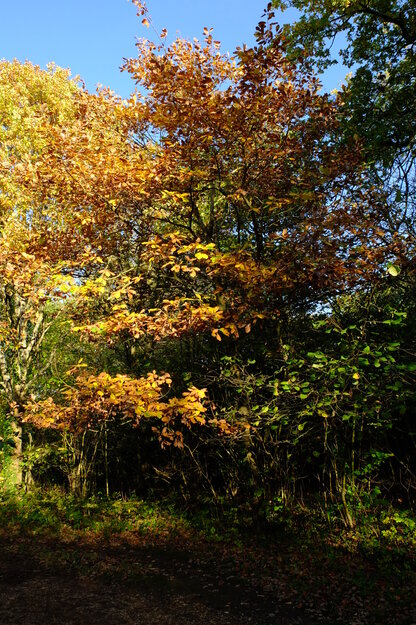
Quercus petraea has brown buds in winter. Short dangling catkins and leaves emerge in April. The leaves are of medium size, somewhat glossy, with 5–8 pairs of rounded smooth-edged lobes; the bays between the lobes do not go far towards the midrib of the leaf. The acorns (the fruit of the oak) occur in clusters; they are initially green and become brown. The leaves turn golden brown in autumn before falling.
Quercus petraea can be distinguished from Quercus robur by both its acorns and its leaves (see this comparison, which includes other Quercus species). Quercus petraea acorns are "sessile" (meaning they grow directly on the twigs with no stalk, whereas Quercus robur acorns have stalks). By contrast, Quercus petraea leaves are on stalks from the twig (whereas Quercus robur are closely attached); they are more oval in shape, and their lobes are more numerous and regularly arranged.
Quercus petraea has long been highly valued for its strong and durable hardwood, which is suitable for construction, furniture making, boat-building and barrel production. It has had significant impact on British history through its use in wooden ship-building.
External webpages
about this species


about this species
How to use the map
Drag with your finger or mouse to move the map.
 Zoom in or out. You can also do this with the mousewheel or by pinching.
Marker of the position of an identified tree, while the map is zoomed out. For the details, zoom in until you see tree markers like the following …

 Clicking on a tree marker brings up a window (called a "popup")
identifying the species of the tree there, with a small photo of it and buttons
to display more photos and information. NB only a few hundred of the thousands
of trees are marked!
Clicking on a tree marker brings up a window (called a "popup")
identifying the species of the tree there, with a small photo of it and buttons
to display more photos and information. NB only a few hundred of the thousands
of trees are marked!
7Marker of a tree of the selected species; clicking it will zoom and centre the map on this tree, and bring up a photo of it in the frame.
 Marker of a British Isles champion tree in
The Tree Register.
Marker of a British Isles champion tree in
The Tree Register.
✕ Click the cross at the top right of any window, including this one, to get rid of it.
 ✕
Click to dismiss all the popups at once.
✕
Click to dismiss all the popups at once.
Choose alternative versions of the map. The tree markers, popups, map centre and zoom are all unaffected by switching.
 Turn on a flashing dot which tracks your live location on the map, surrounded
by a circle indicating the accuracy of the location. This will work
only if your device has a satellite navigation (GPS etc.) receiver which is
enabled and can acquire a signal. You will probably be asked to allow the
website to access "location services" the first time you press this button.
The button flashes orange while trying to locate you,
and green while your location is shown. Press it again to turn it off.
Turn on a flashing dot which tracks your live location on the map, surrounded
by a circle indicating the accuracy of the location. This will work
only if your device has a satellite navigation (GPS etc.) receiver which is
enabled and can acquire a signal. You will probably be asked to allow the
website to access "location services" the first time you press this button.
The button flashes orange while trying to locate you,
and green while your location is shown. Press it again to turn it off.
 Recentre the map on your present location, while live location is switched on.
 Reset the map to its original centre and zoom.
To click on a tree, zoom in until you see
tree markers
Harris GardenSee all photos of this tree
Carpark EatSee all photos of this tree
East lakesideSee all photos of this tree
East lakesideSee all photos of this tree
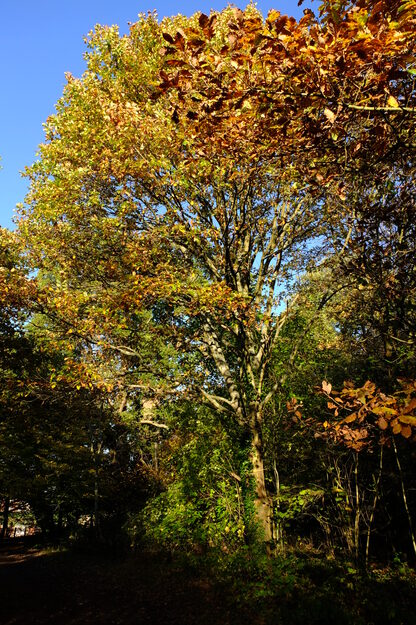
Earley Gate WaySee all photos of this tree