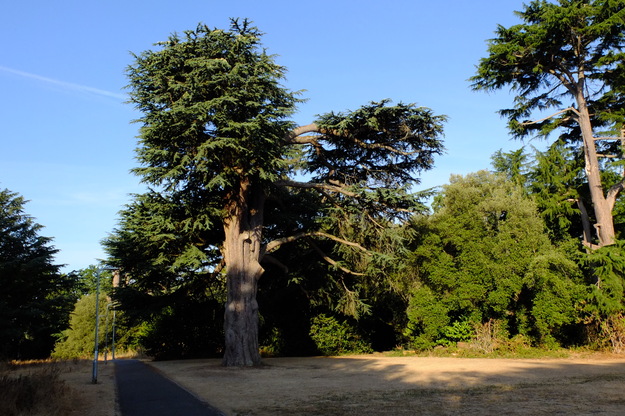
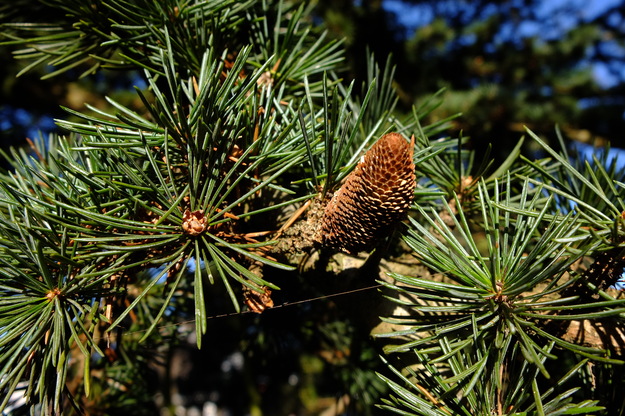
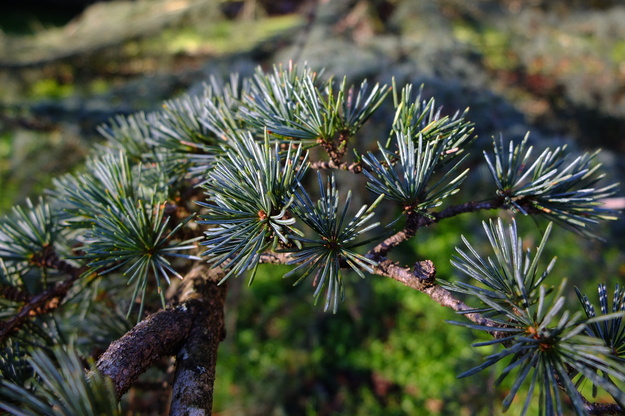
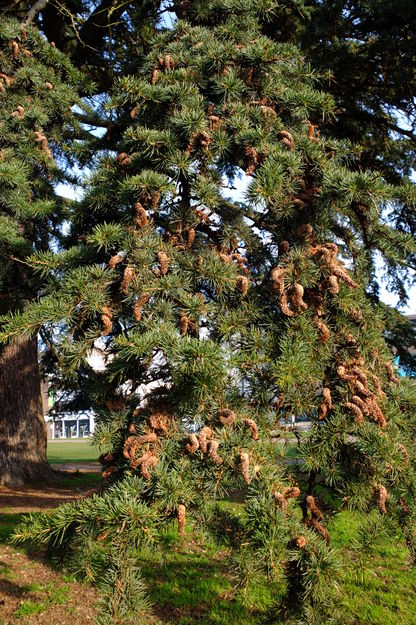
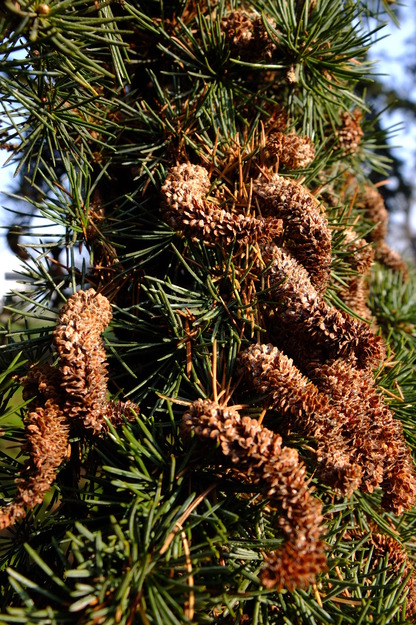
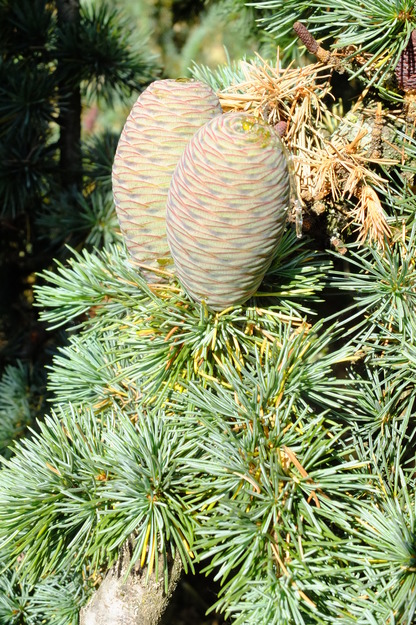
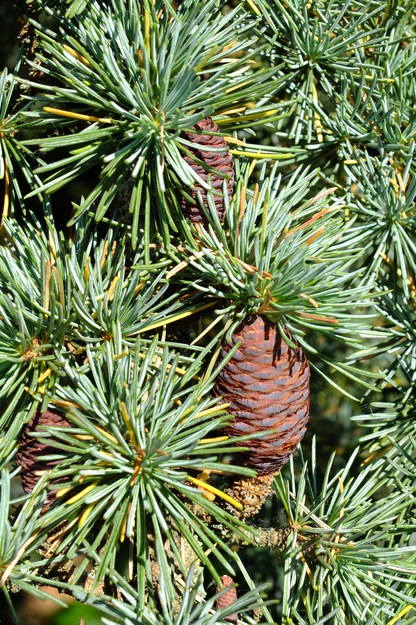
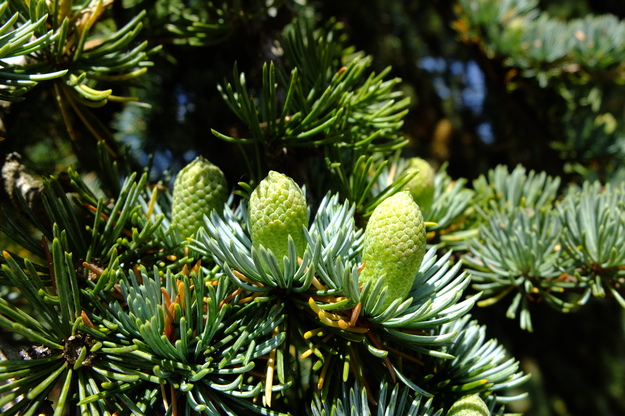
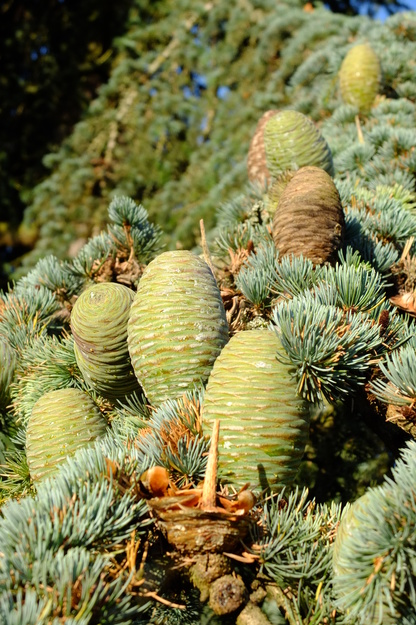
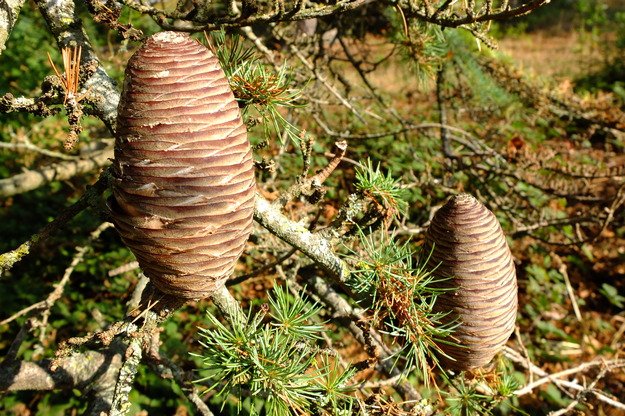
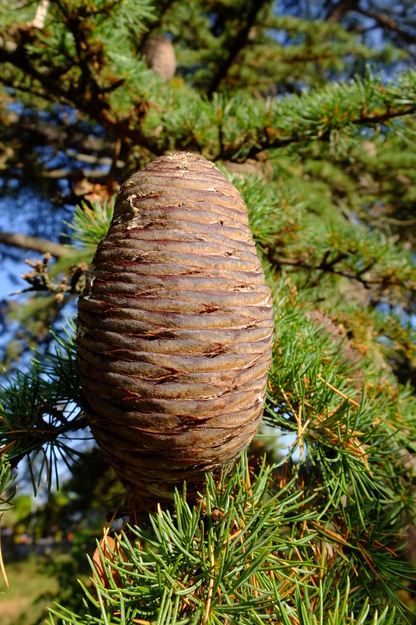
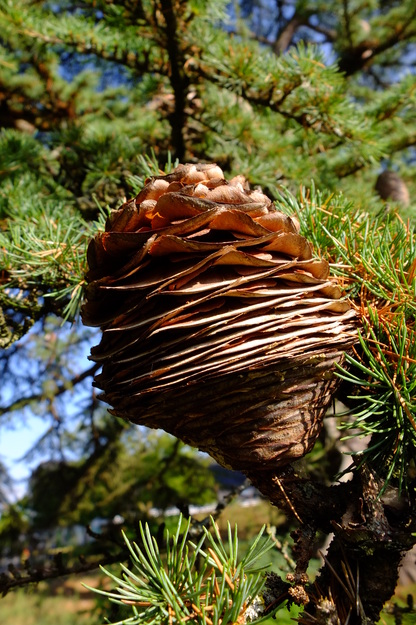
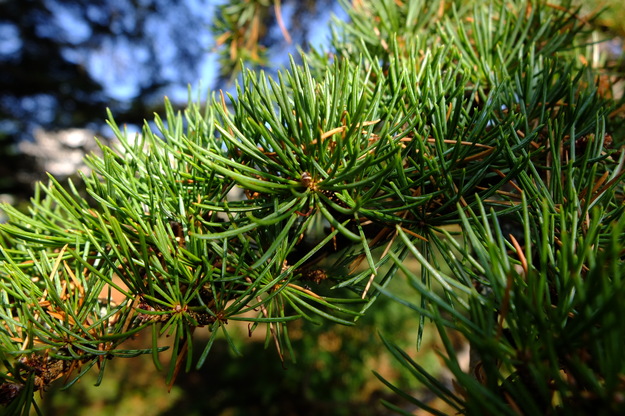
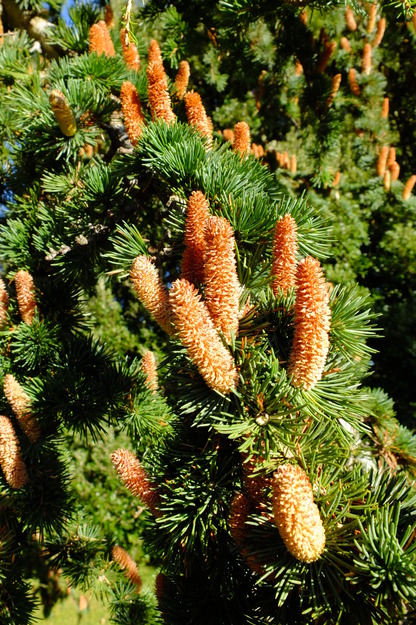
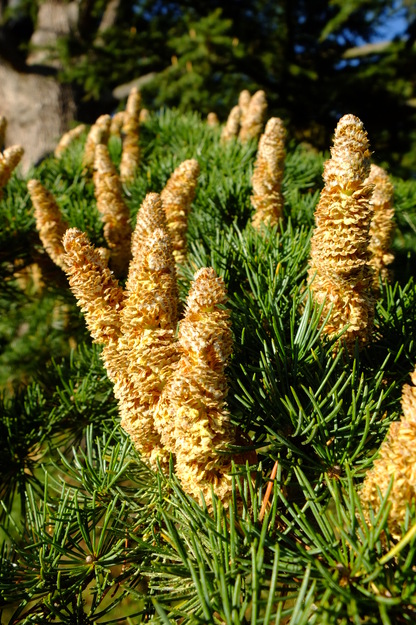
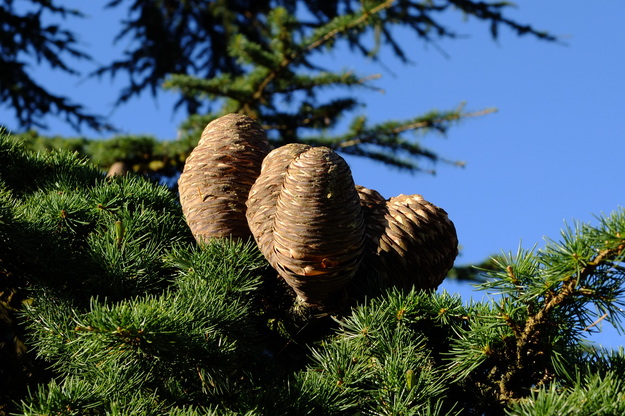
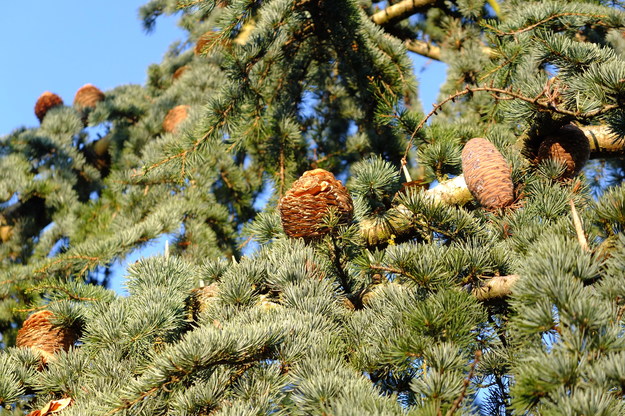
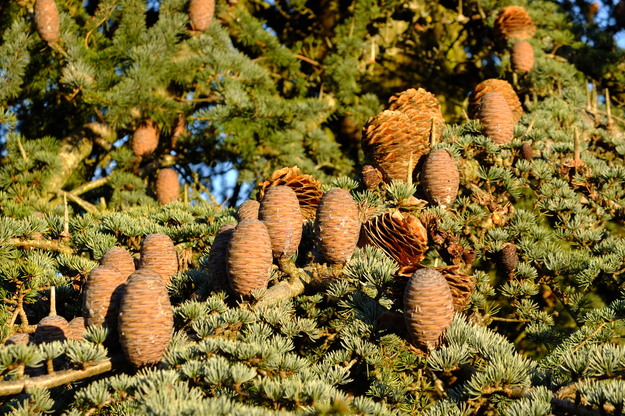
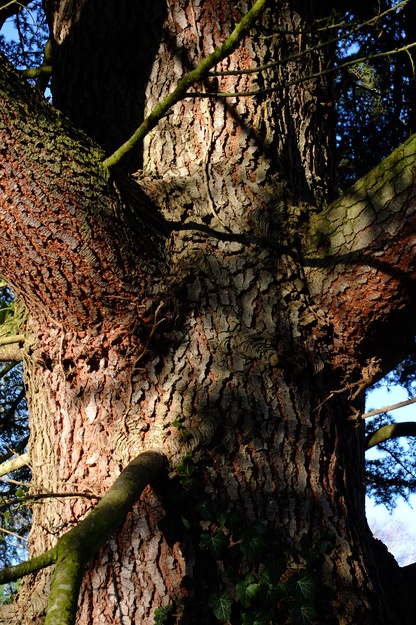
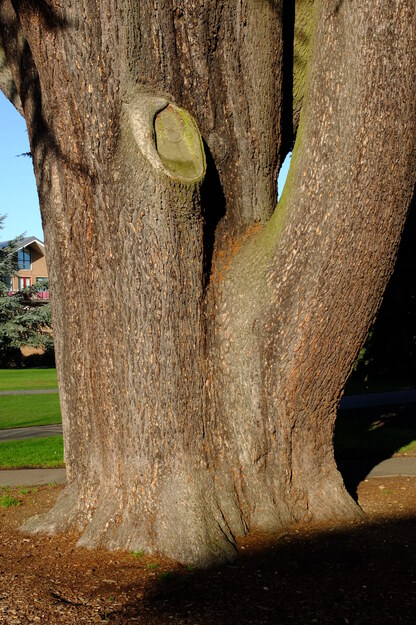
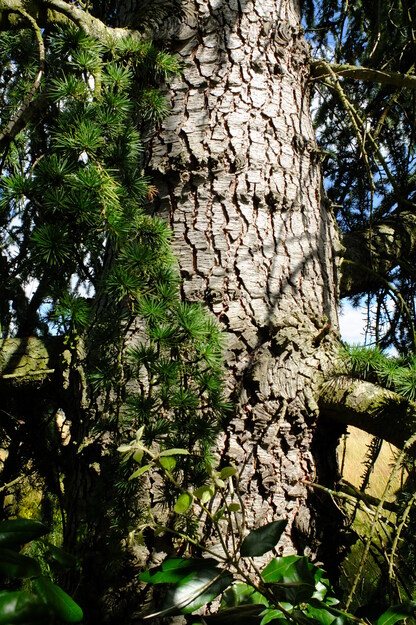
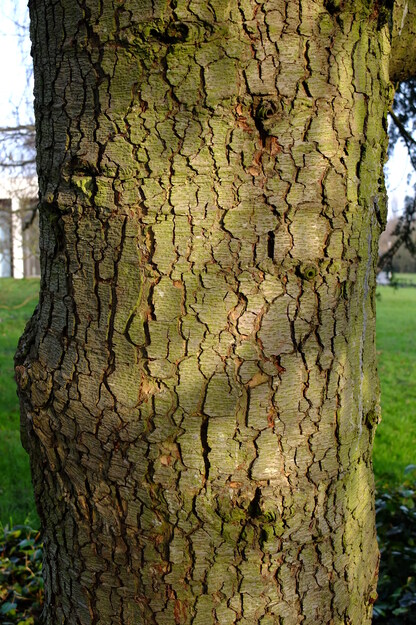
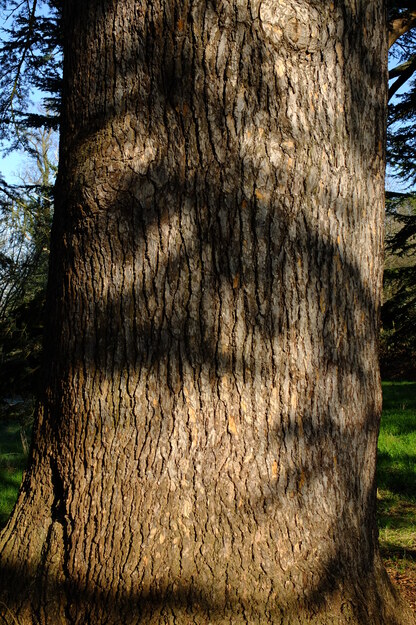
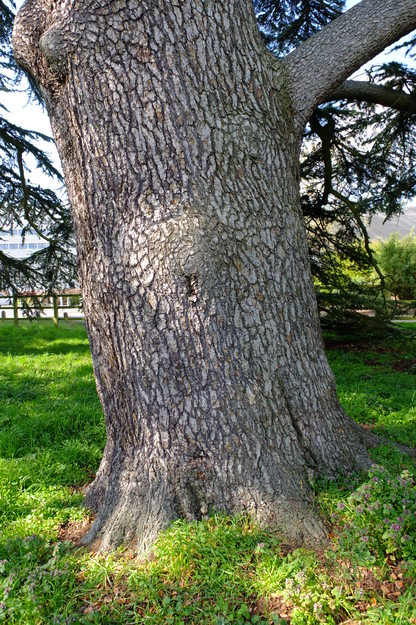
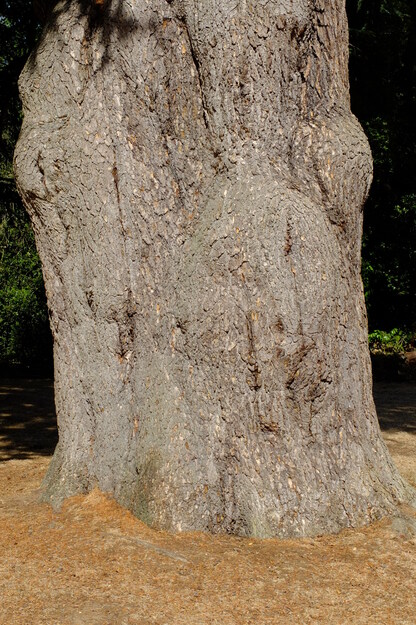
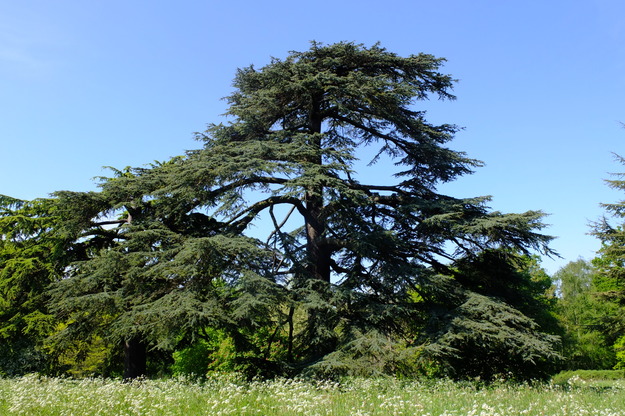
Cedrus libani is a species of evergreen needleleaf coniferous plants (in the Pinaceae or Pine family), native to the mountains of the eastern Mediterranean, particularly Lebanon, Syria, and Turkey. This majestic tree is distinguished by its broad, flat-topped crown and widely spreading branches with dense clusters of blue-green or dark green needles. It can grow to 40 metres and live for many centuries.
It has great historical and cultural significance, being long admired as a symbol of strength and endurance. The fragrant, durable wood of Cedrus libani was highly prized in ancient civilizations for building temples, ships, and palaces. Today, the species is widely planted as an ornamental tree in parks and large landscapes, where its impressive form and longevity make it a striking feature.
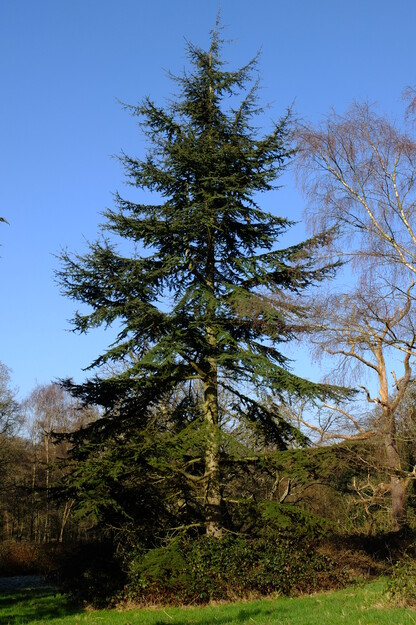
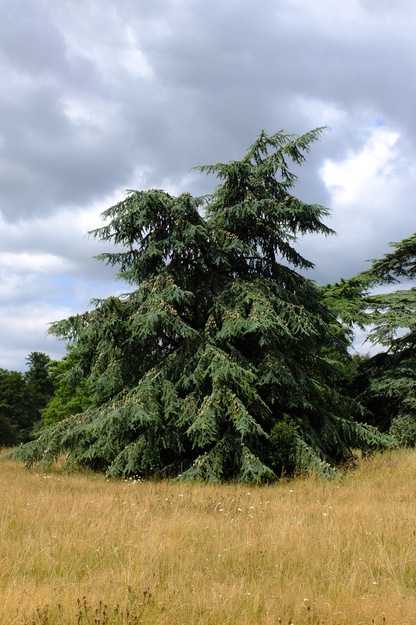
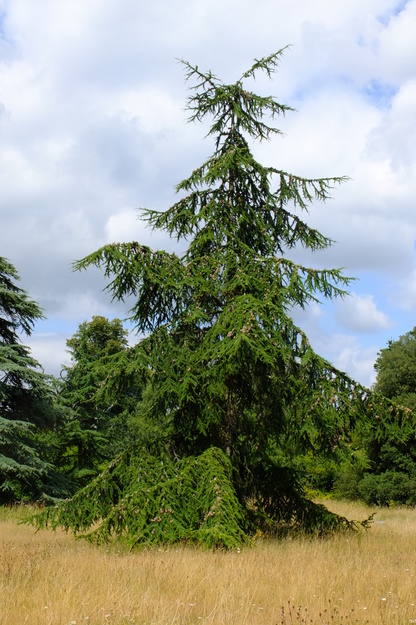
There are three Cedrus species ("true" cedars) grown in Britain, and Whiteknights Park has examples of all three, namely Cedrus atlantica, Cedrus libani and Cedrus deodara. Although fairly similar, they can be distinguished by their general shape ("habit", mature Cedrus libani being the most spreading), the direction in which their branch-tips point, and the length of their needles; see here for a comparison.
External webpages
about this species


about this species
How to use the map
Drag with your finger or mouse to move the map.
 Zoom in or out. You can also do this with the mousewheel or by pinching.
Marker of the position of an identified tree, while the map is zoomed out. For the details, zoom in until you see tree markers like the following …

 Clicking on a tree marker brings up a window (called a "popup")
identifying the species of the tree there, with a small photo of it and buttons
to display more photos and information. NB only a few hundred of the thousands
of trees are marked!
Clicking on a tree marker brings up a window (called a "popup")
identifying the species of the tree there, with a small photo of it and buttons
to display more photos and information. NB only a few hundred of the thousands
of trees are marked!
7Marker of a tree of the selected species; clicking it will zoom and centre the map on this tree, and bring up a photo of it in the frame.
 Marker of a British Isles champion tree in
The Tree Register.
Marker of a British Isles champion tree in
The Tree Register.
✕ Click the cross at the top right of any window, including this one, to get rid of it.
 ✕
Click to dismiss all the popups at once.
✕
Click to dismiss all the popups at once.
Choose alternative versions of the map. The tree markers, popups, map centre and zoom are all unaffected by switching.
 Turn on a flashing dot which tracks your live location on the map, surrounded
by a circle indicating the accuracy of the location. This will work
only if your device has a satellite navigation (GPS etc.) receiver which is
enabled and can acquire a signal. You will probably be asked to allow the
website to access "location services" the first time you press this button.
The button flashes orange while trying to locate you,
and green while your location is shown. Press it again to turn it off.
Turn on a flashing dot which tracks your live location on the map, surrounded
by a circle indicating the accuracy of the location. This will work
only if your device has a satellite navigation (GPS etc.) receiver which is
enabled and can acquire a signal. You will probably be asked to allow the
website to access "location services" the first time you press this button.
The button flashes orange while trying to locate you,
and green while your location is shown. Press it again to turn it off.
 Recentre the map on your present location, while live location is switched on.
 Reset the map to its original centre and zoom.
To click on a tree, zoom in until you see
tree markers
Park HouseSee all photos of this tree
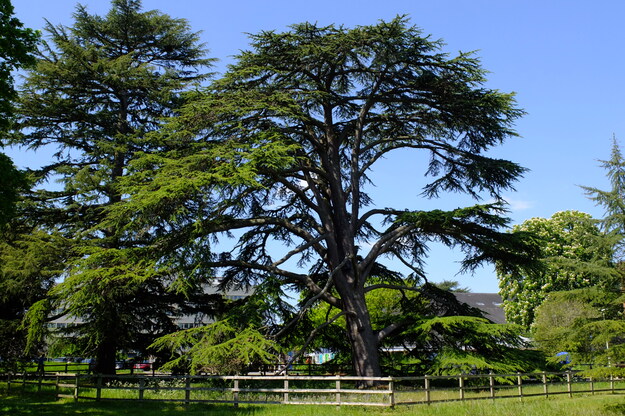
Park House
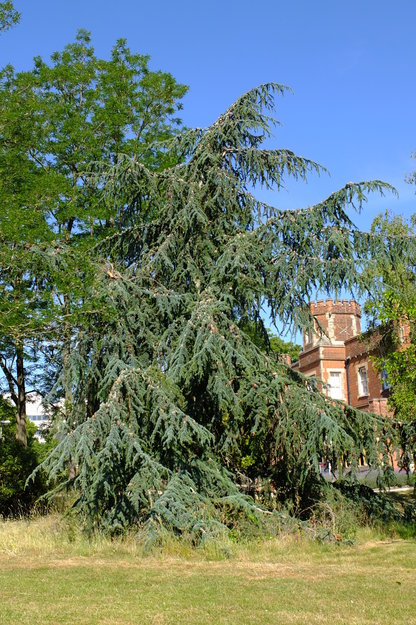
Palmer QuadSee all photos of this tree
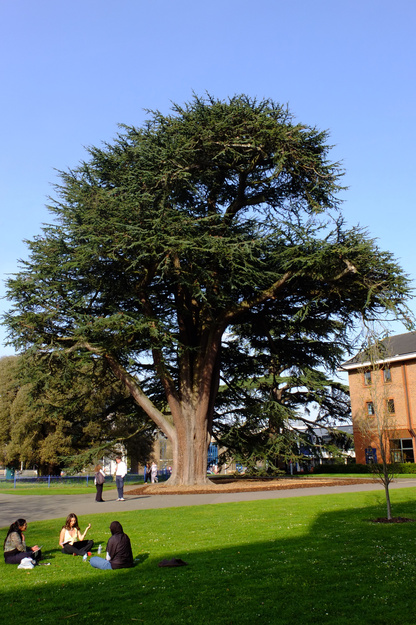
Palmer QuadSee all photos of this tree
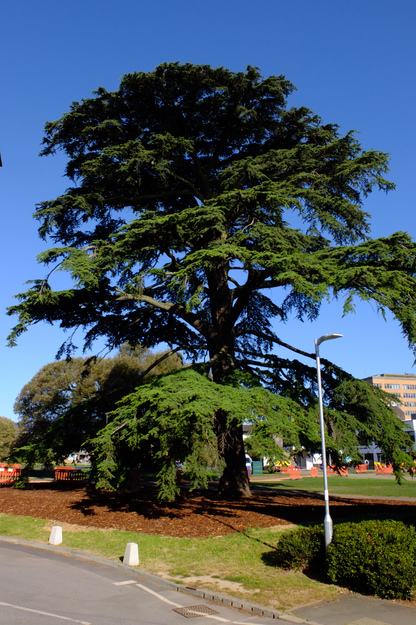
Palmer Quad
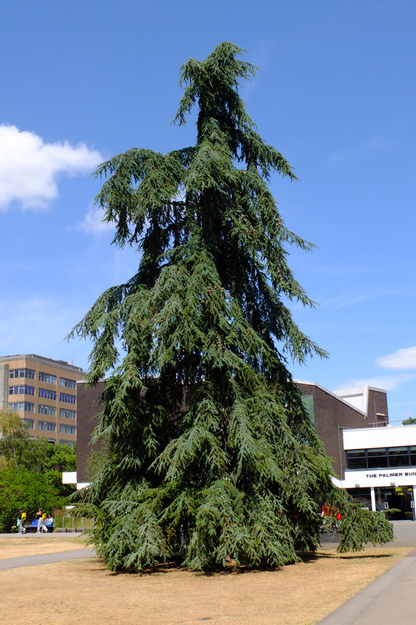
Whiteknights Quad
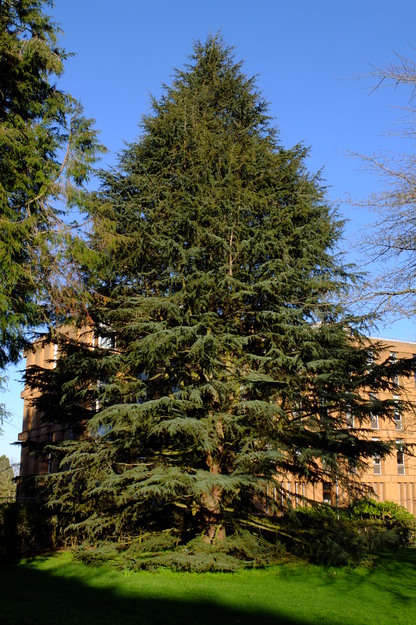
Carpark Eat
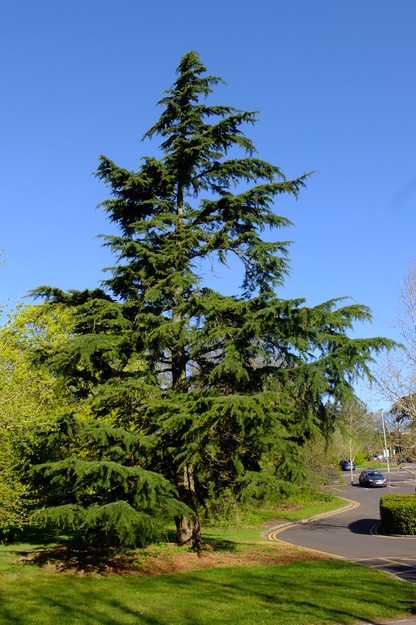
Wessex Way
Wessex Way
Wessex Way
Wessex Way
Wessex Way