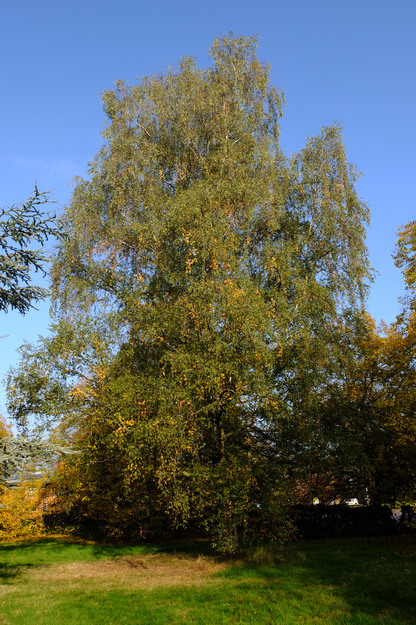
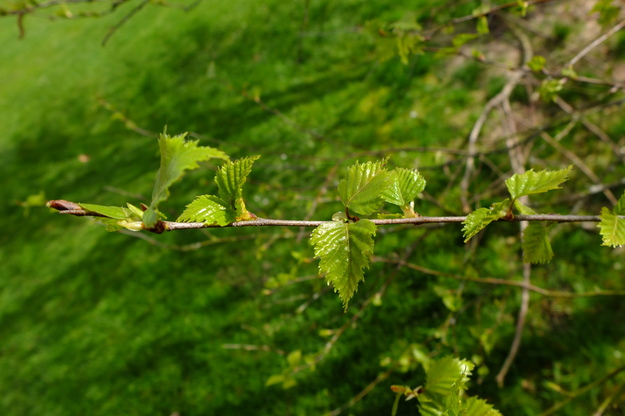
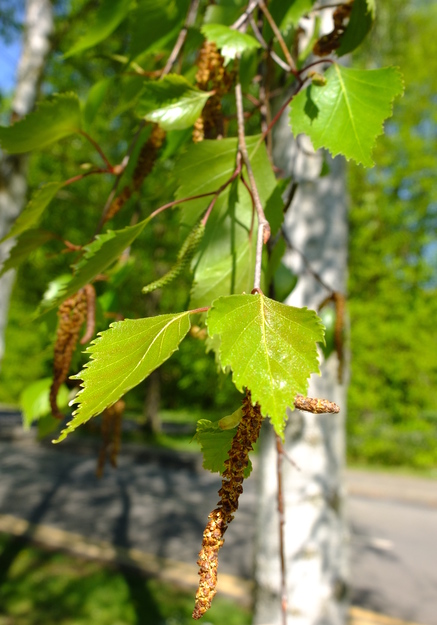
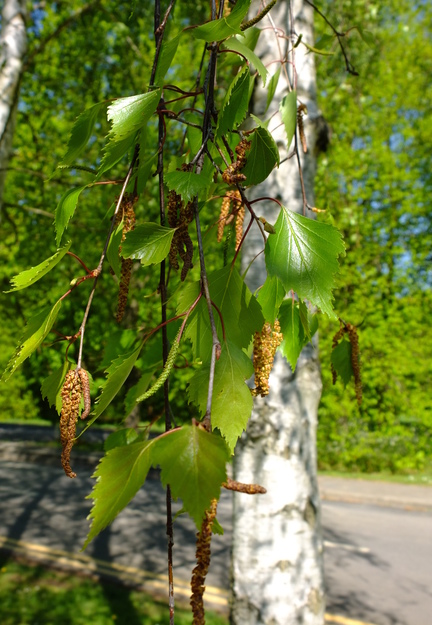
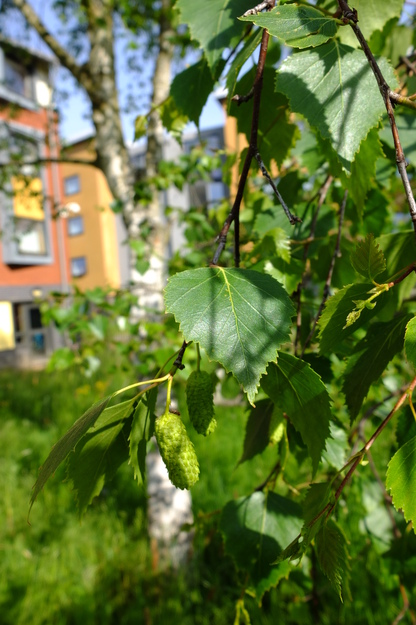
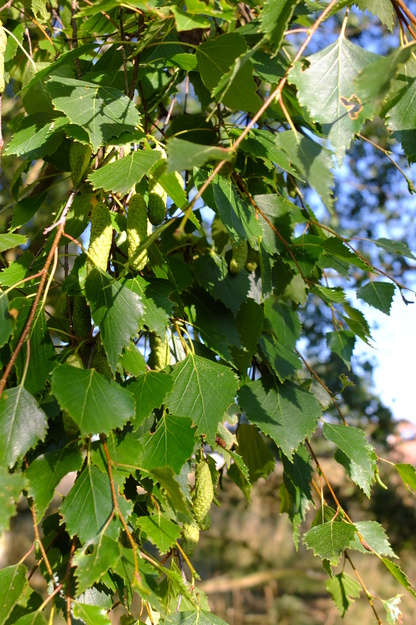
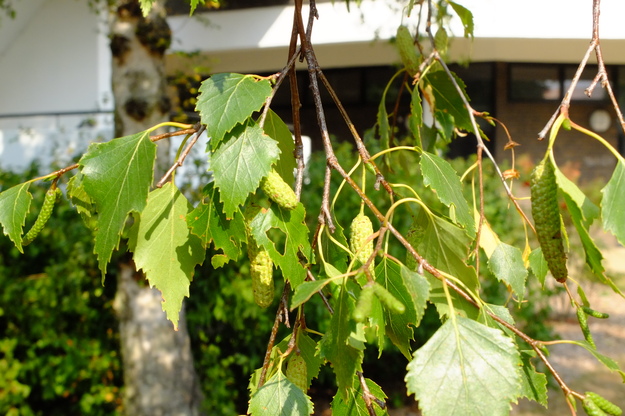
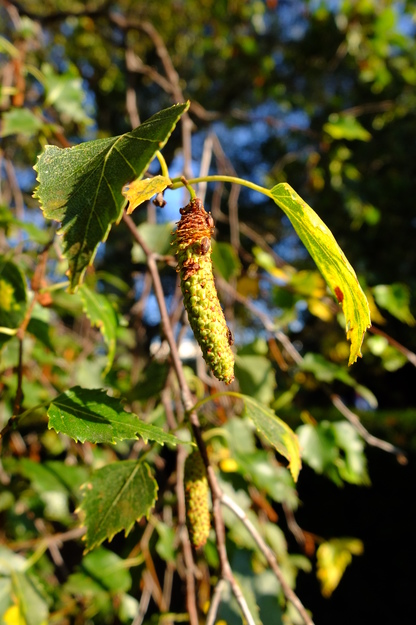
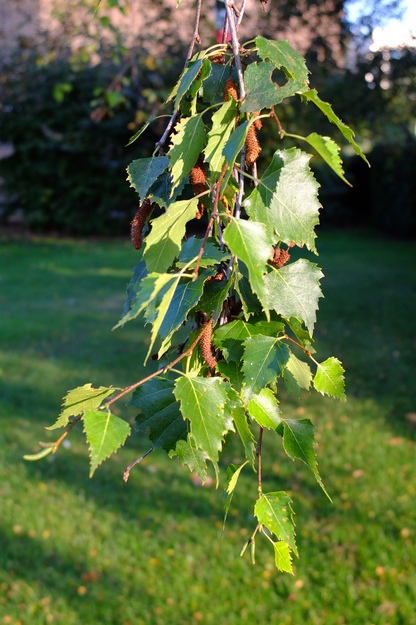
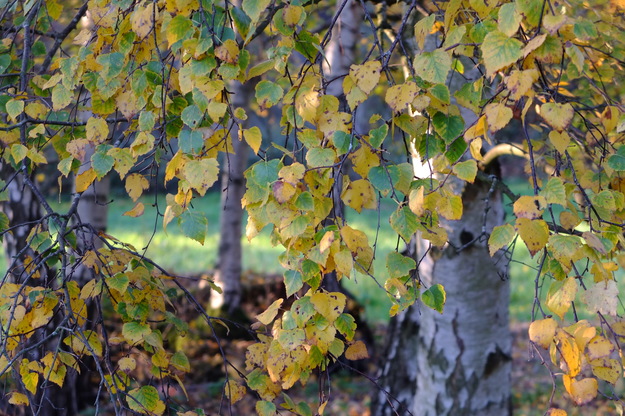
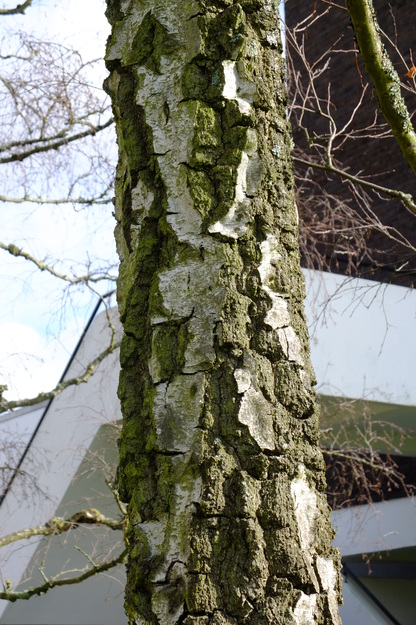
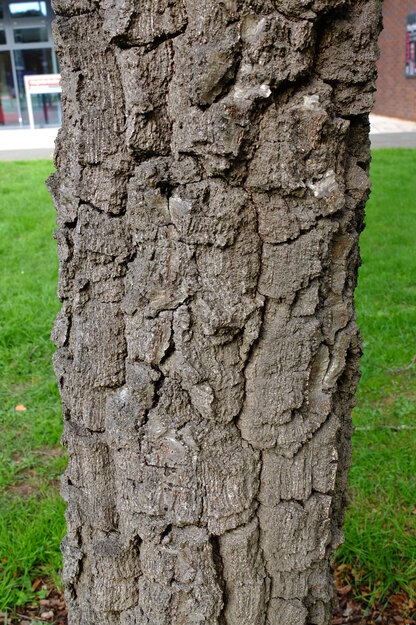
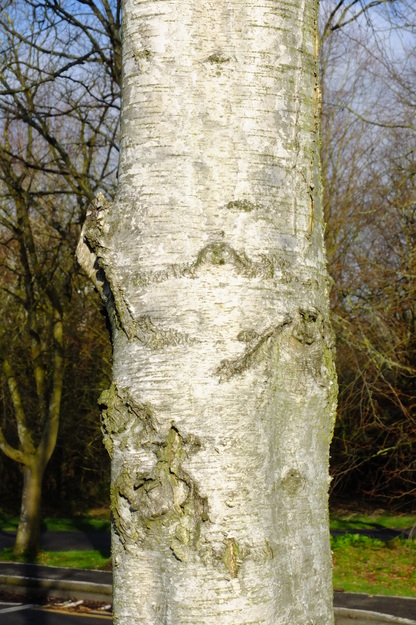
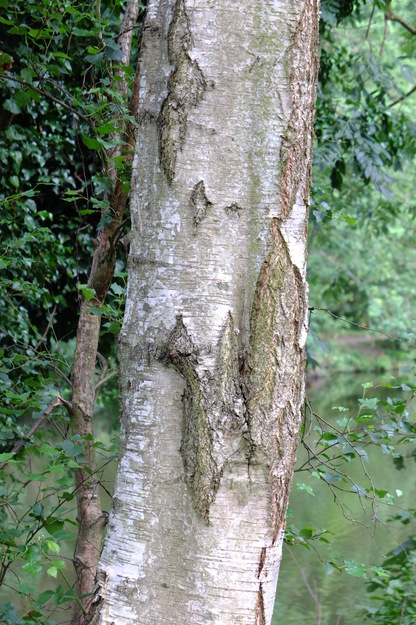
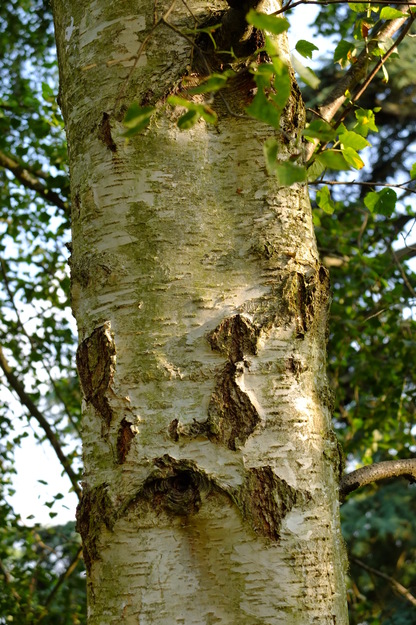
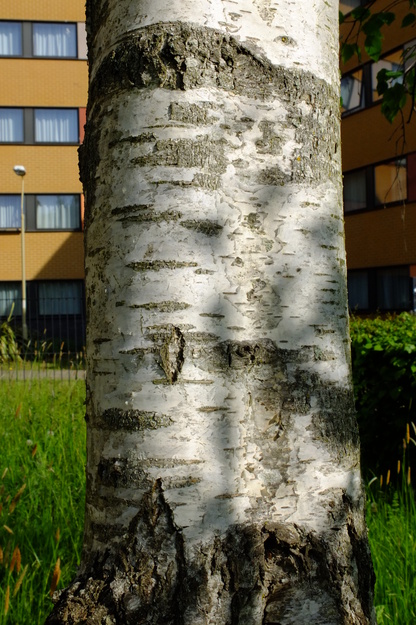
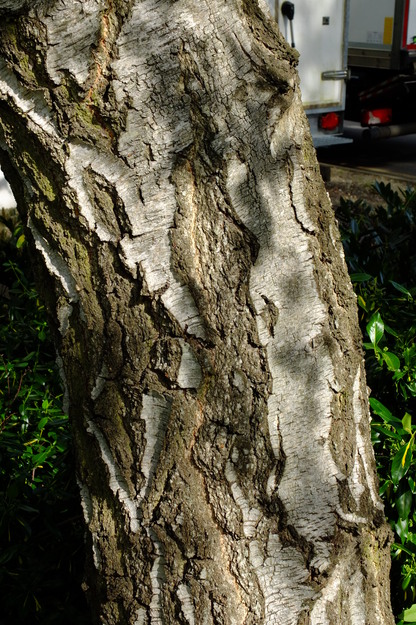
Betula pendula is a species of deciduous broadleaf flowering plants (in the Betulaceae or Birch family), native to Britain, Europe, the mountains of Morocco, the Caucasus, northern Turkey and Iran, temperate latitudes of Asia, Canada and Alaska. It is a medium-sized and fairly slender tree, up to about 20 metres tall. It has an airy canopy of pendulous branches that give the tree a graceful appearance and its specific name pendula, while its English name refers to the distinctive white papery bark of younger trees. Older bark develops dark diamond-shaped marks, forming a lattice around the remaining lighter bark, and eventually becomes entirely dark and rugged, especially at the base of the tree.
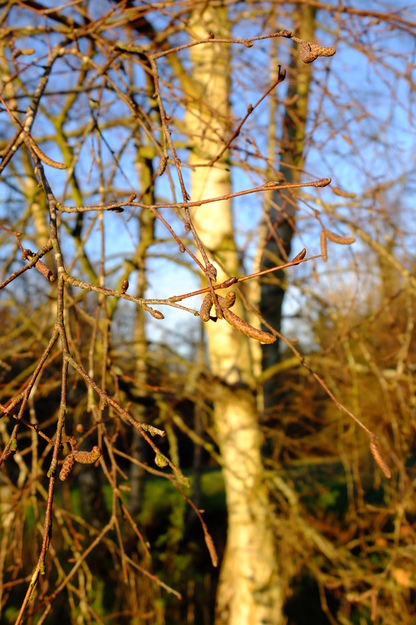
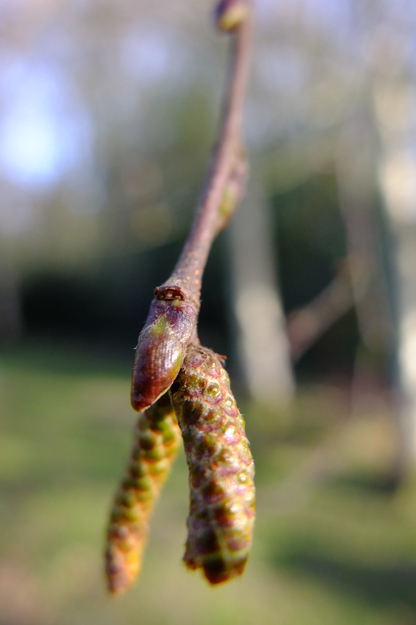
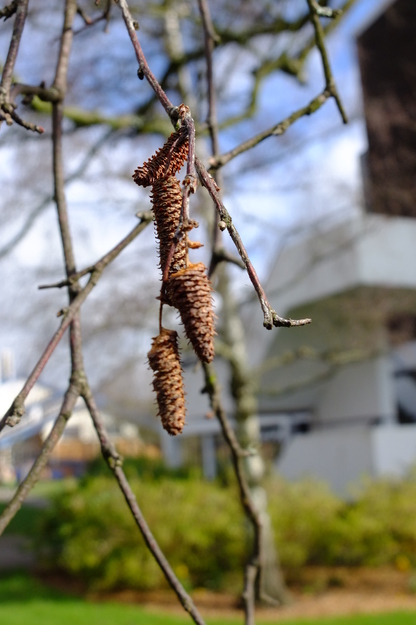
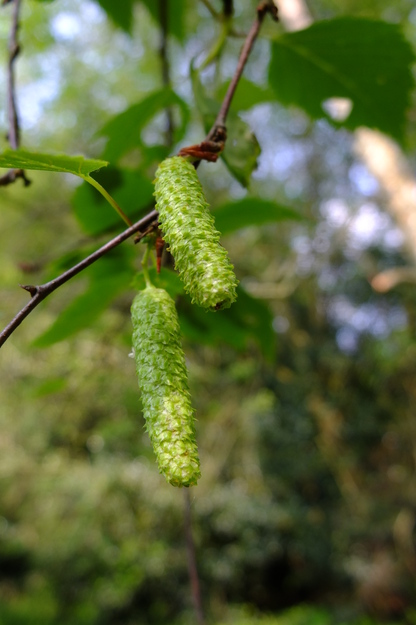
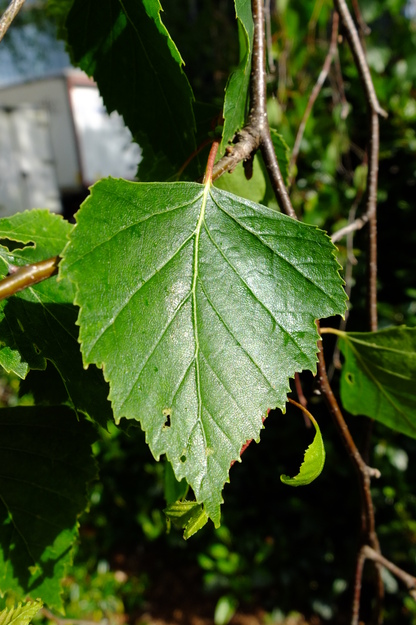
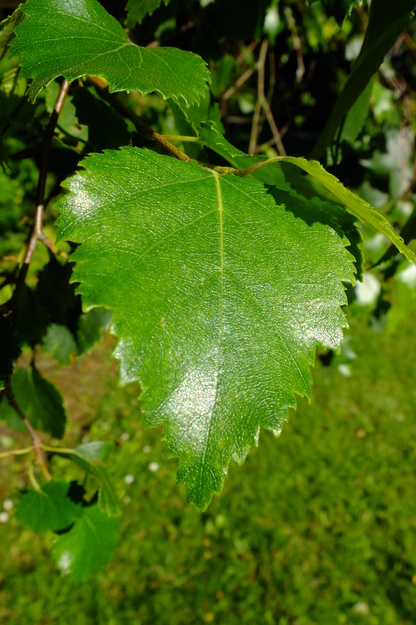
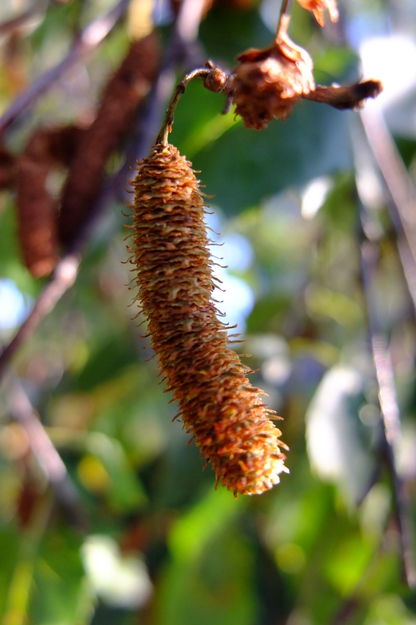
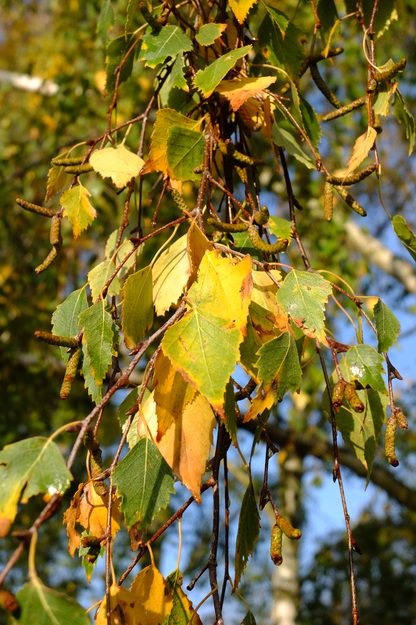
The twigs of Betula pendula are smooth except for small dark warts, distinctive for the species. It produces male catkins in an immature form during the winter, which become long, yellow and pendulous in spring, when the short green female catkins appear, with the leaves. After pollination by wind, the female catkins ripen over the summer into cylinders of small seeds, which are dispersed by the wind. The leaves are small, light green and roughly triangular, with a fairly flat base, pointed tip, and toothed edges (doubly serrated, meaning with two sizes of forward-facing teeth). They turn bright or golden yellow in autumn before they fall.
Despite looking somewhat delicate, Betula pendula is a hardy tree, a pioneer species, which can thrive in poor soils and exposed conditions, and grows at high latitude, well into the Arctic circle. It was elected the national tree of Finland in 1988. It is cultivated both for its appearance, and for timber, which is used for furniture, veneer and plywood, and is good as firewood.
External webpages
about this species


about this species
How to use the map
Drag with your finger or mouse to move the map.
 Zoom in or out. You can also do this with the mousewheel or by pinching.
Marker of the position of an identified tree, while the map is zoomed out. For the details, zoom in until you see tree markers like the following …

 Clicking on a tree marker brings up a window (called a "popup")
identifying the species of the tree there, with a small photo of it and buttons
to display more photos and information. NB only a few hundred of the thousands
of trees are marked!
Clicking on a tree marker brings up a window (called a "popup")
identifying the species of the tree there, with a small photo of it and buttons
to display more photos and information. NB only a few hundred of the thousands
of trees are marked!
7Marker of a tree of the selected species; clicking it will zoom and centre the map on this tree, and bring up a photo of it in the frame.
 Marker of a British Isles champion tree in
The Tree Register.
Marker of a British Isles champion tree in
The Tree Register.
✕ Click the cross at the top right of any window, including this one, to get rid of it.
 ✕
Click to dismiss all the popups at once.
✕
Click to dismiss all the popups at once.
Choose alternative versions of the map. The tree markers, popups, map centre and zoom are all unaffected by switching.
 Turn on a flashing dot which tracks your live location on the map, surrounded
by a circle indicating the accuracy of the location. This will work
only if your device has a satellite navigation (GPS etc.) receiver which is
enabled and can acquire a signal. You will probably be asked to allow the
website to access "location services" the first time you press this button.
The button flashes orange while trying to locate you,
and green while your location is shown. Press it again to turn it off.
Turn on a flashing dot which tracks your live location on the map, surrounded
by a circle indicating the accuracy of the location. This will work
only if your device has a satellite navigation (GPS etc.) receiver which is
enabled and can acquire a signal. You will probably be asked to allow the
website to access "location services" the first time you press this button.
The button flashes orange while trying to locate you,
and green while your location is shown. Press it again to turn it off.
 Recentre the map on your present location, while live location is switched on.
 Reset the map to its original centre and zoom.
To click on a tree, zoom in until you see
tree markers
Palmer QuadSee all photos of this tree
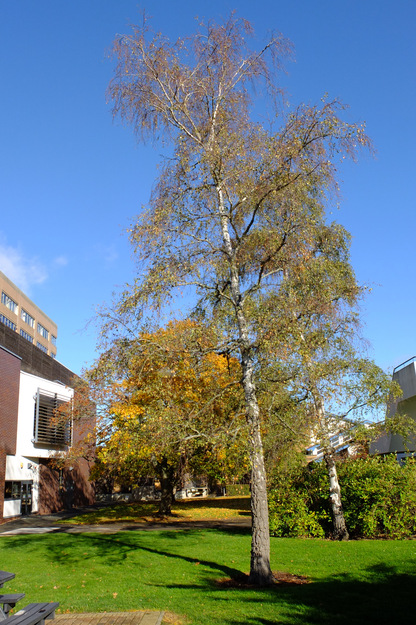
Tower NorthSee all photos of this tree
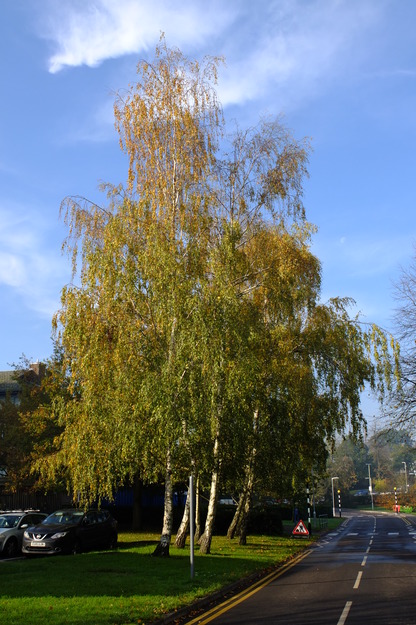
Nursten EastSee all photos of this tree
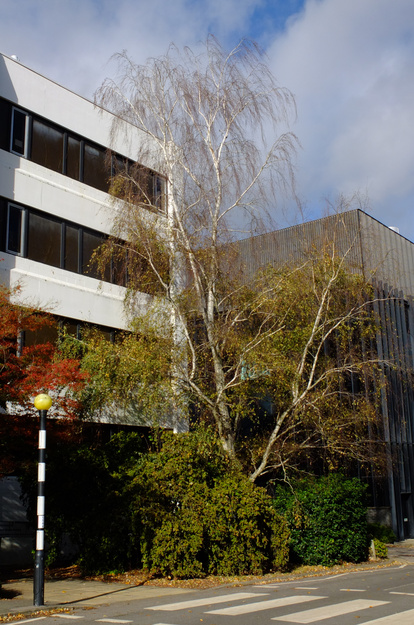
West lakesideSee all photos of this tree
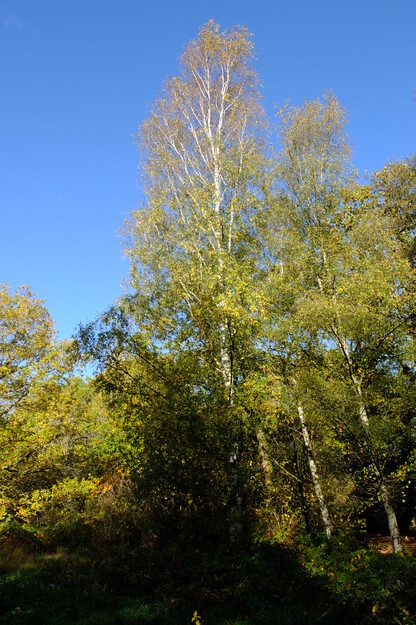
East lake parkSee all photos of this tree
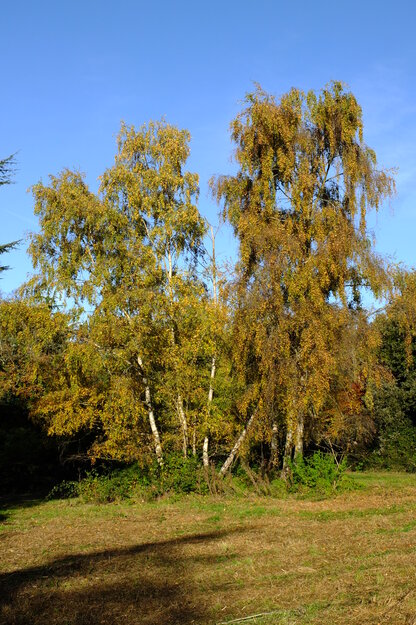
East lakesideSee all photos of this tree
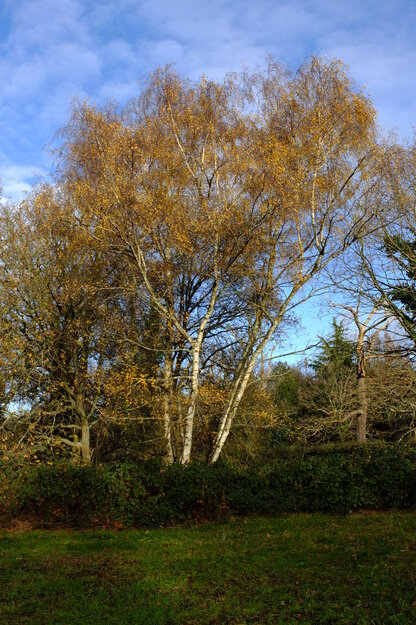
Childs lawnSee all photos of this tree
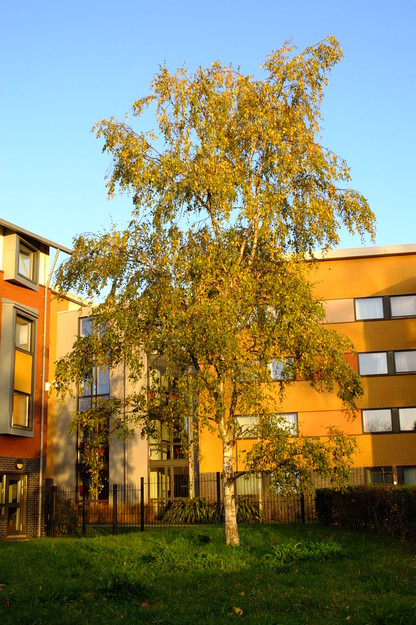
Harris GardenSee all photos of this tree
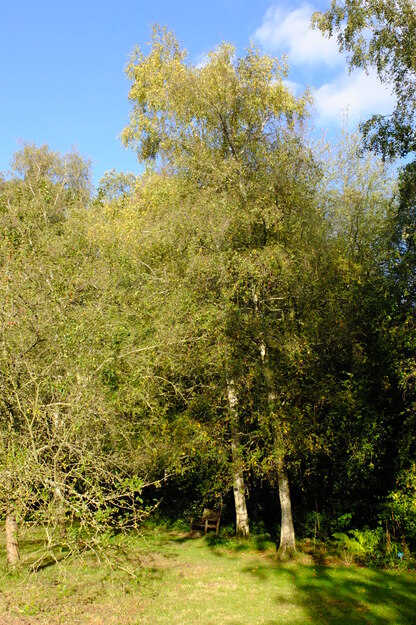
Harris GardenSee all photos of this tree
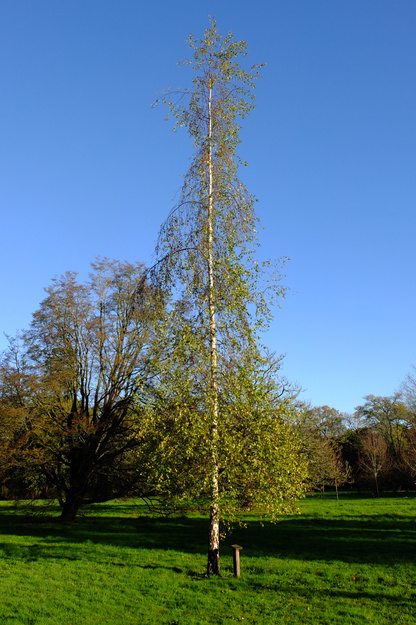
Harris GardenSee all photos of this tree
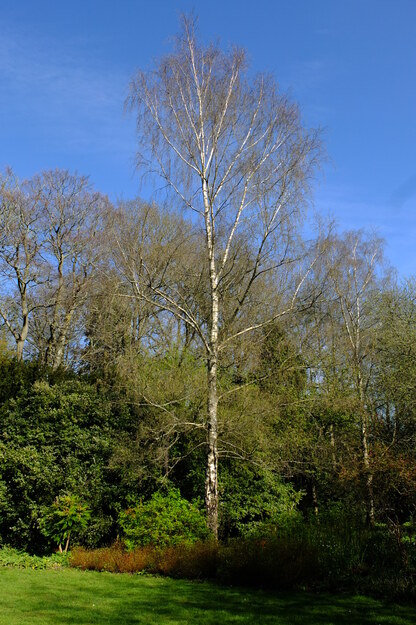
Miller Wager TriangleSee all photos of this tree