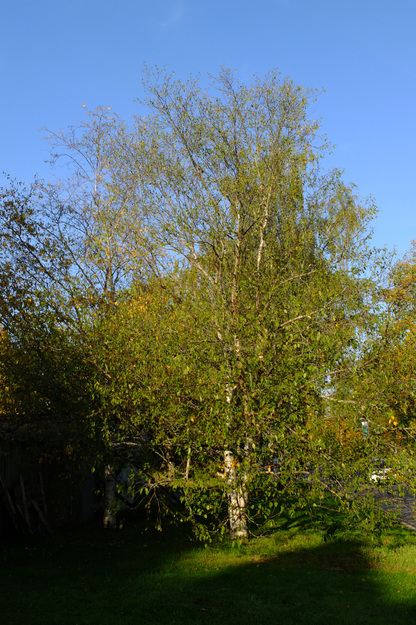
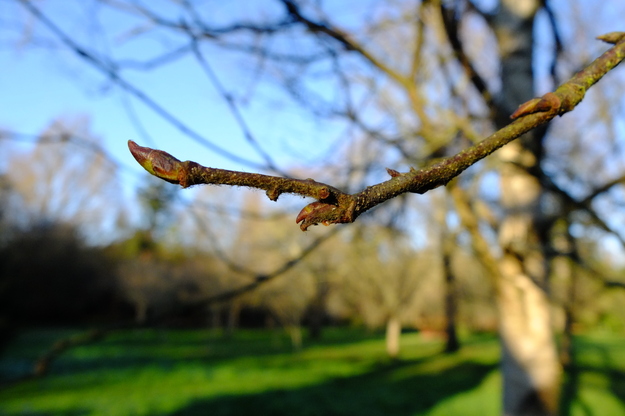
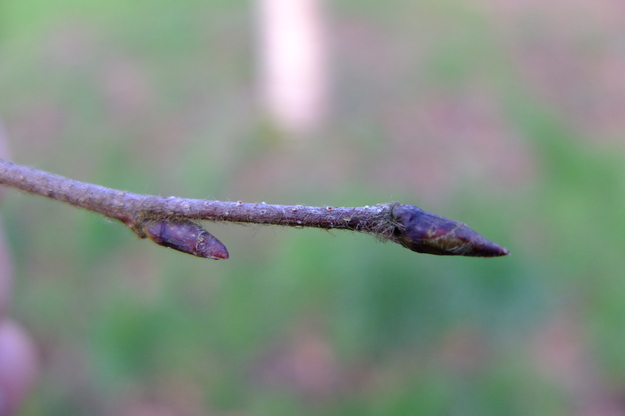
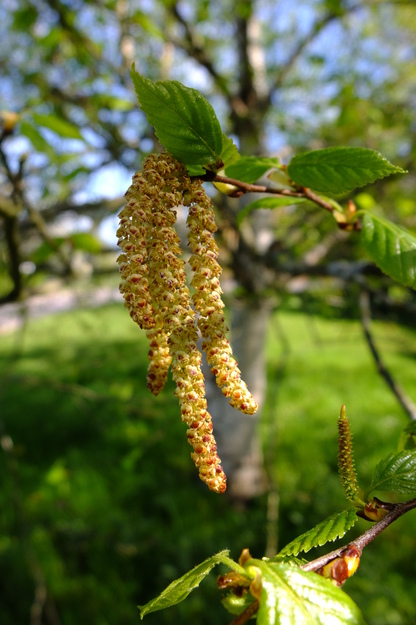
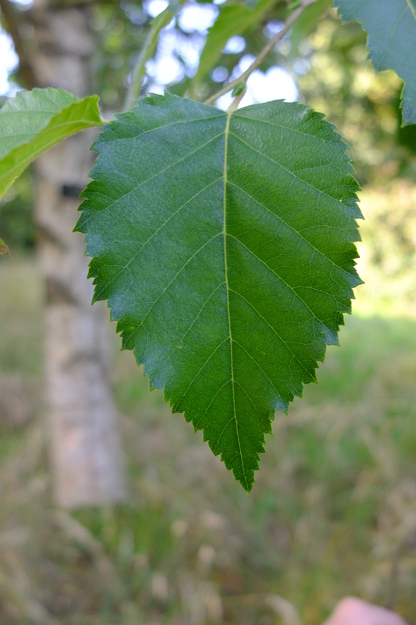
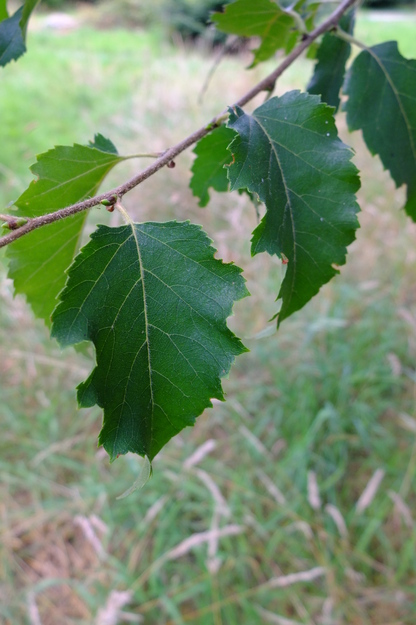
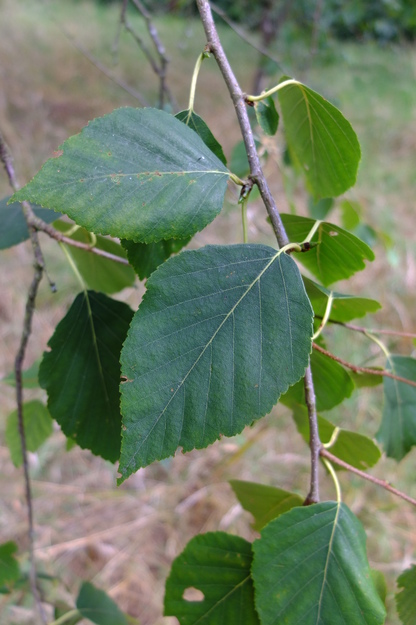
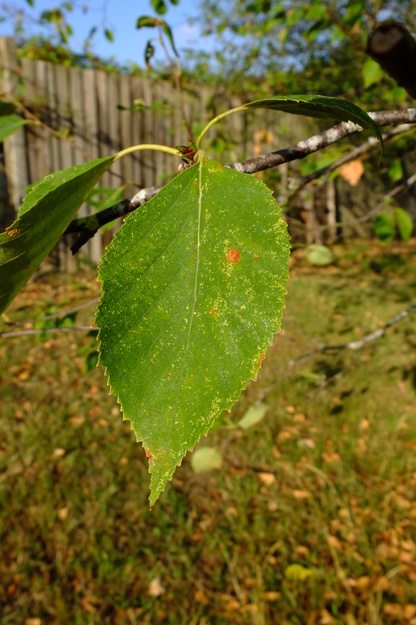
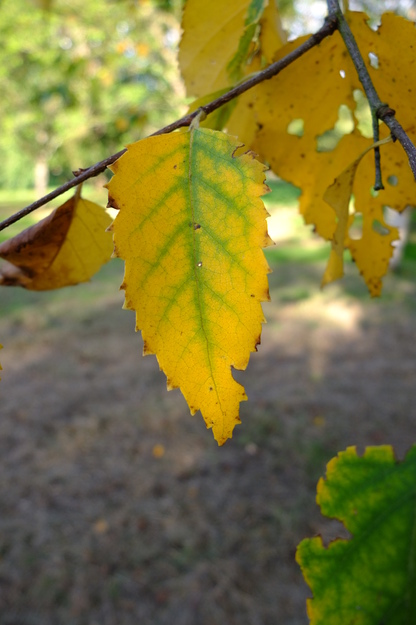
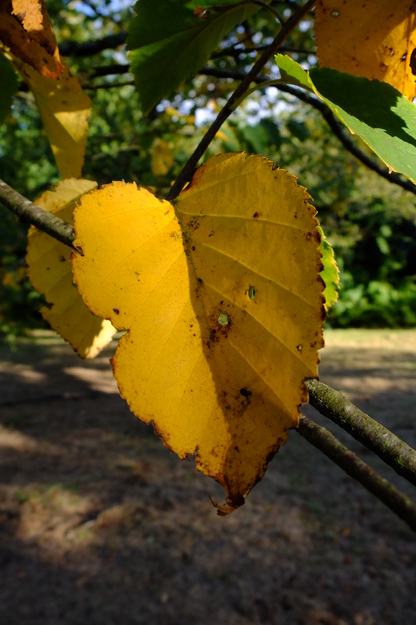
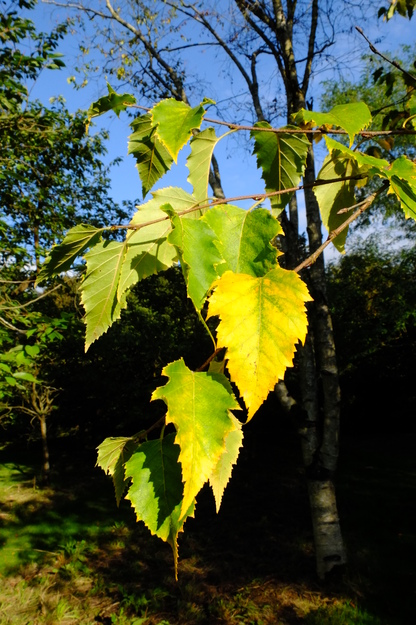
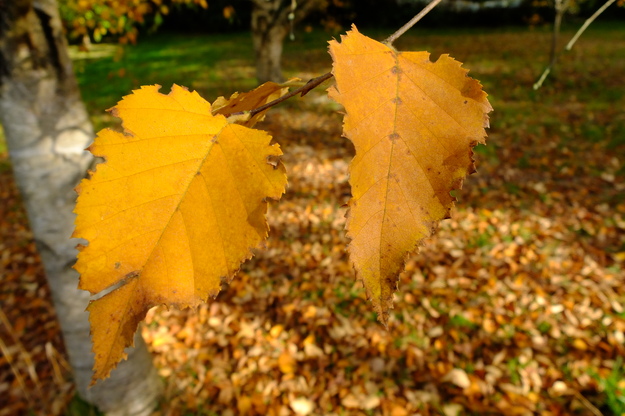
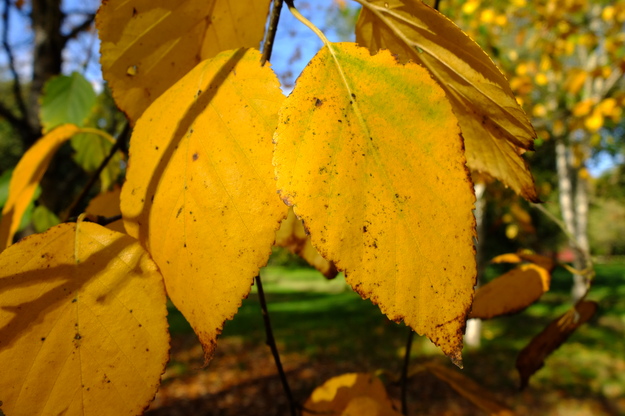
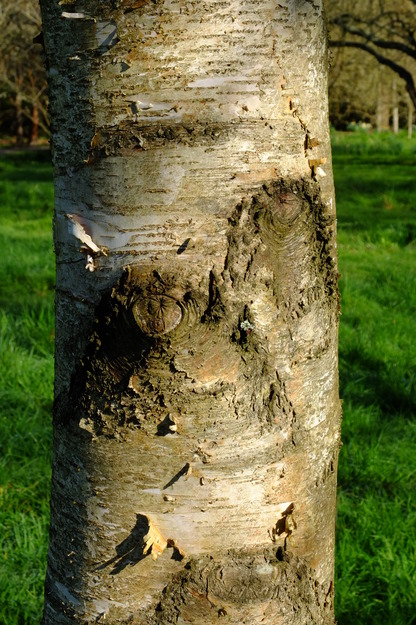
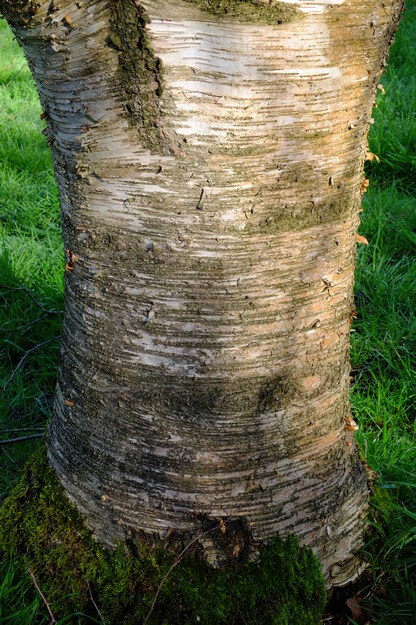
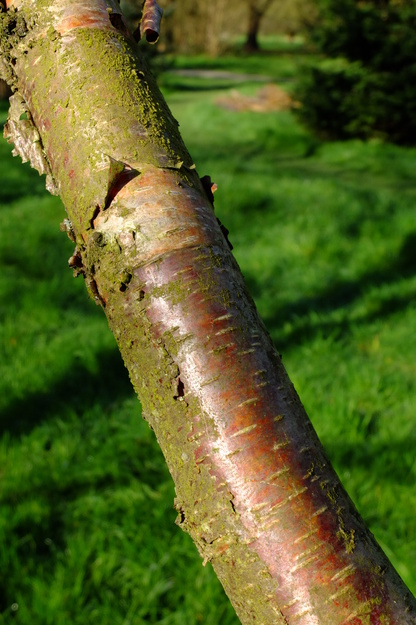
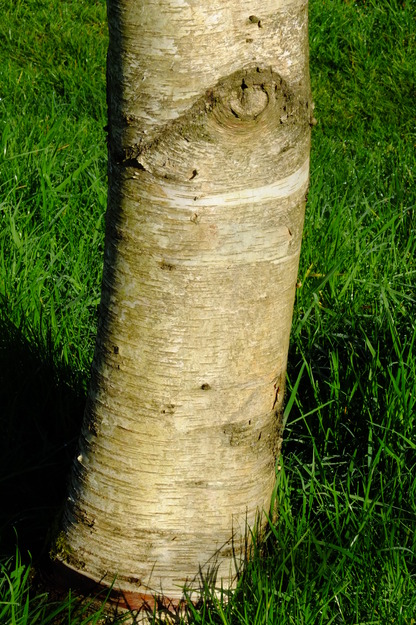
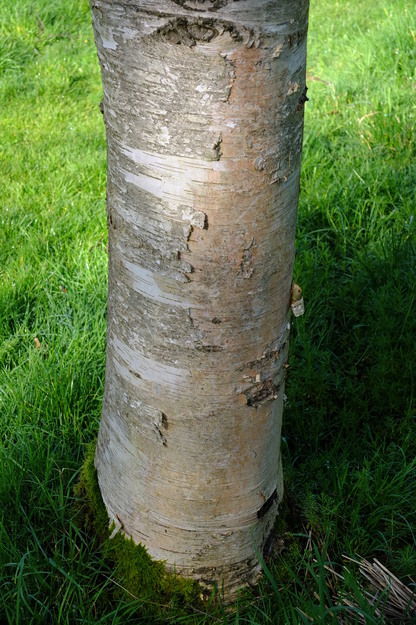
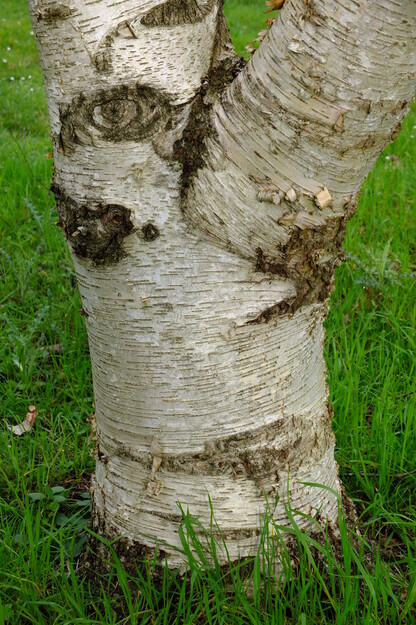
Betula papyrifera is a species of deciduous broadleaf flowering plants (in the Betulaceae or Birch family), native to northern North America. It is admired for its striking white bark that peels horizontally into thin, papery layers. The bark beneath, and the bark of younger trees, can be orange or pink. Historically, the bark was widely used by native peoples for making canoes, containers, and shelters. Today the tree is valued for ornamental planting, wildlife habitat, and its ecological role in early forest succession, often colonising open areas after fire or other disturbance.
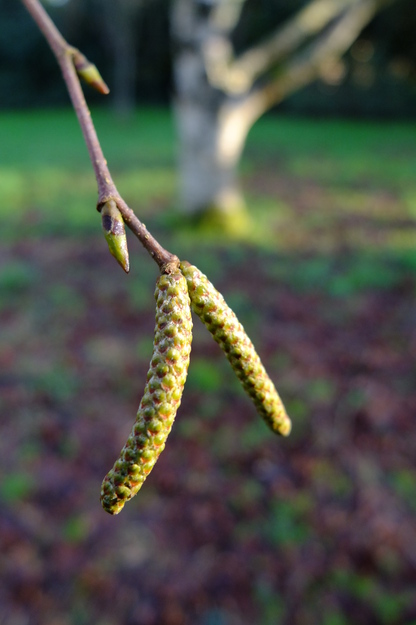
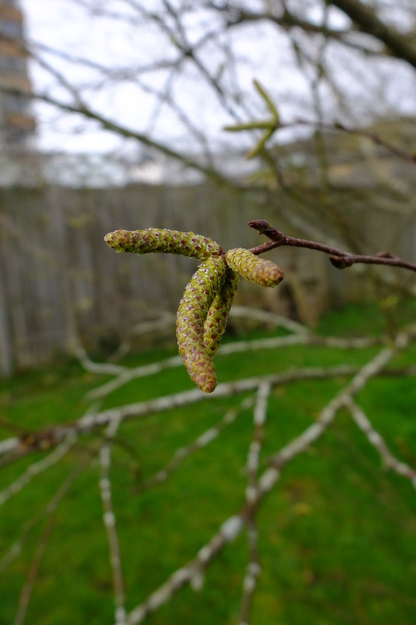
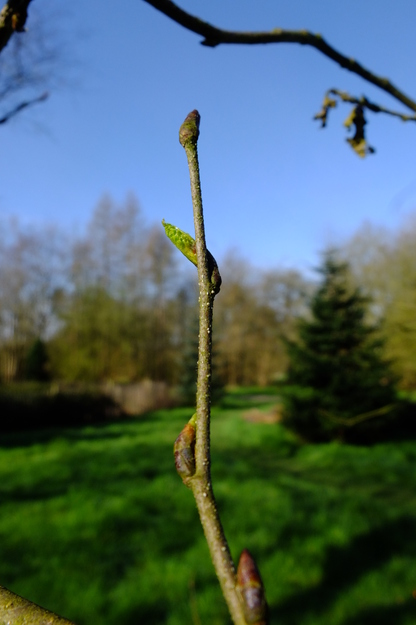
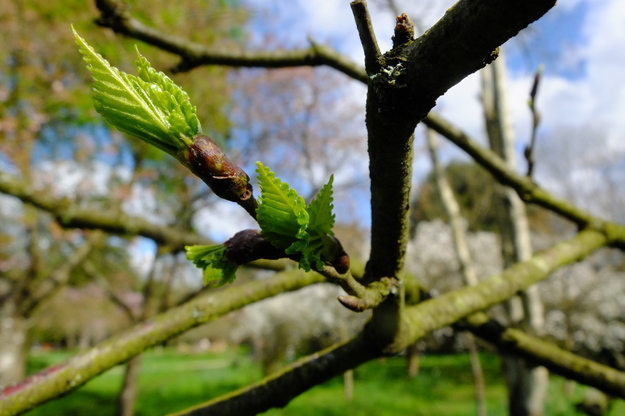
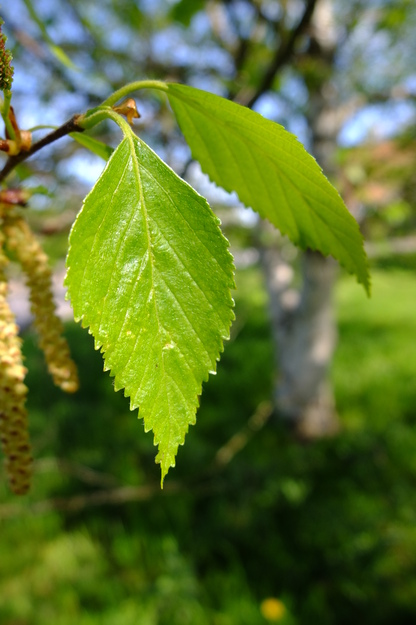
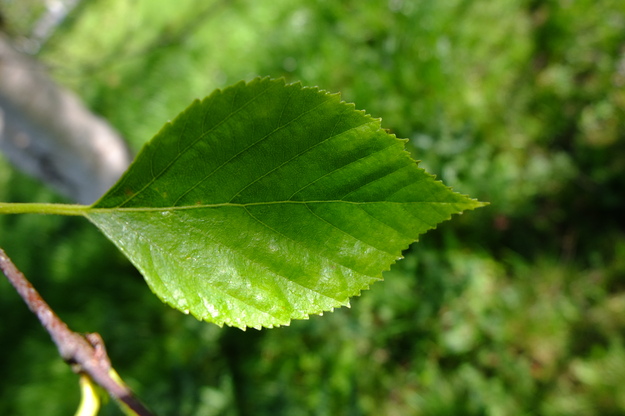
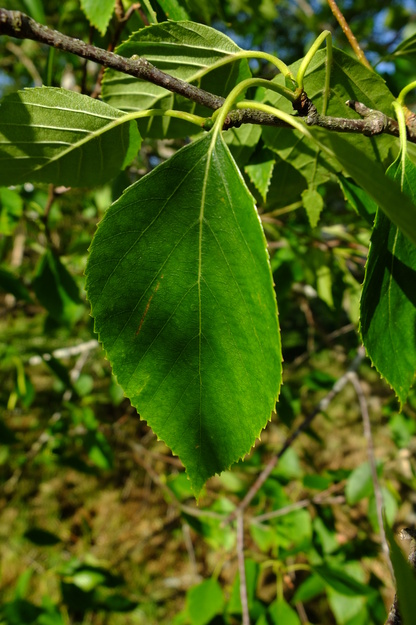
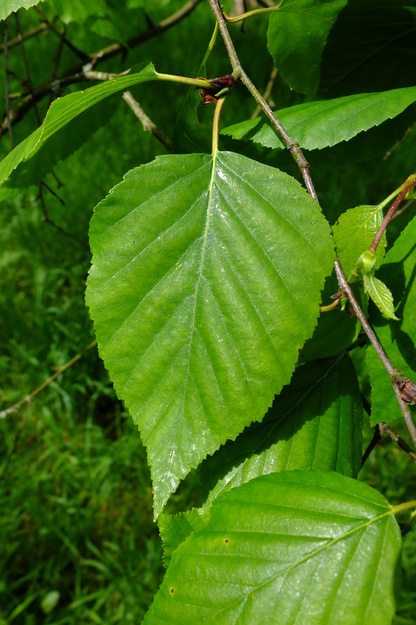
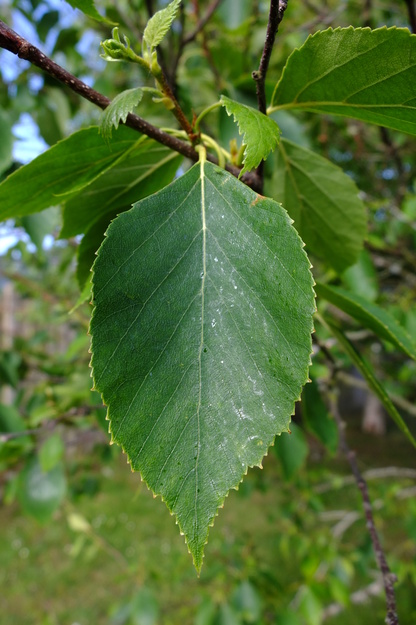
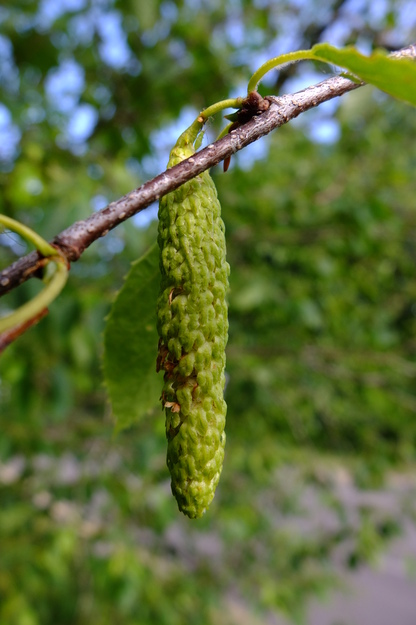
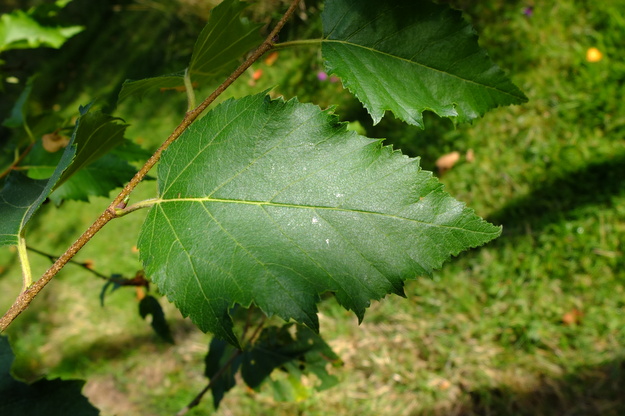
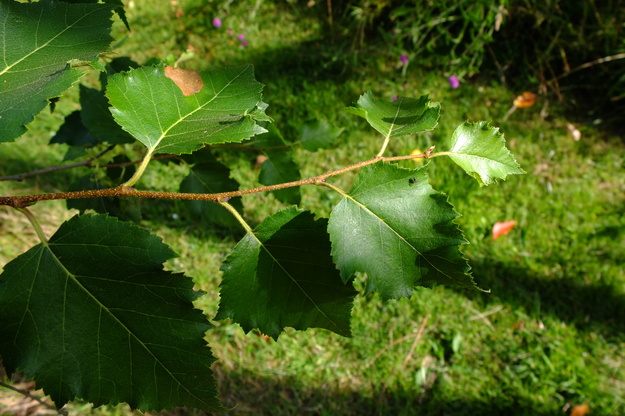
Betula papyrifera thrives in cool climates and well-drained soils. Typically growing 15–25 metres tall, it has an open, rounded crown. Over winter it produces slender catkins, opening in spring along with the new leaves, which are arranged on alternate sides of the twig. The leaves are medium-sized and oval, tapering to a point at the end, with 6–9 pairs of veins running forwards from the central axis to the serrated edges (with forward-pointing teeth). They turn bright yellow in autumn before falling.
External webpages
about this species


about this species
How to use the map
Drag with your finger or mouse to move the map.
 Zoom in or out. You can also do this with the mousewheel or by pinching.
Marker of the position of an identified tree, while the map is zoomed out. For the details, zoom in until you see tree markers like the following …

 Clicking on a tree marker brings up a window (called a "popup")
identifying the species of the tree there, with a small photo of it and buttons
to display more photos and information. NB only a few hundred of the thousands
of trees are marked!
7Marker of a tree of the selected species; clicking it will zoom and centre the map on this tree, and bring up a photo of it in the frame.
 Marker of a British Isles champion tree in
The Tree Register.
✕ Click the cross at the top right of any window, including this one, to get rid of it.
 Click to choose whether more than one popup can be open at once.

 Click to dismiss the open popup, or all open popups. You can also close
the popups by clicking on the map anywhere apart from a popup or marker.
Choose alternative versions of the map. The tree markers, popups, map centre and zoom are all unaffected by switching.
 Turn on a flashing dot which tracks your live location on the map, surrounded
by a circle indicating the accuracy of the location. This will work
only if your device has a satellite navigation (GPS etc.) receiver which is
enabled and can acquire a signal. You will probably be asked to allow the
website to access "location services" the first time you press this button.
The button flashes orange while trying to locate you,
and green while your location is shown. Press it again to turn it off.
 Recentre the map on your present location, while live location is active.
 Reset the map to its original centre and zoom.
To click on a tree, zoom in until you see
tree markers
Harris GardenSee all photos of this tree
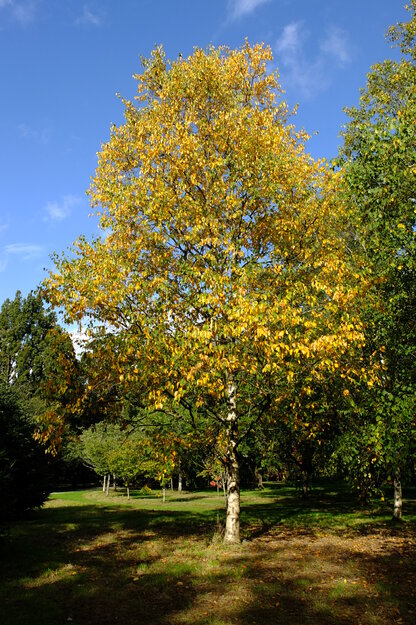
Harris GardenSee all photos of this tree
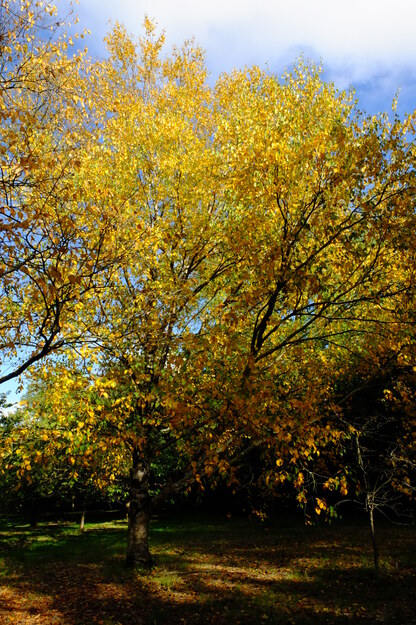
Harris GardenSee all photos of this tree
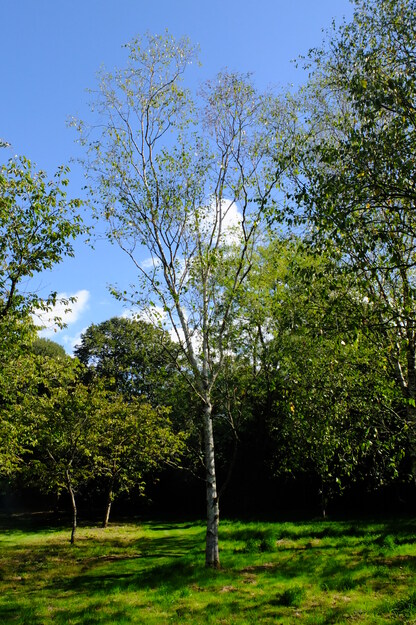
Tower NorthSee all photos of this tree