How to use the map
Drag with your finger or mouse to move the map.
 Zoom in or out. You can also do this with the mousewheel or by pinching.

 Clicking on a tree marker brings up a window (called a "popup")
identifying the species of the tree there, with a small photo of it and buttons
to display more photos and information. NB only a few hundred of the thousands
of trees are marked!
Clicking on a tree marker brings up a window (called a "popup")
identifying the species of the tree there, with a small photo of it and buttons
to display more photos and information. NB only a few hundred of the thousands
of trees are marked!
✕ Click the cross at the top right of any window, including this one, to get rid of it.
Click to dismiss all the popups at once.
Choose alternative versions of the map. The tree markers, popups, map centre and zoom are all unaffected by switching.
 Turn on a flashing dot which tracks your live location on the map. It will work
only if your device has a satellite navigation (GPS etc.) receiver which is
enabled and can acquire a signal. You will probably be asked to allow the
website to access "location services" the first time you press this button.
It turns red while trying to locate you, then green if this succeeds. Press it
again to turn it off.
Turn on a flashing dot which tracks your live location on the map. It will work
only if your device has a satellite navigation (GPS etc.) receiver which is
enabled and can acquire a signal. You will probably be asked to allow the
website to access "location services" the first time you press this button.
It turns red while trying to locate you, then green if this succeeds. Press it
again to turn it off.
 Recentre the map on your present location, while live location is switched on.
Central Whiteknights Tree Route
This route is an anticlockwise tour (as viewed on the map) of the central part of the Whiteknights campus. It begins and ends outside the main entrance on the west side of Whiteknights House, near the bus stop on Queen's Drive, because this is an easily identifiable point, but you could start anywhere.
The route is shown by the red line on the map, and described
by the text below. The map stays in a fixed position on the screen, while the
description scrolls. The trees included in the route are marked by red circles
on the map. Each of these featured trees is shown and described in a white box
in the text. The trees on the route are numbered in order of visiting; the
number in each red circle on the map (e.g.  42)
corresponds to the number in the button at the top left corner of the box
describing the tree (e.g. ). If you click or press a
numbered button in the description, the map will centre and zoom in on the
corresponding tree. Similarly, the map will centre and zoom in on a numbered
red circle if you click or press it, and in addition the description will
scroll to bring the corresponding tree description into view.
42)
corresponds to the number in the button at the top left corner of the box
describing the tree (e.g. ). If you click or press a
numbered button in the description, the map will centre and zoom in on the
corresponding tree. Similarly, the map will centre and zoom in on a numbered
red circle if you click or press it, and in addition the description will
scroll to bring the corresponding tree description into view.
Please note that the photos of the trees that feature in this route aren't always viewed from the direction by which you'll approach them. They are taken from angles that give the best view or which are least overshadowed. On the other hand, the annotated photos are intended for navigation; they show the outlook that you will have while following the route, with some of the featured trees that lie ahead indicated in red and yellow. A few other trees, not included in the route, are also indicated on these photos, in grey and white.
Start on Queen's Drive, facing Whiteknights House, at the bottom of the path which leads to its main entrance.

Temporary note. This route doesn't yet have any navigational photos apart from the one above. They will be provided soon! The Harris Garden route has them, though.
Betula utilis is a group of three trees on your right, beyond the driveway that comes up from the basement of Whiteknights House.
Betula utilis, Himalayan birch
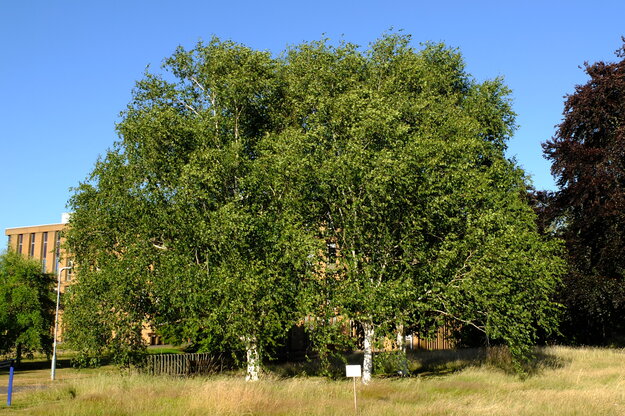
Deciduous broadleaf flowering (angiosperm) plant of the Betulaceae or Birch family, not native in Britain.
Fagus sylvatica cultivar, Copper beech
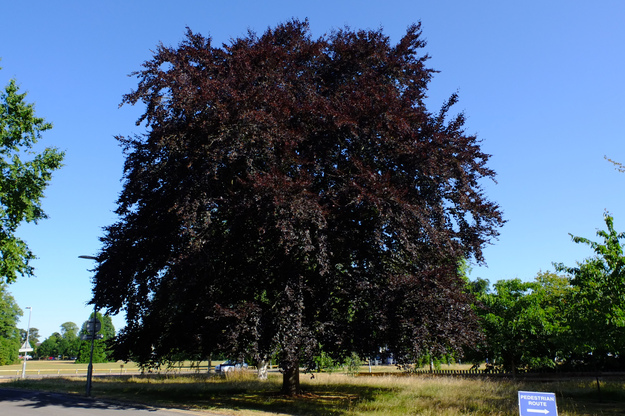
Deciduous broadleaf flowering (angiosperm) plant of the Fagaceae or Beech family, a cultivated variety.
Pinus sylvestris, Scots pine
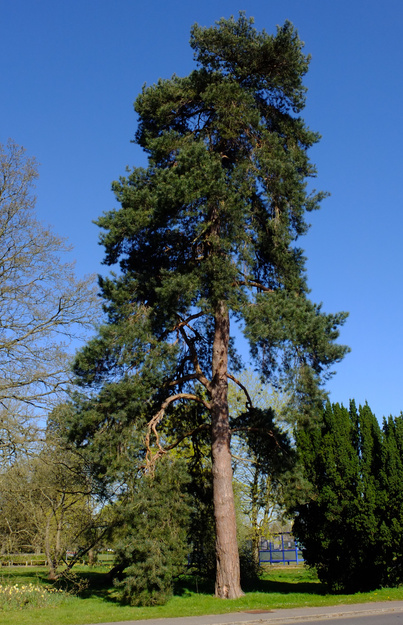
Evergreen needleleaf coniferous (gymnosperm) plant of the Pinaceae or Pine family, native to Britain.
Quercus cerris, Turkey oak
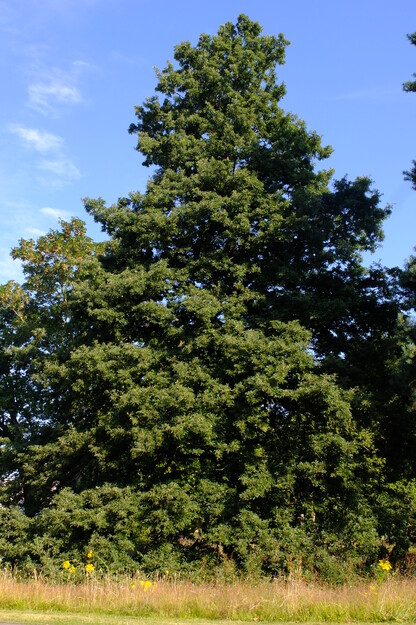
Deciduous broadleaf flowering (angiosperm) plant of the Fagaceae or Beech family, native to south-eastern Europe and Asia Minor, and naturalised in Britain.
Turkey oak was introduced to the UK as an ornamental tree in the 18th century. It can act as host to the gall wasp, whose larvae damage the acorns of native British oaks. Its wood is liable to cracking so is only used for fencing and similar roles.
Araucaria araucana, Monkey puzzle tree
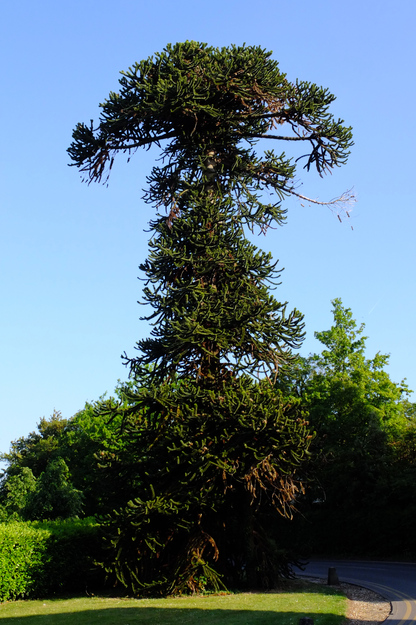
Evergreen spiny-leaf coniferous (gymnosperm) plant of the Araucariaceae family, native to temperate forests of Chile and Argentina.
Araucaria araucana is adapted to volcanic soils and harsh mountain climates. It is easily recognized by its thick, armour-like, triangular leaves that spiral densely around its branches, giving the tree a dramatic, prehistoric appearance. Its popular name derives from a comment that climbing it would be a puzzle for a monkey. Growing up to 30–40 metres tall, it develops a straight trunk with a distinctive umbrella-shaped crown as it matures. Male and female cones grow on separate trees, with the large female cones producing edible seeds that have long been an important food source for Indigenous communities. Araucaria araucana is both an ecological and cultural symbol in its native range, though it is now considered endangered due to logging and habitat loss.
Picea abies, Norway spruce
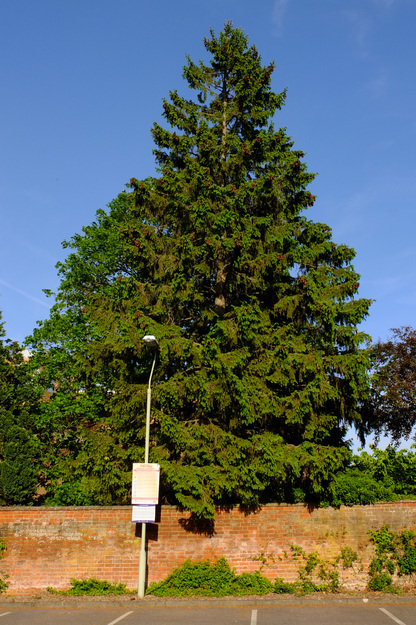
Evergreen needleleaf coniferous (gymnosperm) plant of the Pinaceae or Pine family, native to northern, central and eastern Europe.
This is a large tree, growing up to 35–55 metres, which produces long, cylindrical cones that hang downward from the branches. Norway spruce grows well in cool climates and well-drained soils, forming extensive forests across Europe. It is one of the most economically important coniferous species of the continent, its wood being used for construction, paper production, and musical instruments. It's also popular as a traditional Christmas tree. Every year the Norwegian capital city, Oslo, provides a Norway spruce for Trafalgar Square in London as thanks for the aid given during the Second World War.
Acer pseudoplatanus, Sycamore
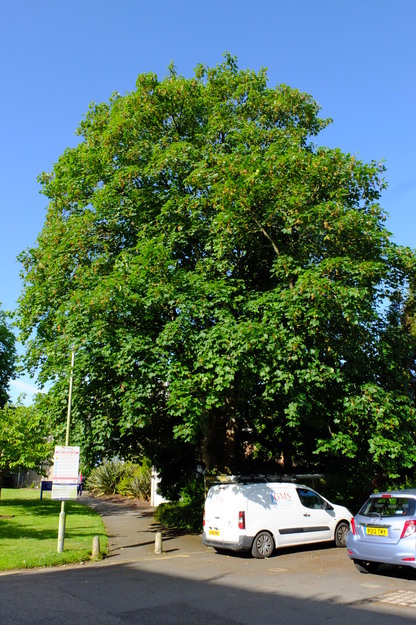
Deciduous broadleaf flowering (angiosperm) plant of the Sapindaceae or Soapberry family, not native but naturalised in Britain.
Platanus × acerifolia, London plane

Deciduous broadleaf flowering (angiosperm) plant of the Platanaceae family, a hybrid species.
Carya ovata, Shagbark hickory
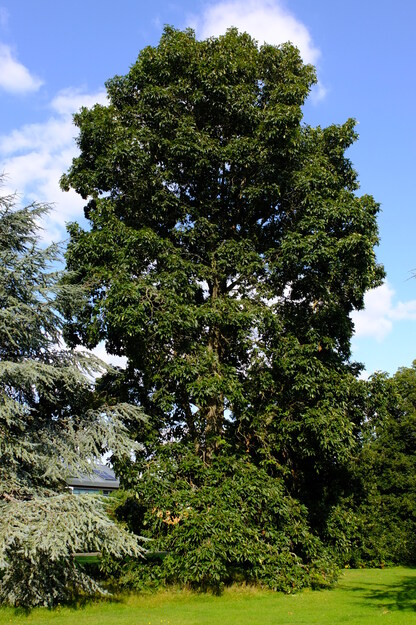
Deciduous broadleaf flowering (angiosperm) plant of the Juglandaceae or Walnut family, not native in Britain.
Tilia × europaea, Common lime or linden

Deciduous broadleaf flowering (angiosperm) plant of the Malvaceae or Mallow family, native to Britain.
Cedrus atlantica, Atlantic blue or Atlas cedar
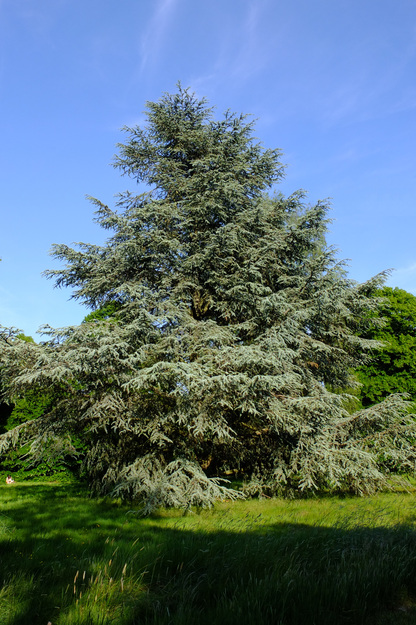
Evergreen needleleaf coniferous (gymnosperm) plant of the Pinaceae or Pine family, not native in Britain.
Betula pendula, Silver birch
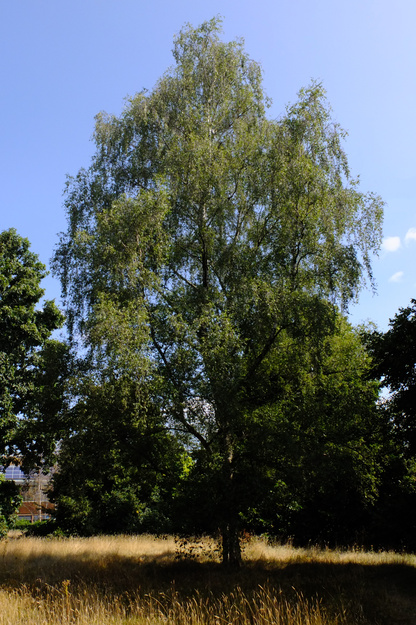
Deciduous broadleaf flowering (angiosperm) plant of the Betulaceae or Birch family, native to Britain, Europe and parts of Asia.
Betula pendula is a slender tree, widely recognised for its elegant form and distinctive white, papery bark. It has light, triangular green leaves that turn bright yellow in autumn, and delicate, pendulous branches that give the tree a graceful appearance. In spring it produces catkins, which are important for wildlife.
Acer saccharum, Sugar maple
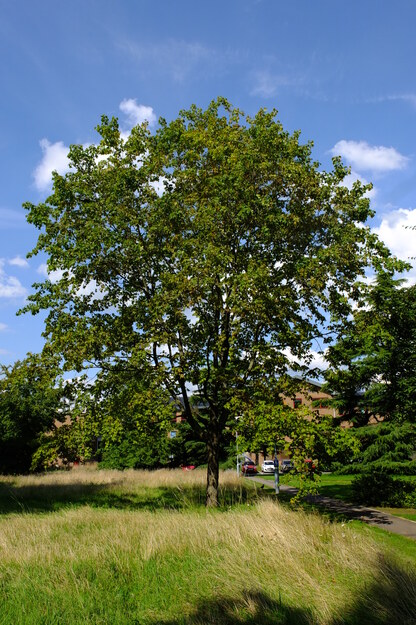
Deciduous broadleaf flowering (angiosperm) plant of the Sapindaceae or Soapberry family, not native in Britain.
Liquidambar styraciflua, Sweetgum
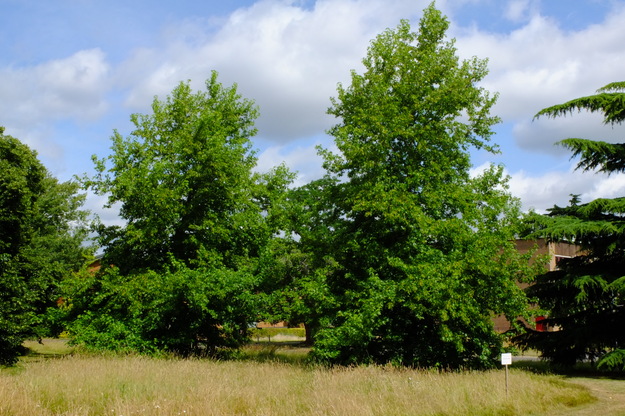
Deciduous broadleaf flowering (angiosperm) plant of the Altingiaceae family, not native in Britain.
Prunus cultivar, Ornamental cherry
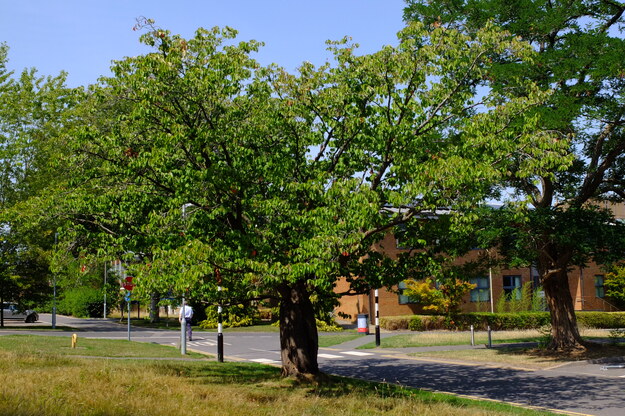
Deciduous broadleaf flowering (angiosperm) plant of the Rosaceae or Rose family, a cultivated variety.
Prunus serrulata
Aesculus indica, Indian horsechestnut
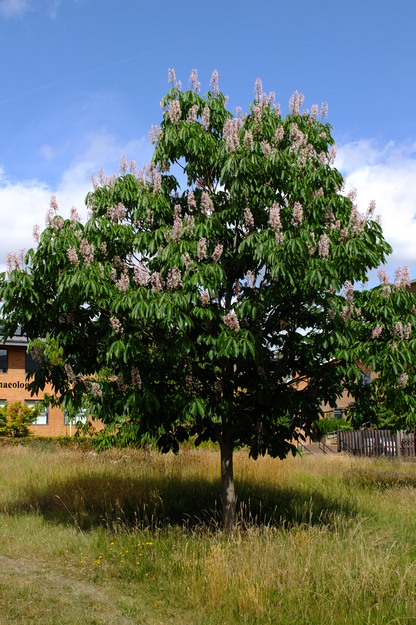
Deciduous broadleaf flowering (angiosperm) plant of the Sapindaceae or Soapberry family, not native in Britain.
Aesculus flava, Sweet buckeye
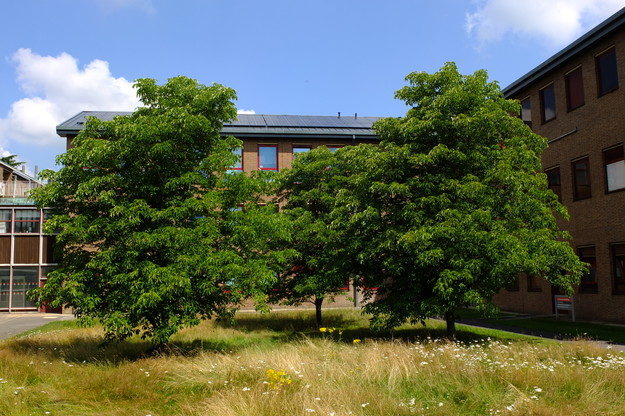
Deciduous broadleaf flowering (angiosperm) plant of the Sapindaceae or Soapberry family, not native in Britain.
Robinia pseudoacacia, False acacia or black locust
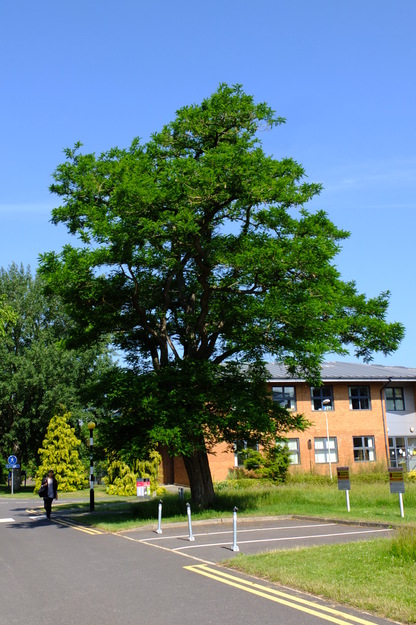
Deciduous broadleaf flowering (angiosperm) plant of the Fabaceae or Legume, pea or bean family, not native in Britain.
Populus alba, White or silver poplar
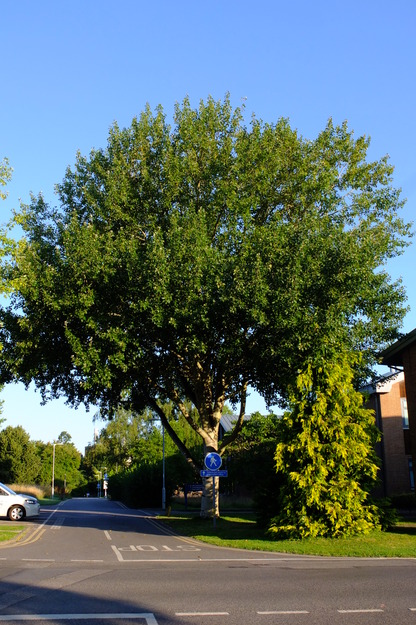
Deciduous broadleaf flowering (angiosperm) plant of the Salicaceae or Willow family, native to Britain.
Chamaecyparis lawsoniana, Lawson cypress
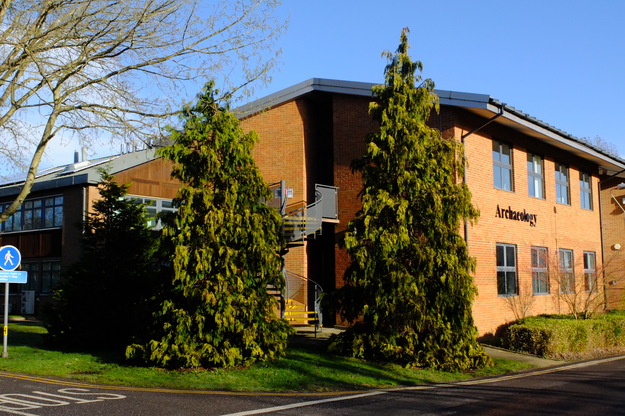
Evergreen needleleaf coniferous (gymnosperm) plant of the Cupressaceae or Cypress family, native to north-west North America.
Chamaecyparis lawsoniana can live for 600 years and reach heights of 50 metres in the wild, forming a narrow, conical crown with drooping branches covered in fine, scale-like foliage that emits a scent when crushed, variously described as resinous and pungent. The small, round cones mature from green to brown, and the bark is reddish-brown and fibrous, peeling in thin strips. Chamaecyparis lawsoniana wood is light, strong, rot-resistant and aromatic. The species has a wide range of ornamental cultivars, commonly planted in gardens and landscapes.
Cercidiphyllum japonicum, Katsura
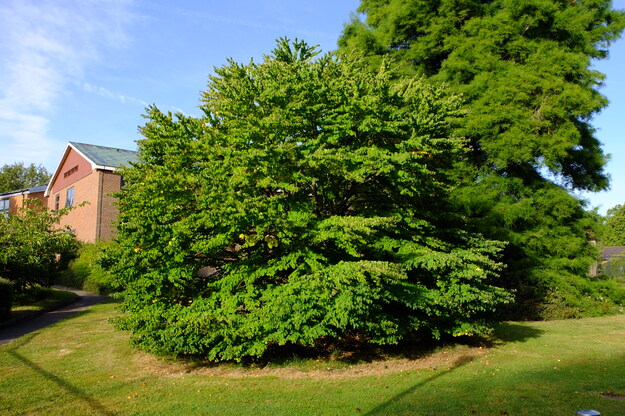
Deciduous broadleaf flowering (angiosperm) plant of the Cercidiphyllaceae family, not native in Britain.
Malus spectabilis, Chinese crab or Asiatic apple
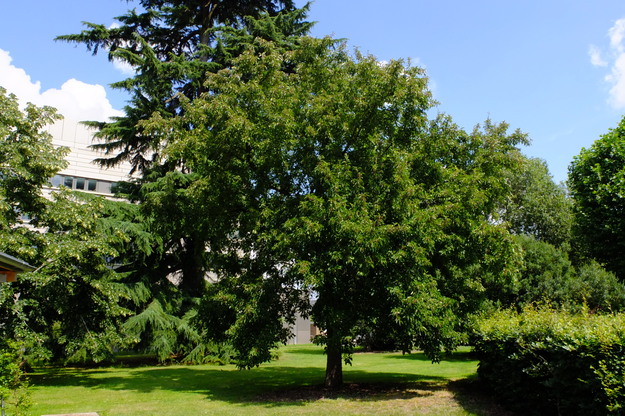
Deciduous broadleaf flowering (angiosperm) plant of the Rosaceae or Rose family, not native in Britain.
Tilia maximowicziana, Maximowicz's lime

Deciduous broadleaf flowering (angiosperm) plant of the Malvaceae or Mallow family, not native in Britain.
Cedrus deodara, Deodar cedar or deodar
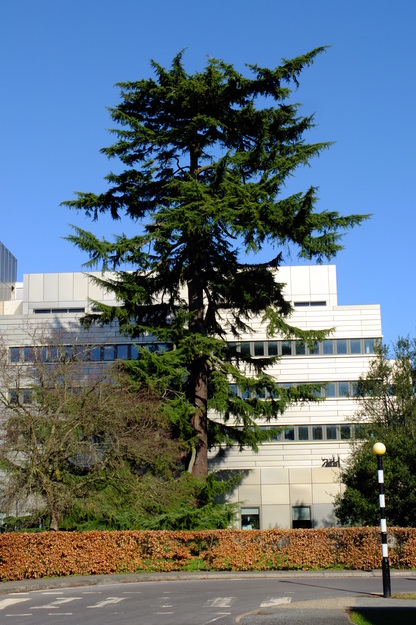
Evergreen needleleaf coniferous (gymnosperm) plant of the Pinaceae or Pine family, native to the western Himalayas.
A majestic tree, growing up to 40–50 metres tall, distinguished by its drooping branch tips and soft, bluish-green needles arranged in dense clusters. The tree produces upright, barrel-shaped cones that gradually disintegrate to release their seeds. Its wood is valued because of its durability, rot-resistant character and fine grain. The inner wood is aromatic and used to make incense. Its name derives from the Sanskrit meaning "wood of the gods". The deodar is widely planted as an ornamental tree in parks and large gardens around the world.
Populus nigra, Black poplar

Deciduous broadleaf flowering (angiosperm) plant of the Salicaceae or Willow family, native to Britain.
Prunus serrulata 'Tai-haku', Great white cherry
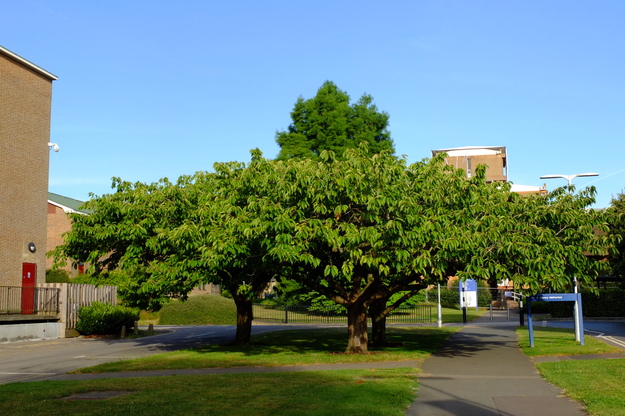
Deciduous broadleaf flowering (angiosperm) plant of the Rosaceae or Rose family, native to east Asia.
Prunus serrulata is celebrated for its spectacular spring blossom, comprising profuse clusters of pale pink to white flowers. In Japan it has a cultural significance, marked during the cherry blossom festival, when its flowering symbolises renewal and the fleeting nature of life. In the early 20th century the 'Tai-haku' variety was thought to be extinct but fortunately in the 1920s a specimen was found in a garden in Sussex that had been grown from plants sent from Japan years earlier.
Cercis siliquastrum, Judas tree
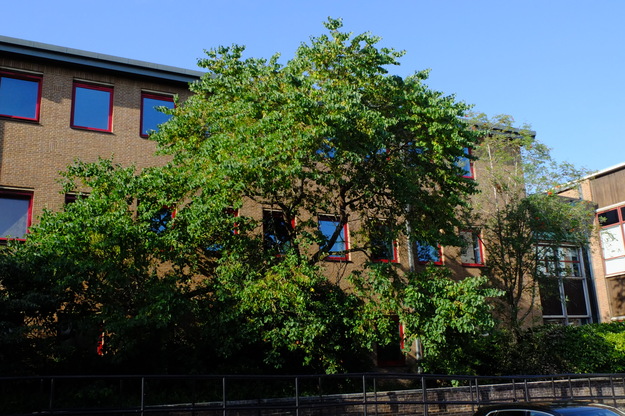
Deciduous broadleaf flowering (angiosperm) plant of the Fabaceae or Legume, pea or bean family, not native in Britain.
Acer negundo, Ash-leaf maple or box elder
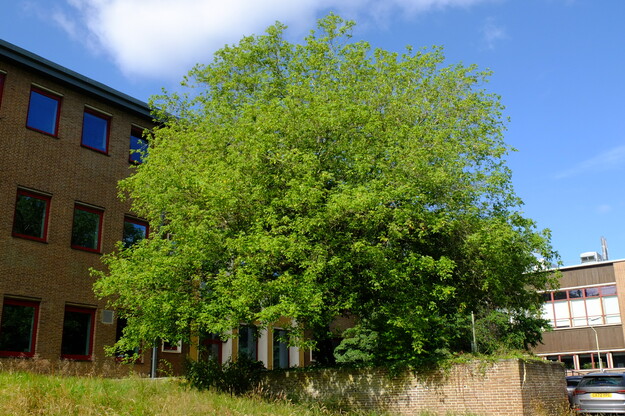
Deciduous broadleaf flowering (angiosperm) plant of the Sapindaceae or Soapberry family, not native in Britain.
Carpinus betulus, Hornbeam
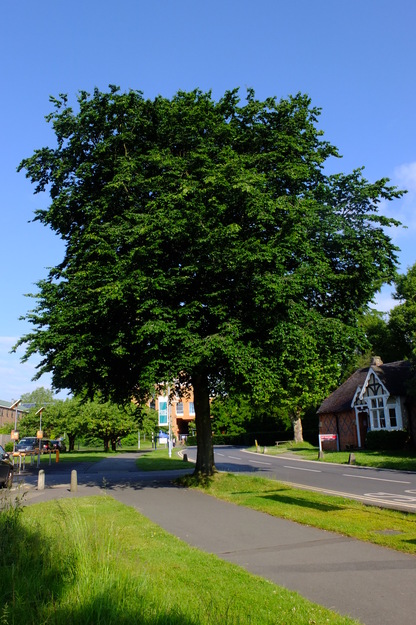
Deciduous broadleaf flowering (angiosperm) plant of the Betulaceae or Birch family, native to Britain.
Acer platanoides cultivar, Purple-leaved Norway maple
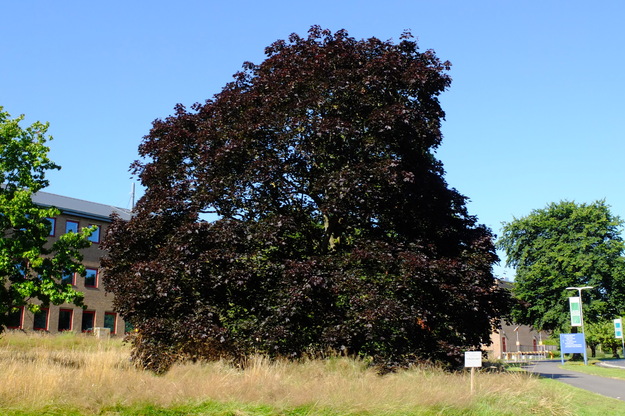
Deciduous broadleaf flowering (angiosperm) plant of the Sapindaceae or Soapberry family, a cultivated variety.
Tilia cordata, Small-leaved lime or linden
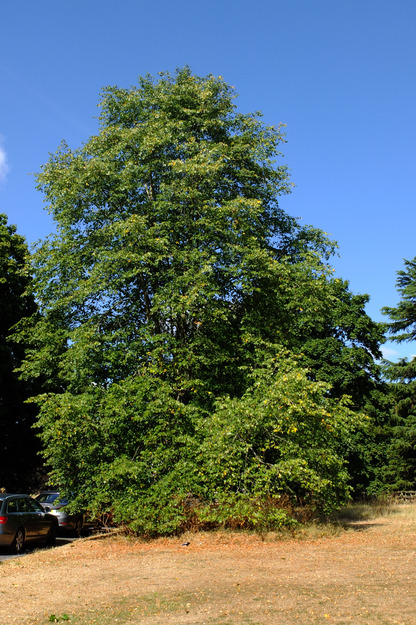
Deciduous broadleaf flowering (angiosperm) plant of the Malvaceae or Mallow family, native to Britain.
Sequoiadendron giganteum, Giant redwood or Wellingtonia
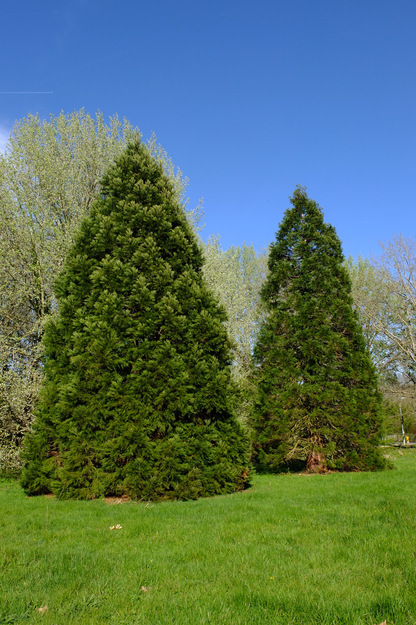
Evergreen needleleaf coniferous (gymnosperm) plant of the Cupressaceae or Cypress family, native to western slopes of the Sierra Nevada in California.
By volume the largest tree in the world, Sequoiadendron giganteum can reach up to 95 m in height and 12 m in diameter, and live for more than 3000 years.
When it was introduced to Britain in 1853, the species was named Wellingtonia giganteum after the Duke of Wellington. Although this scientific name was discontinued, the species is still called Wellingtonia as a common name in the UK. Wellingtonia Avenue in Finchampstead is an avenue of over 100 Sequoiadendron giganteum planted alongside the road in the 1860s as a memorial to the Duke.
Populus × canescens, Grey poplar

Deciduous broadleaf flowering (angiosperm) plant of the Salicaceae or Willow family, a hybrid species.
Fraxinus angustifolia 'Raywood', Raywood ash
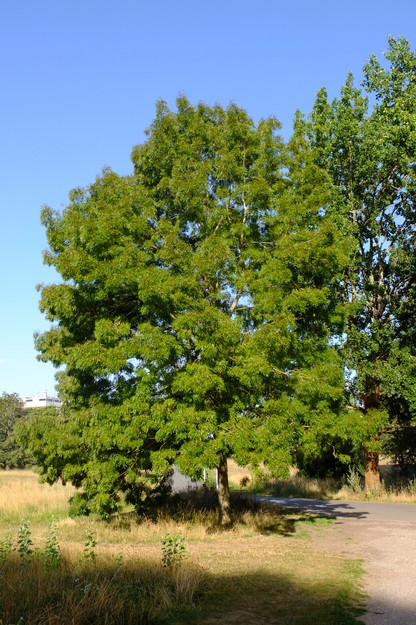
Deciduous broadleaf flowering (angiosperm) plant of the Oleaceae or Olive family, a cultivated variety.
Salix alba, White willow
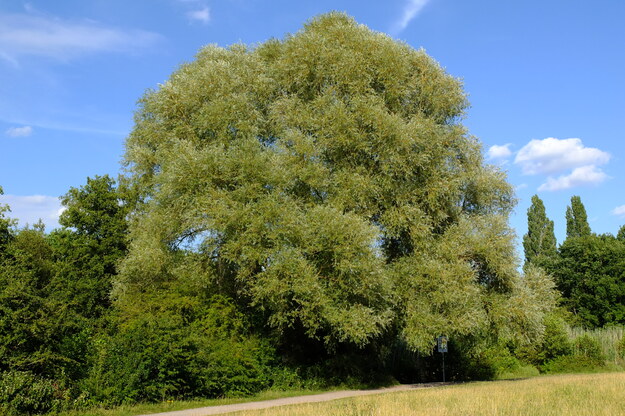
Deciduous broadleaf flowering (angiosperm) plant of the Salicaceae or Willow family, native to Britain.
Quercus palustris, Pin oak
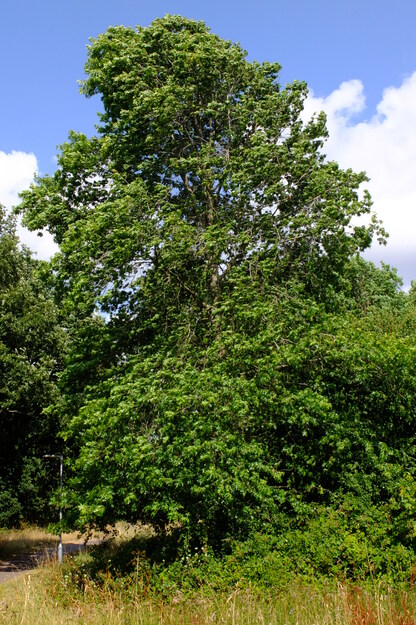
Deciduous broadleaf flowering (angiosperm) plant of the Fagaceae or Beech family, not native in Britain.
Salix × sepulcralis, Weeping willow
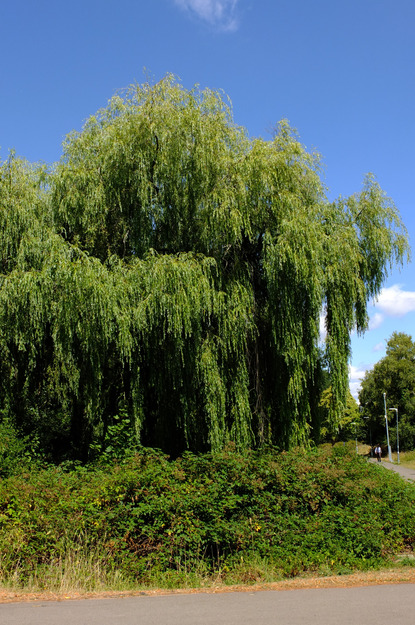
Deciduous broadleaf flowering (angiosperm) plant of the Salicaceae or Willow family, a hybrid species.
Quercus robur, Pedunculate or common oak

Deciduous broadleaf flowering (angiosperm) plant of the Fagaceae or Beech family, native to Britain.
Acer cappadocicum, Cappadocian maple
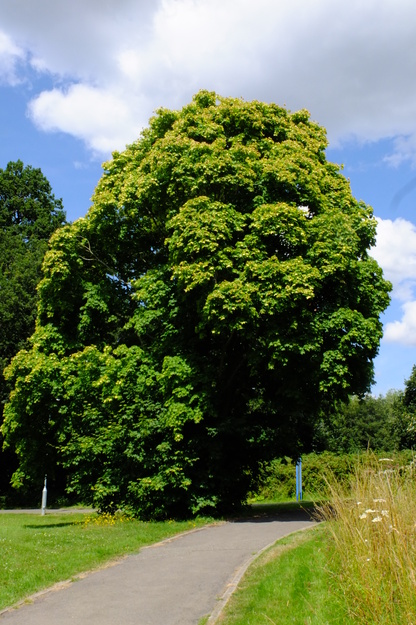
Deciduous broadleaf flowering (angiosperm) plant of the Sapindaceae or Soapberry family, not native in Britain.
Platanus orientalis, Oriental plane
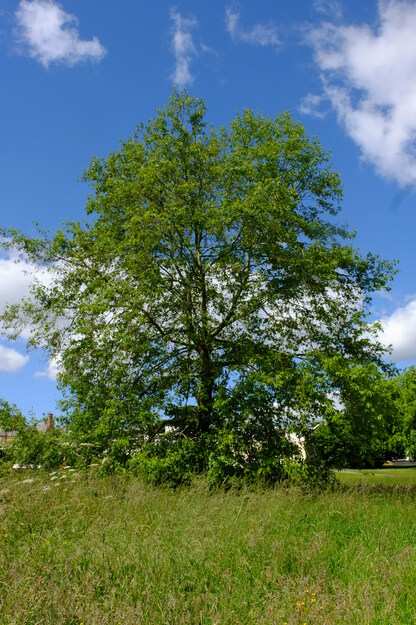
Deciduous broadleaf flowering (angiosperm) plant of the Platanaceae family, not native in Britain.
Populus tremula, Aspen
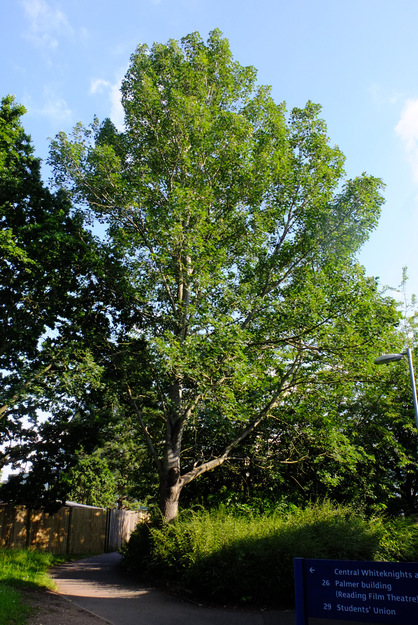
Deciduous broadleaf flowering (angiosperm) plant of the Salicaceae or Willow family, native to Britain.
Acer griseum, Paper-bark maple
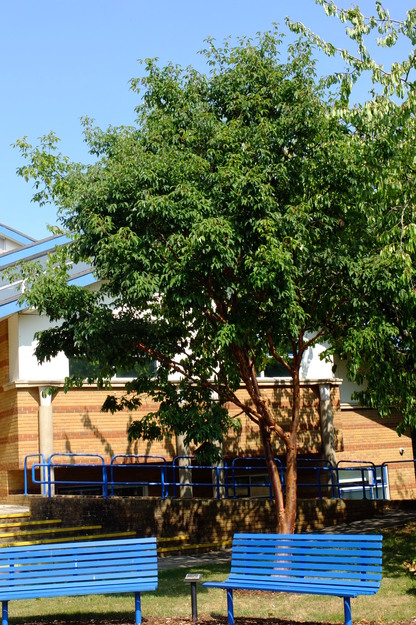
Deciduous broadleaf flowering (angiosperm) plant of the Sapindaceae or Soapberry family, native to central China.
Acer griseum is a small to medium-sized tree with ornamental qualities. It has distinctive cinnamon-brown bark, which peels away in thin, papery strips to reveal smooth layers beneath. It has green leaves in groups of three (in botanical terms, three leaflets comprising each compound leaf). They turn brilliant shades of red, orange, and scarlet in autumn.
Alnus cordata, Italian alder
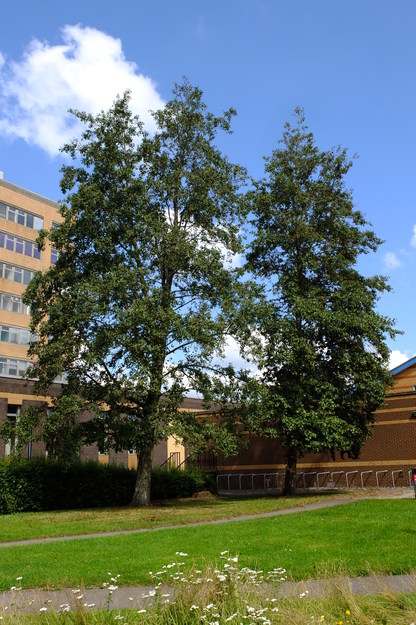
Deciduous broadleaf flowering (angiosperm) plant of the Betulaceae or Birch family, not native in Britain.
Tilia platyphyllos, Large-leaved lime or linden
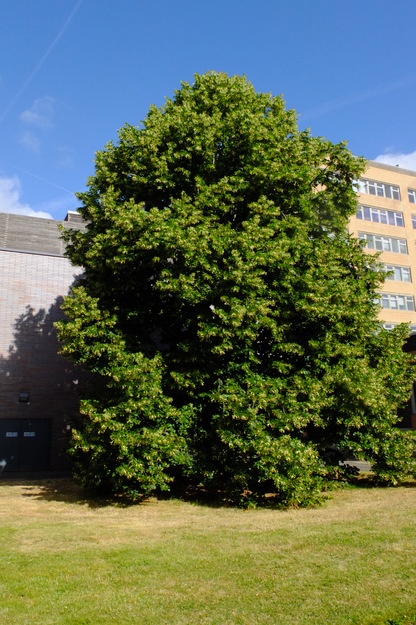
Deciduous broadleaf flowering (angiosperm) plant of the Malvaceae or Mallow family, native to Britain.
Acer platanoides, Norway maple
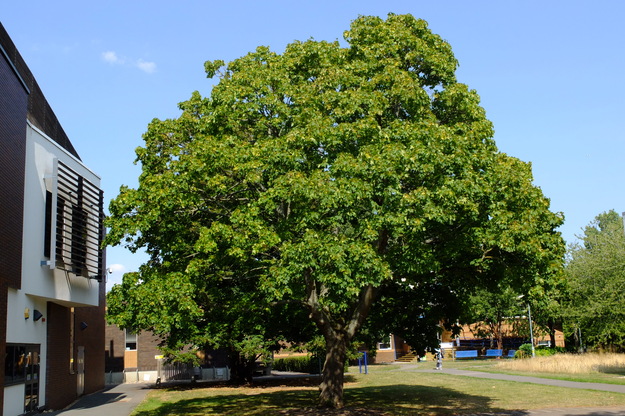
Deciduous broadleaf flowering (angiosperm) plant of the Sapindaceae or Soapberry family, not native in Britain.
Quercus ilex, Holm or evergreen or holly oak
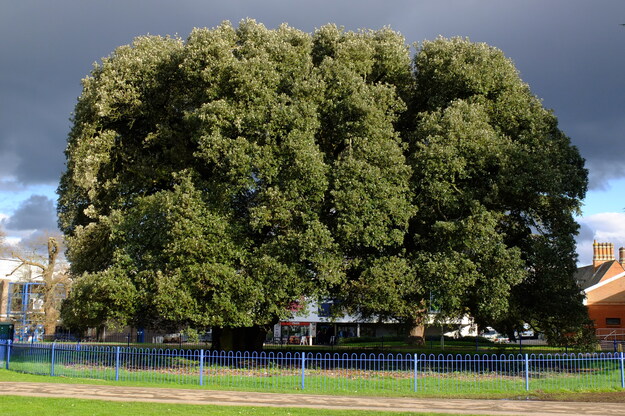
Evergreen broadleaf flowering (angiosperm) plant of the Fagaceae or Beech family, not native but naturalised in Britain.
Cedrus libani, Cedar of Lebanon
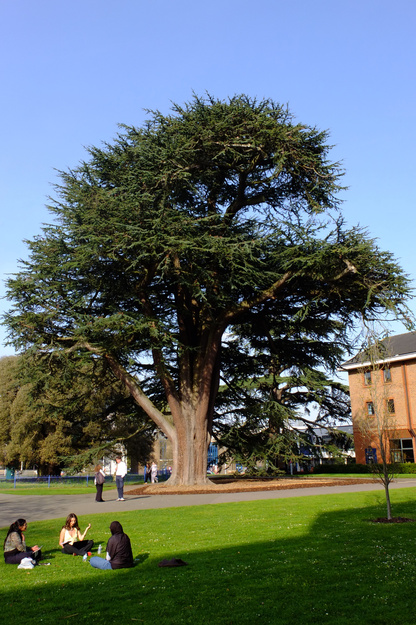
Evergreen needleleaf coniferous (gymnosperm) plant of the Pinaceae or Pine family, not native in Britain.
Catalpa bignonioides, Southern catalpa or Indian bean tree

Deciduous broadleaf flowering (angiosperm) plant of the Bignoniaceae or Bignonia family, not native in Britain.
Tilia mongolica, Mongolian lime
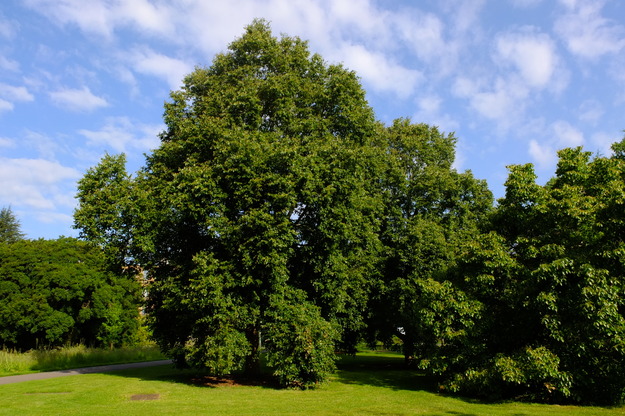
Deciduous broadleaf flowering (angiosperm) plant of the Malvaceae or Mallow family, not native in Britain.
Tilia henryana, Henry's lime
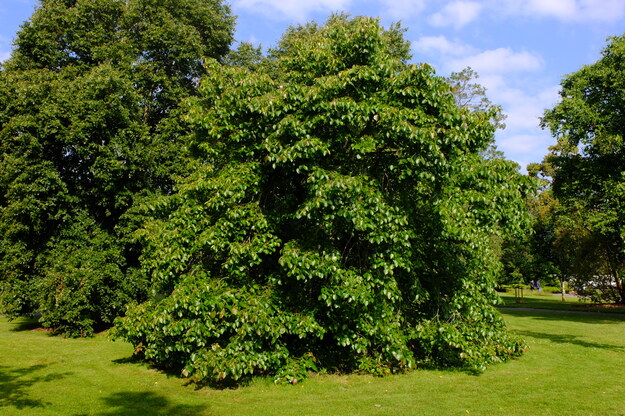
Deciduous broadleaf flowering (angiosperm) plant of the Malvaceae or Mallow family, not native in Britain.
Betula pendula cultivar, Cut-leaf silver birch
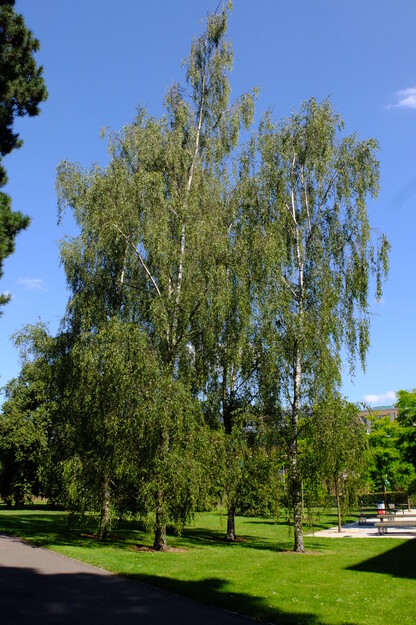
Deciduous broadleaf flowering (angiosperm) plant of the Betulaceae or Birch family, a cultivated variety.
Taxodium distichum, Swamp cypress
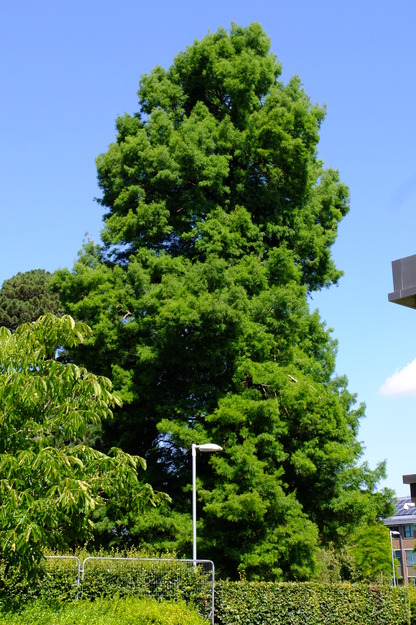
Deciduous needleleaf coniferous (gymnosperm) plant of the Cupressaceae or Cypress family, native to south-eastern North America.
Taxodium distichum is a large tree adapted to wetlands and floodplains, where it develops distinctive woody "knees" that protrude from the ground, thought to aid in stability and gas exchange. It has soft, feathery green needles that turn a rich copper-brown in autumn before falling. It is widely planted as a specimen tree in parks and large landscapes for its impressive size, graceful form, and autumn colour.
Pinus radiata, Monterey pine
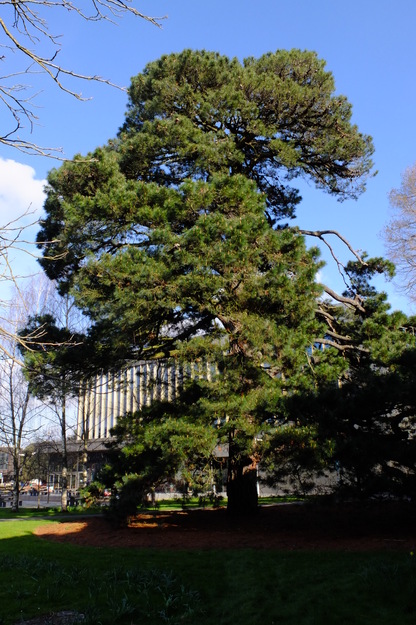
Evergreen needleleaf coniferous (gymnosperm) plant of the Pinaceae or Pine family, not native in Britain.
Gymnocladus dioicus, Kentucky coffee tree

Deciduous broadleaf flowering (angiosperm) plant of the Fabaceae or Legume, pea or bean family, not native in Britain.
Cryptomeria japonica, Japanese red cedar
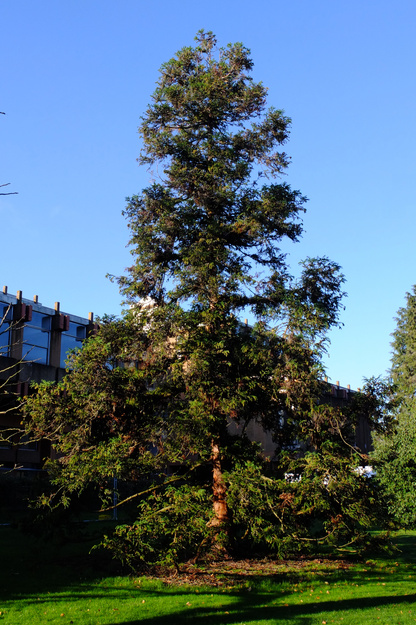
Evergreen needleleaf coniferous (gymnosperm) plant of the Cupressaceae or Cypress family, native to Japan and parts of China.
A tall tree in its natural habitat, reaching heights of 50–70 metres, with a straight trunk and a narrow, conical crown. Its reddish-brown bark peels in long, fibrous strips, giving it ornamental interest. The tree has soft, awl-shaped needles arranged spirally along the shoots, often turning bronze in winter in cooler climates. Small, spherical cones develop at the tips of branches. Widely planted as both a forestry and ornamental species, Cryptomeria japonica is valued for its fragrant, durable wood and its elegant presence in parks and large gardens.
Fagus sylvatica, (Common or European) beech
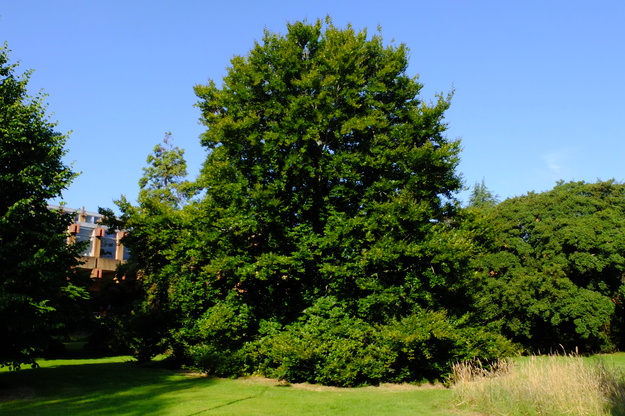
Deciduous broadleaf flowering (angiosperm) plant of the Fagaceae or Beech family, native to Britain and much of Europe.
Fagus sylvatica is widely valued for its beauty and ecological importance. It can grow 30–40 metres tall and forms a broad, dense crown with smooth, pale grey bark that remains relatively unbroken even in old age. The tree has glossy, oval green leaves with slightly wavy edges that turn golden brown in autumn. In spring it produces small flowers that develop into triangular nuts known as beechnuts, which are an important food source for birds and mammals. Fagus sylvatica thrives in well-drained soils and temperate climates, often forming extensive beech forests, and is also widely planted in parks and landscapes for its impressive size and shade.
Acer sempervirens, Cretan maple
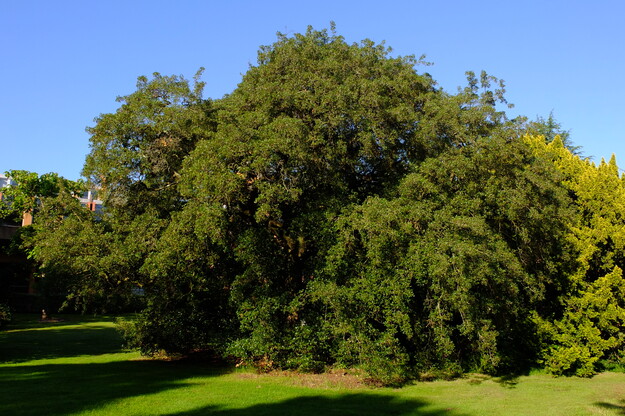
Evergreen broadleaf flowering (angiosperm) plant of the Sapindaceae or Soapberry family, not native in Britain.
Nyssa sylvatica, Black tupelo
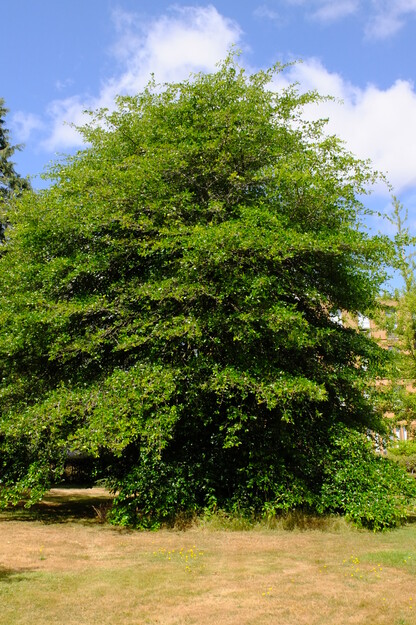
Deciduous broadleaf flowering (angiosperm) plant of the Nyssaceae family, not native in Britain.
Ginkgo biloba, Ginkgo
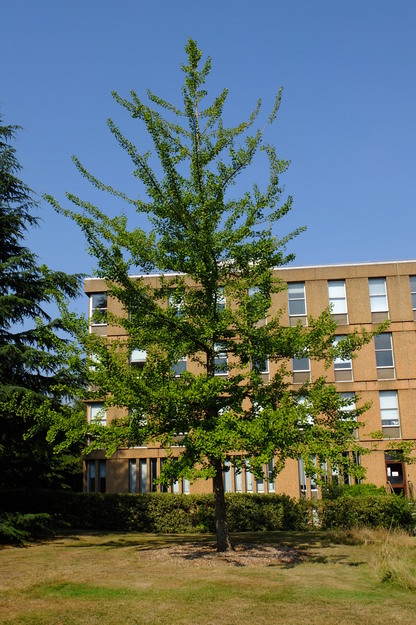
Deciduous broadleaf non-flowering (gymnosperm) plant of the Ginkgoaceae family, not native in Britain.
Magnolia kobus, Northern Japanese magnolia
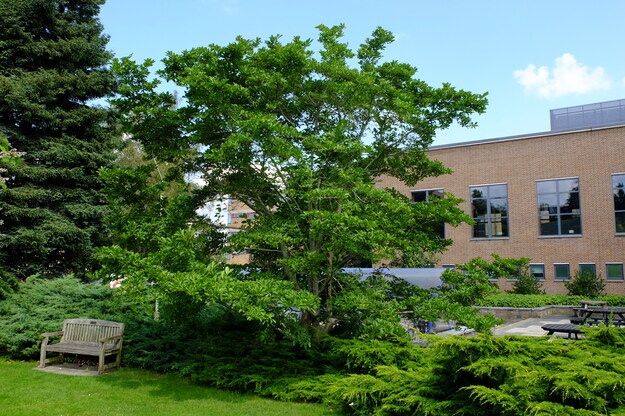
Deciduous broadleaf flowering (angiosperm) plant of the Magnoliaceae or Magnolia family, not native in Britain.
Juglans cathayensis, Chinese walnut
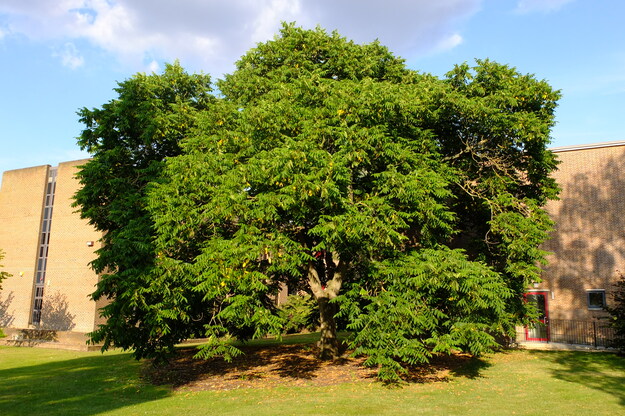
Deciduous broadleaf flowering (angiosperm) plant of the Juglandaceae or Walnut family, not native in Britain.
Metasequoia glyptostroboides, Dawn redwood
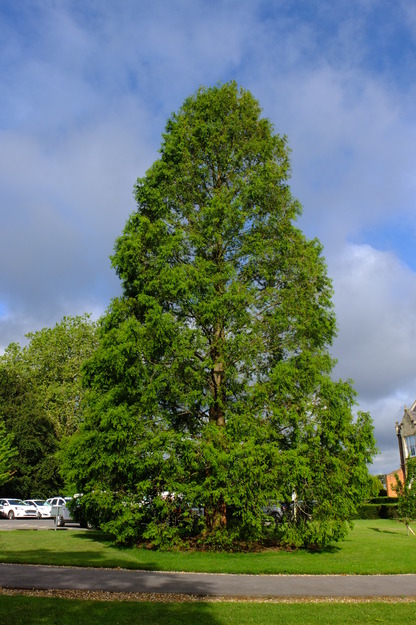
Deciduous needleleaf coniferous (gymnosperm) plant of the Cupressaceae or Cypress family, native to China.
The genus Metasequoia was known only from fossil evidence and considered extinct for 5 million years, until this species was found in the 1940s in Szechuan. It is a fast-growing tree which prefers a damp habitat and is adapted to growing on flood plains. It is critically endangered, partly due to intensive rice cultivation.
Quercus rubra, Northern red oak
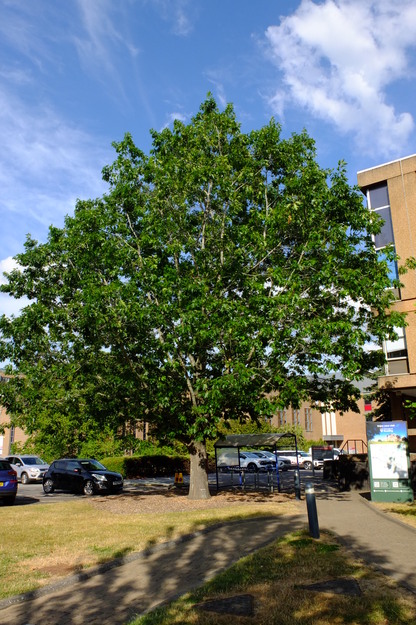
Deciduous broadleaf flowering (angiosperm) plant of the Fagaceae or Beech family, not native in Britain.
Liriodendron tulipifera, Tulip tree
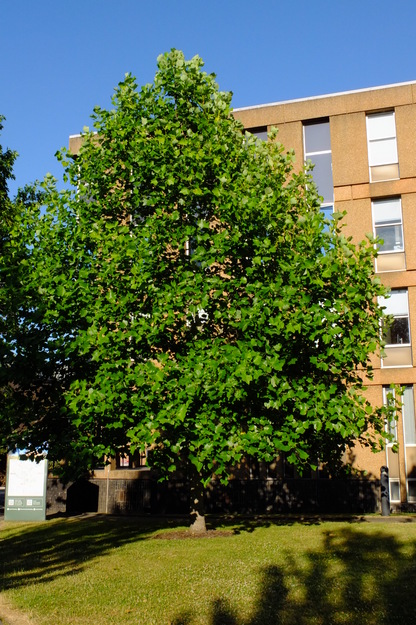
Deciduous broadleaf flowering (angiosperm) plant of the Magnoliaceae or Magnolia family, not native in Britain.